
REVIEW · BANGKOK
River Kwai Day Tour from Bangkok – History, Scenery & Culture
The most moving part of this River Kwai day tour is not the bridge itself. It is the quiet Commonwealth war cemetery, where rows of graves mark the cost of building the Burma Railway during World War II. From there, the day connects the memorial, museum, bridge, railway, and countryside into one clear story.
I like the small maximum group of 15, which makes a real difference when you are walking the bridge or trying to hear a guide. I also like the train ride beside the River Kwai, followed by a Thai-style lunch at Wang Po station. The drawback is the length: with an early start and Bangkok traffic, you can spend a very long day on the road.
Key points to know before booking
- A full WWII history day: The route covers Kanchanaburi War Cemetery, the JEATH War Museum, the bridge, the Death Railway, and Tham Kra Sae.
- Small-group format: The tour caps participation at 15 people, a useful advantage over a large coach excursion.
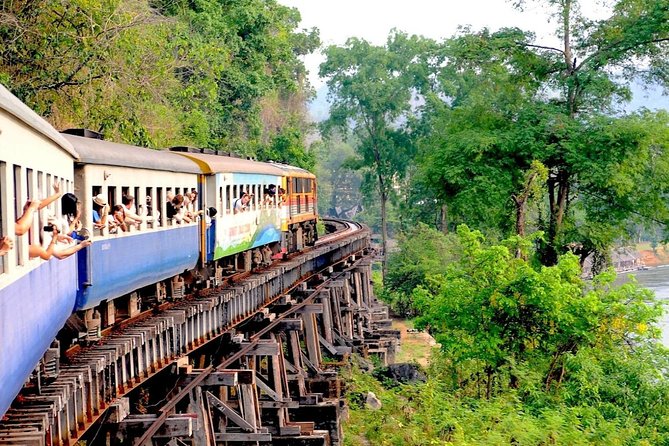
- The train is part of the value: You ride a surviving section of the Death Railway, including the wooden viaduct near the river.
- Guides make or break the day: Rach, Oom, Nina, and Jira have received especially strong praise for clear explanations and personal care, while some guides have offered little commentary.
- Lunch comes with a view: The meal is served near Wang Po station, with plenty of Thai-style buffet choices.
- Expect a long day: The advertised duration is about 11 hours, with pickup commonly around 6 a.m. and return near 5:30 or 6 p.m.
Why the River Kwai day trip matters
This is not simply a sightseeing outing to a famous bridge. The River Kwai area carries the memory of the Burma Railway, built under brutal conditions by Allied prisoners of war and Asian laborers during Japanese occupation in World War II.
The railway once ran between Thailand and Burma, now Myanmar, for military purposes. Thousands died from disease, exhaustion, starvation, abuse, and dangerous working conditions. The surviving railway, cemetery, photographs, and reconstructed camp help you understand the human cost behind a place that can otherwise look like a pleasant river stop.
The day is best approached with patience and respect. Some stops are emotionally heavy, especially the cemetery. Others, such as the bridge and train ride, are more active and scenic. Together, they create a useful balance between remembrance, history, and the present-day countryside.
More history trips in Bangkok:
- From Bangkok: Historical Day Tour to River Kwai
★ 4.6 · 868 reviews - River Kwai Day Tour from Bangkok: History, Scenic Views & Culture
★ 4.5 · 36 reviews - Private Historic River Kwai Death Railway, War Cemetery and Hellfire Pass Tour
★ 4.5 · 12 reviews
Leaving Bangkok for Kanchanaburi
The tour begins with pickup from selected Bangkok hotels, followed by an air-conditioned minibus journey west to Kanchanaburi. The vehicle is included, as is an English-speaking guide and lunch.
The road trip is a major part of the day. Bangkok traffic can delay pickup, and the operator allows for a possible 15 to 45 minute delay caused by traffic or other conditions. You should wait in your hotel lobby 15 minutes before the stated pickup time and avoid planning anything tightly for the evening.
The small vehicle is more comfortable than a full-size coach, especially when the group is near its limit of 15. Still, this is not a quick excursion. Some people find the road time tiring, while others appreciate having transport arranged from Bangkok rather than managing trains, buses, and local transfers on their own.
A few guides use the drive to explain Thailand and the wartime railway. That is where the quality can vary. Rach and Oom are particularly good choices if assigned to your departure, with strong English and a clear grasp of the subject. Guide Nina has also been praised for explaining the route, offering water and fruit, and helping with train seating.
Kanchanaburi War Cemetery: the quietest stop
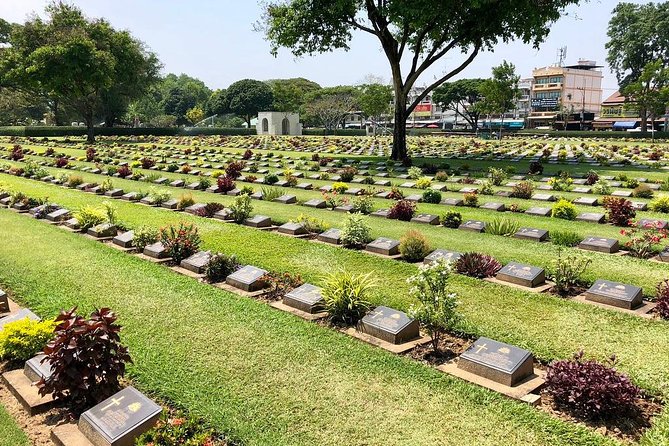
The first major stop is Kanchanaburi War Cemetery. It contains the graves of Allied prisoners who died during construction of the railway, including many Australian soldiers. The grounds are carefully laid out, and the repeated rows of headstones make the scale of the loss easier to grasp than a single monument can.
You generally have about an hour here, though the exact pace can vary. This is a place where you should slow down. The cemetery is not a photo stop in the usual sense, although people do take respectful photographs. If you are visiting because of a relative, tell your guide early. Rach has helped participants locate particular graves and walked them directly to the right section.
I find this stop gives the whole excursion its moral center. The bridge is famous because of film and popular culture, but the cemetery reminds you that real people endured the railway and many never returned home.
JEATH War Museum and the limits of the display
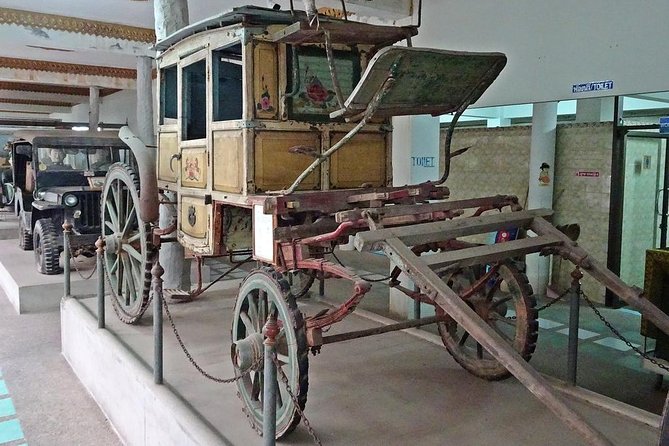
The JEATH War Museum presents photographs, paintings, and material connected with World War II and the railway. A reconstructed prisoner-of-war hut gives you a rough sense of the cramped accommodation used by prisoners.
The museum is useful, but keep your expectations modest. Parts of the display have been described as worn and in need of cleaning, and some photographs have limited English explanation. The visit can also feel rushed, with roughly half an hour to an hour allocated depending on the day.
This is a place where your guide matters. A good guide adds the missing context, explains the images, and connects the museum to the cemetery and railway. A weak guide may simply escort you through while you read what you can for yourself.
If you want a detailed museum experience, this stop alone will not satisfy you. Its value comes from seeing the visual record before you stand on the bridge and railway itself.
A few more river trips around Bangkok worth comparing
- Bangkok: Chao Phraya River Hop-on Hop-off Boat
★ 4.5 · 2,990 reviews - From Bangkok: Ayutthaya Day Tour by Bus with River Cruise
★ 4.3 · 1,892 reviews - Ayutthaya Temples and River Cruise from Bangkok
★ 4.0 · 1,692 reviews - Bangkok: River Dinner Cruise on the Chao Phraya Princess
★ 4.2 · 1,651 reviews
Walking across the River Kwai Bridge
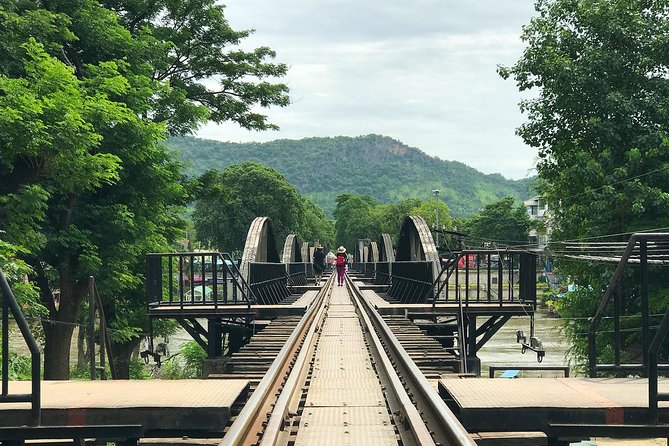
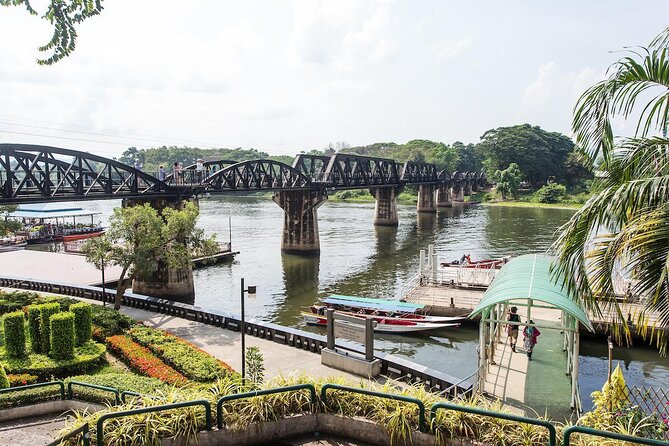
At the bridge, you can walk across the steel structure over the river and look along the tracks. The bridge is an active railway crossing, so you need to follow local instructions and move aside when required.
The setting is more scenic than grim. Water, hills, railway lines, and passing trains make this the most recognizable part of the trip. That contrast can feel strange. You are taking photographs in a pleasant place built around a painful chapter of history.
The bridge has also been shaped by popular culture, particularly the 1957 film commonly associated with it. The real site is not identical to the movie version, and the tour helps separate cinematic invention from wartime fact. You will see a bridge, not a preserved prison camp or a frozen moment from the 1940s.
Some departures also offer an optional boat ride to view the bridge from the river. This is not listed as part of the standard included program, so treat it as an add-on offered on the day, not as a guaranteed feature. It may suit you if you want a different angle and enjoy being on the water, but it adds cost and time.
Riding the Death Railway near Tham Kra Sae
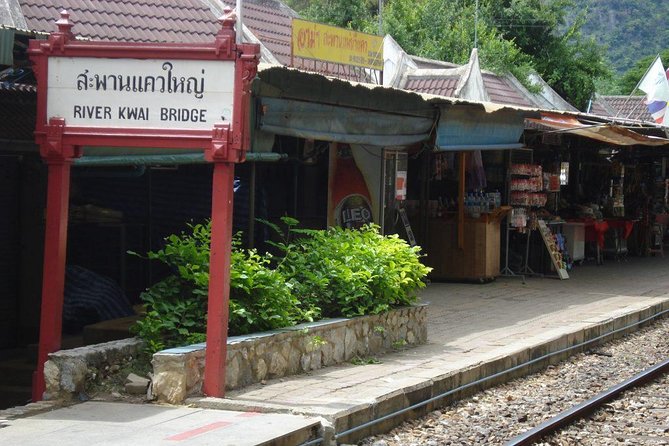
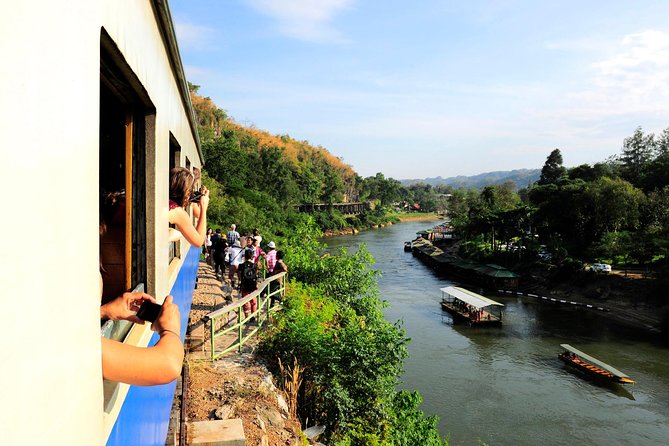
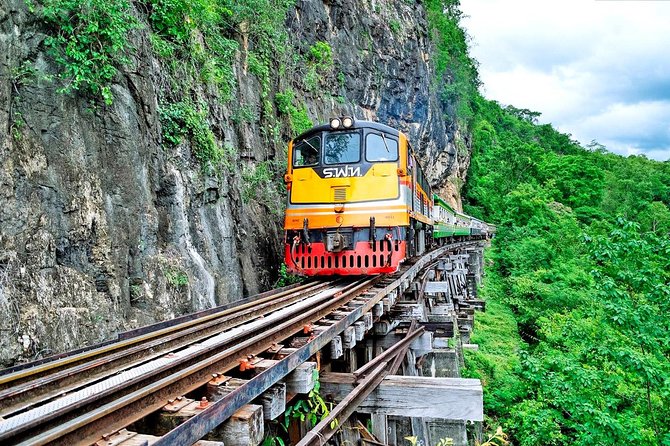
The train ride is the physical highlight. You board a local train and travel along a remaining section of the Death Railway, passing countryside and the wooden viaduct near Tham Kra Sae. The line follows a sheer cliff above the River Kwai, giving you views that are both striking and tied directly to the railway’s past.
This is not a luxury railway journey. The standard carriage uses hard benches, can be crowded, and has no air conditioning. Smoke, dust, heat, and noise are possible. One practical detail matters: a better or more comfortable seat may be available for an extra charge, reported at about 500 baht. Ask your guide what is included before agreeing to any upgrade.
The included train segment is described as about 30 minutes, though the broader rail portion can feel longer depending on the schedule and waiting time. You share the carriage with local passengers and other visitors, which gives the ride an everyday quality rather than a staged tourist feel.
Try to sit where you can see the river and viaduct, but do not assume a particular seat will be available. Nina has been praised for helping people find better seats, and other guides have offered practical assistance as well. Solo visitors may also appreciate guides who help with photographs. One guide sent pictures and videos to the group through WhatsApp.
The train is dusty and basic, but that is also its strength. You are not looking at the railway from behind glass. You are riding on the surviving line, hearing the carriage and seeing the track cut into the hillside.
Lunch at Wang Po station
After the railway section, you stop near Wang Po station for lunch. The meal is included and is served buffet-style at a local restaurant, with a number of Thai dishes and plenty of choice.
The setting is part of the appeal. The restaurant overlooks the river, and the meal gives you time to sit down after the early start, museum visits, walking, and train ride. It is not presented as a fine-dining experience, but it is a practical and well-timed part of the day.
A small market near the lunch stop may give you a little time to browse before leaving for Bangkok. The schedule can be tight, so do not count on a long shopping break.
Guide quality is the biggest variable
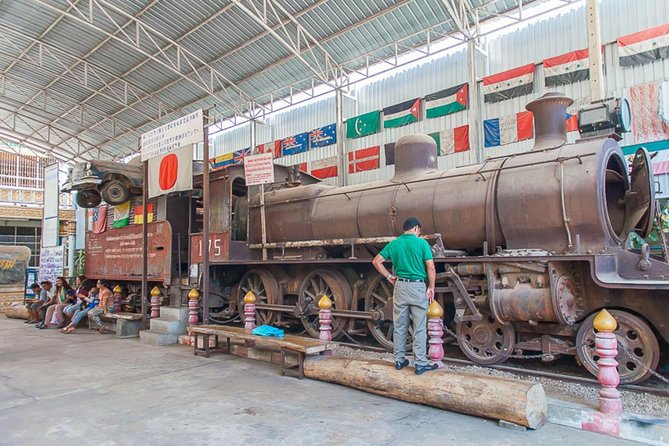
The operator provides an English-speaking guide, but the actual quality depends heavily on the person assigned. That is worth considering before you pay for a history-focused tour.
Rach is repeatedly praised for clear English, warmth, detailed WWII explanations, and close attention to individual needs. Oom is also singled out for strong historical knowledge, patience, and making sure the group sees as much as possible. Nina has been appreciated for practical help, commentary during the drive, and attention to comfort. Jira has been praised for bringing water and explaining the sites.
There have also been disappointing guide experiences. Some guides have offered little more than basic directions, fallen asleep during the drive, or lacked the English needed for detailed explanations. In those cases, the tour can feel like transport between attractions rather than a guided history day.
You cannot normally choose your guide, so I would bring a little background reading if the subject matters deeply to you. That way, even a quiet guide will not leave the museum and cemetery without context. If you do receive a strong guide, the extra explanation can greatly improve the experience.
What the price includes, and what it does not
At $97.77 per person, the price is reasonable if you value convenience and want all the main sites handled in one day. You receive round-trip transfer from Bangkok, an air-conditioned vehicle, an English-speaking guide, the listed admissions, the train portion, and lunch.
The value comes from the logistics. Reaching Kanchanaburi independently requires arranging transport, finding the cemetery and museum, understanding the train schedule, and organizing the return. This tour removes that work and links the stops in a sensible order.
The price feels less attractive if you mainly want to see the bridge or take a short train ride. You are paying for a long day, and much of it is spent getting between Bangkok and Kanchanaburi. The optional boat ride and possible train-seat upgrade are additional costs, so ask about them before accepting.
A group discount may be available, and the tour normally limits the group to 15 people. That is a fair compromise between private touring and the lower price of a large bus.
Who will enjoy this tour most
I would recommend this experience to you if you want a focused WWII day without spending a night in Kanchanaburi. It suits first-time visitors to the area, people with family connections to the war, and anyone who wants to combine memorial sites with a real railway ride.
It is also a good fit if you prefer a guide to explain difficult history in person. The cemetery and museum can be hard to interpret from labels alone, and the railway makes more sense when someone explains who built it and under what conditions.
You may want a different plan if you dislike early starts, long road transfers, basic train seating, or emotionally heavy sites. The museum may feel underdeveloped, and a weak guide can reduce the day to a sequence of stops.
Children can participate, but the published child guidance is inconsistent. One note says children over 120 centimeters are charged the adult rate, while another says children over 110 centimeters should use the adult price. Confirm the correct rule when booking.
Practical tips for a better day
- Wear shoes you can walk in comfortably. You will visit the cemetery, museum, bridge, and railway area.
- Bring water and sun protection. Guides may provide water, but you should not depend on that.
- Keep your schedule open after the stated return time. Bangkok traffic can be unpredictable.
- Ask early about train seating and any upgrade fee.
- If you have a specific grave to visit, bring the name and service details and tell the guide at the cemetery.
- Treat the bridge and cemetery differently. The bridge is scenic and active, while the cemetery calls for quiet respect.
- If the guide is giving limited commentary, ask direct questions. The best guides respond well to questions about the railway, POW camps, Thai history, and the route.
Should you book the River Kwai day tour?
Book it if you want the most important River Kwai sites in one organized day and you accept that the journey from Bangkok will be long. The combination of the cemetery, JEATH Museum, bridge, Death Railway, cliffside viaduct, and lunch by the river gives you a fuller understanding than visiting the bridge alone.
The strongest reason to choose this tour is the small group and the chance of a guide such as Rach, Oom, Nina, or Jira. The main warning is guide inconsistency, along with basic train conditions and a museum that may feel dated.
For about $97.77, I think the tour offers solid value for a first visit, especially if you have limited time in Thailand. Cancel at least 24 hours before departure for a full refund. If you want a quieter, slower, more detailed study of the railway, stay overnight in Kanchanaburi instead. If you want a meaningful day trip from Bangkok, this is a sensible choice.
FAQ
How long is the River Kwai day tour from Bangkok?
The tour lasts about 11 hours. Pickup may begin around 6 a.m., with return to Bangkok commonly around 5:30 or 6 p.m., depending on traffic and the day’s schedule.
Is hotel pickup available in Bangkok?
Yes. Pickup is offered from various hotels in Bangkok, and hotel pickup is available on request. You should wait in the hotel lobby 15 minutes before the stated pickup time.
How large is the tour group?
The tour has a maximum of 15 participants. It is operated as a small-group experience rather than a large coach tour.
What historical sites are included?
The route includes Kanchanaburi War Cemetery, the JEATH War Museum, the River Kwai Bridge, the Death Railway, and the Tham Kra Sae area.
Is the train ride included?
Yes. The tour includes a train ride along part of the Death Railway, including countryside views and the wooden viaduct near the River Kwai.
Is lunch included?
Yes. Lunch is included and is served at a local restaurant near Wang Po station. It is described as a Thai-style buffet with a range of choices.
Are train-seat upgrades included?
No. Standard seating uses hard benches. An optional upgrade may be offered on the day and has been reported at about 500 baht, but you should confirm the current fee and availability with the guide.
Can children join the tour?
The tour allows children, but the supplied child-height rules conflict. One note lists 120 centimeters as the adult-rate threshold, while another lists 110 centimeters. Confirm the correct rate before booking.
What is the cancellation policy?
You can cancel up to 24 hours before the experience begins for a full refund. Cancellations or changes made less than 24 hours before the start time are not accepted for a refund.
Just added around Bangkok
- VIVA Alangka River Cruise: Dining & Cabaret Delight★ 3.5 · 15 reviews
- Ancient City & Temples of Ayutthaya ( UNESCO ) by River Cruise with Buffet Lunch★ 4.0 · 11 reviews
- The White Orchid: Chao Phraya Dinner Cruise Experience★ 3.5 · 223 reviews
- Bangkok Opulence Chao Phraya River Dinner Cruise from ICONSIAM★ 4.0 · 135 reviews
- Bangkok Sunset or Evening Dinner Cruise (The Planet Cruise)★ 4.0 · 30 reviews
- Saffron Luxury Dinner Cruise: A Journey on the River of Kings★ 4.5 · 84 reviews
- Train trip death railway Bridge on river Kwai from Bangkok to Kanchanaburi trip★ 4.0 · 17 reviews
- River Kwai Day Tour from Bangkok: History, Scenic Views & Culture★ 4.5 · 36 reviews
Bangkok River Cruises, compared.
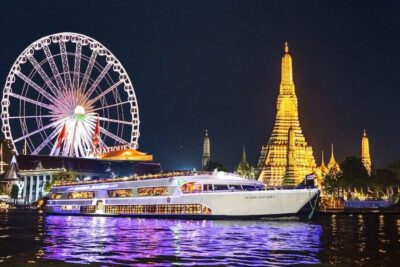
White Orchid Chao Phraya Dinner Cruise free Beer
Read our review →
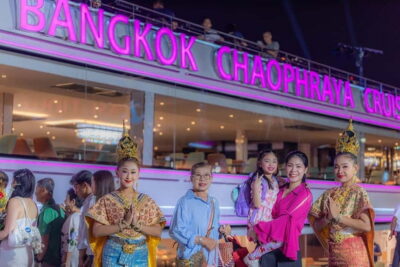
The Newest Luxury 5-Star Bangkok Chao Phraya Cruise
Read our review →
Ayutthaya Temples and River Cruise from Bangkok
Read our review →
River Dinner Cruise on the Chao Phraya Princess
Read our review →
2-Hour Dinner & Shows on White Orchid River Cruise
Read our review →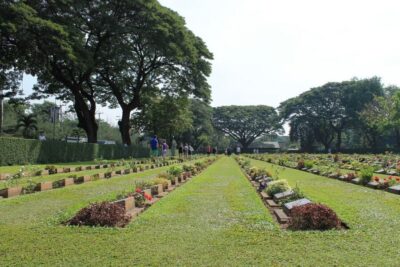
Browse the lists this tour appears in