
REVIEW · CHICAGO
Chicago River: 1.5-Hour Guided Architecture Cruise
Chicago’s skyline makes the most sense from the water. On this 90-minute Chicago River architecture cruise, you glide beneath bridges and past towers that tell the story of the city’s rebuilding, ambition, and taste for big engineering. The boat covers the main river plus its north and south branches, so you see far more than the usual downtown stretch.
I like the choice between open-air decks and climate-controlled seating, especially because Chicago weather can change your mood quickly. I also like the guides’ mix of facts and humor. John, Sarah, Alex, Scotty D, Jack, and others have been praised for making technical subjects easy to follow without turning the trip into a lecture.
The main drawback is seating. Deck places are first come, first served, and one passenger found the guide hard to hear from the very front. Arrive ready to claim a good spot, and move inside when cold, windy, or noisy conditions make the commentary harder to catch.
Why this cruise earns a place in your Chicago plans
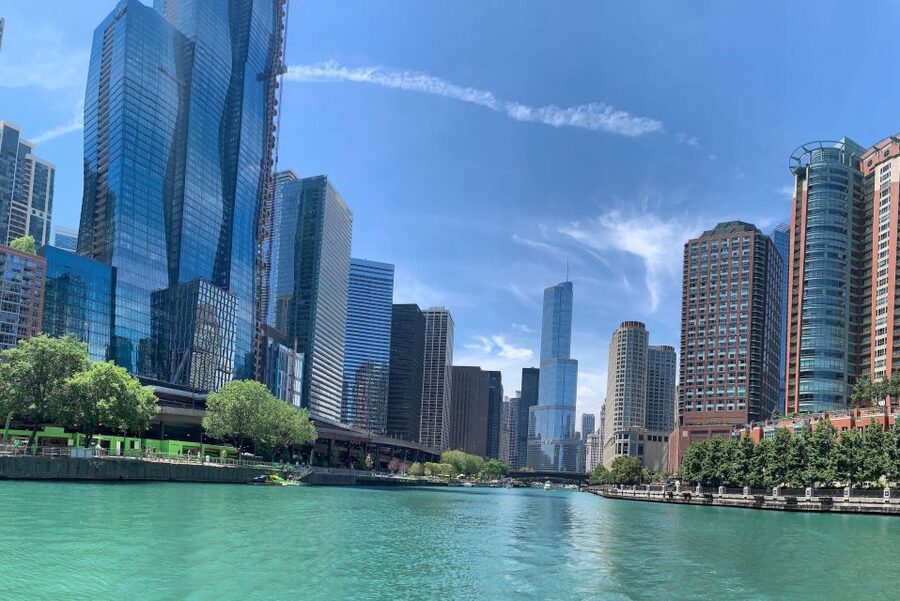
- Three river sections in 90 minutes: You travel the main branch, then continue along the north and south branches before returning toward Lake Michigan.
- A skyline lesson from 1880s beginnings to today: The commentary connects early skyscrapers, Art Deco landmarks, Miesian modernism, and new towers.
- Guides who use humor well: John, Sarah, Alex, Jack, Bobby, Lucas, and Scotty D are among the guides singled out for lively, clear commentary.
- Useful seating choices: Sit outside for wide photographs and fresh air, or use the heated and cooled interior when the weather turns sharp.
- Chicago snacks and drinks onboard: A cash bar offers local beer and spirits, along with Garrett’s Popcorn.
- A strong value at $44: You get a long city tour, changing views, and access to areas that are difficult to understand from street level.
Starting beneath the Wrigley Building
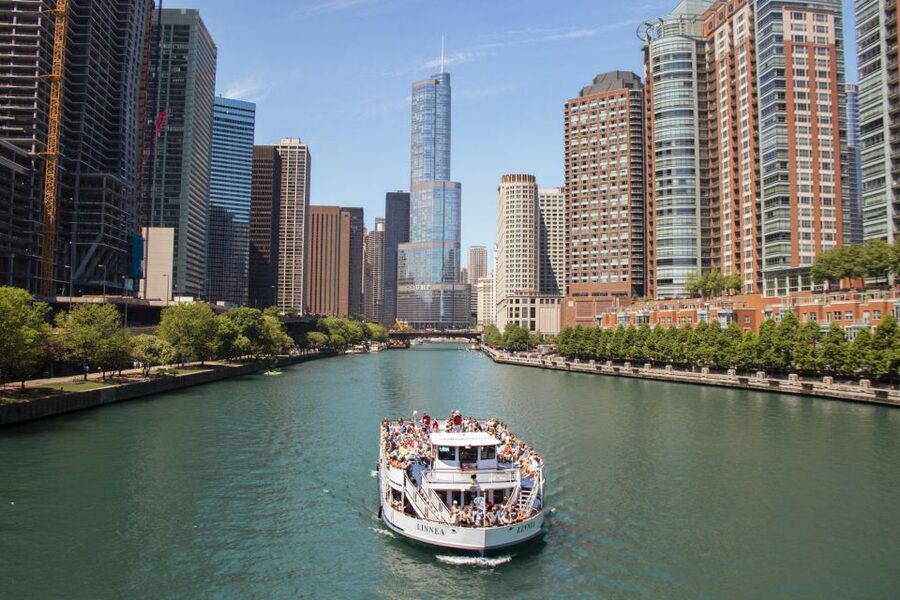
The cruise begins near the Michigan Avenue, or DuSable, Bridge. The closest address for most docks is 400 North Michigan Avenue, near the Wrigley Building. Check in with a dock employee there, since that person can direct you to the right boarding area.
The listed starting point is the Brainlab Training Center in Chicago, but the practical dock reference is the Michigan Avenue address. Pre-purchasing your ticket lets you skip the ticket line and protects your place on a popular departure. I would still arrive with enough time to find the boarding area and settle in before the boat leaves.
The vessel has open decks, indoor climate-controlled seating, restrooms, and diaper-changing tables. Bags can be searched, and pets are not allowed except for assistance dogs. You can bring your own non-alcoholic drinks and food, but alcohol and drugs are not allowed onboard.
Seats are not assigned. If you want the clearest view of the guide and the buildings, do not leave seating until the last moment. The front has an attractive grand staircase and good photo possibilities, but the very front may not be the best place for hearing every word.
More guided river trips in Chicago:
- Chicago River: Guided Sunset Cocktail & Architecture Tour
★ 4.6 · 203 reviews - Chicago River: 1.5-Hour Guided Architecture Riverboat Tour
★ 4.7 · 93 reviews - Chicago: Guided Tour with Architecture River Cruise
★ 4.5 · 20 reviews
The main river: Chicago’s architectural classroom
The first part of the ride follows the main branch of the Chicago River toward Wolf Point. This is the section most people picture when they think of a Chicago architecture cruise: tight river walls, bridges overhead, and tall buildings rising on both sides.
The setting helps you understand scale. From a sidewalk, a skyscraper can seem like an isolated object. From the river, you see how one building meets another, how towers frame older structures, and how the city keeps adding new layers without erasing the old ones.
The guide explains about 130 years of Chicago building history, with attention to design, engineering, and the city’s growth. The strongest part of this format is that you are not simply pointed toward famous buildings. You are given a reason to look at their shape, materials, age, and place in the skyline.
Chicago architecture is also easier to photograph from the water. The river gives you open sight lines that streets often lack. Keep your camera ready near bridges and at bends in the river, but listen too. A picture can show a tower. The guide helps you understand why it looks that way.
Marina City and the circular towers
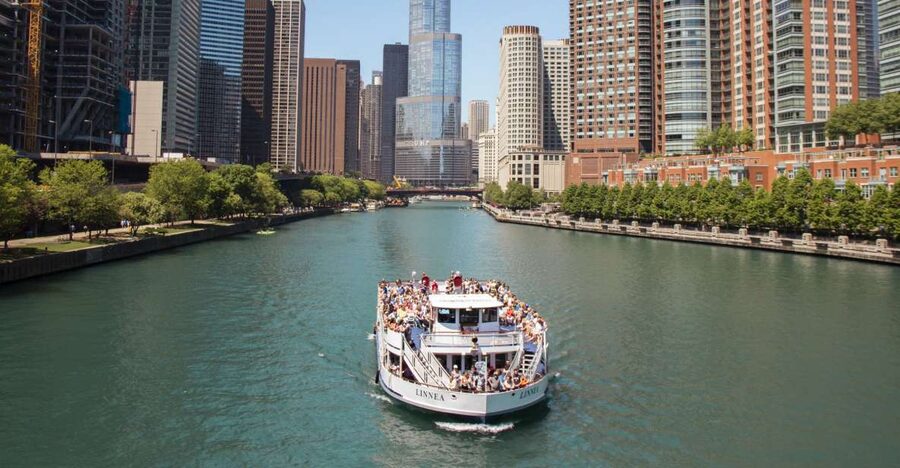
Marina City is one of the most memorable buildings along the route. Its round towers are instantly recognizable, and their unusual form gives the cruise an early lesson in how Chicago architects experimented with city living.
From the boat, you can study the repeated curved balconies and the way the towers rise beside the river. It is the kind of building that works better in three dimensions than in a quick street photograph. The river view lets you watch the towers change as the boat moves past them.
This is also a good moment to pay attention to the guide’s delivery. The best commentary on this cruise is not only about dates and names. Guides such as Alex, John, and Scotty D have been praised for adding jokes, questions, and small details that keep the information moving.
Merchandise Mart and Chicago’s working river
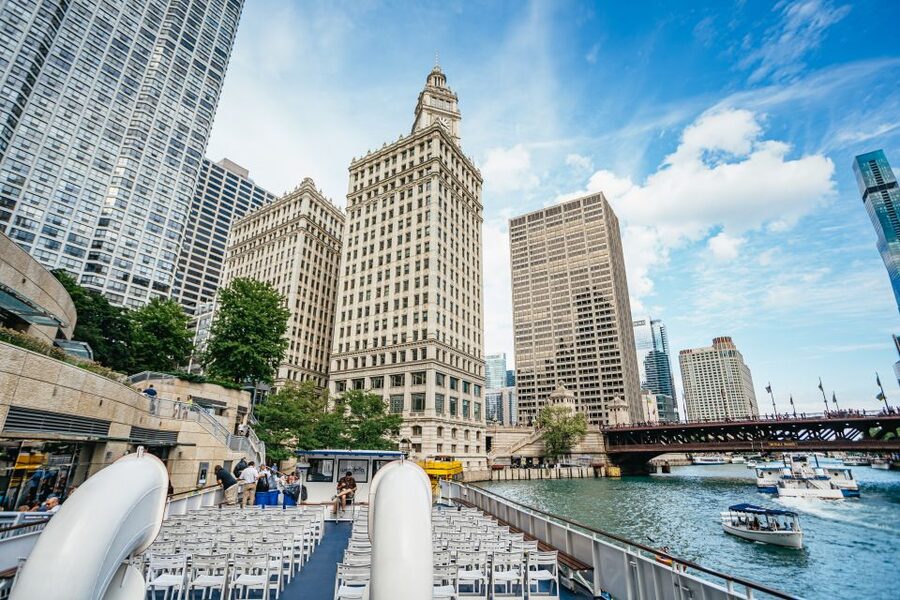
The Merchandise Mart brings a different mood. Its massive Art Deco form reflects Chicago’s commercial power and its long relationship with the river. The building feels broad and imposing rather than delicate, and its scale is easier to appreciate from the water.
As the boat passes, you get a sense of how the river once functioned as a practical working corridor, not just a scenic route. The guide uses buildings like this to explain how Chicago grew into a major business center.
The north branch then carries you toward Wolf Point. This section is useful because it gives you a wider view of the city’s changing skyline. Older commercial buildings, modern towers, and large developments appear in sequence, showing that Chicago’s architecture is not one fixed style.
The south branch offers another change in perspective. Instead of seeing only the most polished downtown facades, you get a fuller sense of the river’s route and the city’s spread. The tour’s inclusion of both branches is one of its biggest advantages over shorter cruises that stay near the central river.
A few more river trips around Chicago worth comparing
- Chicago Architecture River Cruise
★ 5.0 · 15,756 reviews - Chicago River 90-Minute Architecture Tour
★ 4.5 · 9,629 reviews - Chicago Architecture Center River Cruise aboard First Lady
★ 5.0 · 5,536 reviews - Chicago: Architecture River Cruise Skip-the-Ticket Line
★ 4.8 · 4,325 reviews
Willis Tower, the Board of Trade, and Chicago’s vertical ambition
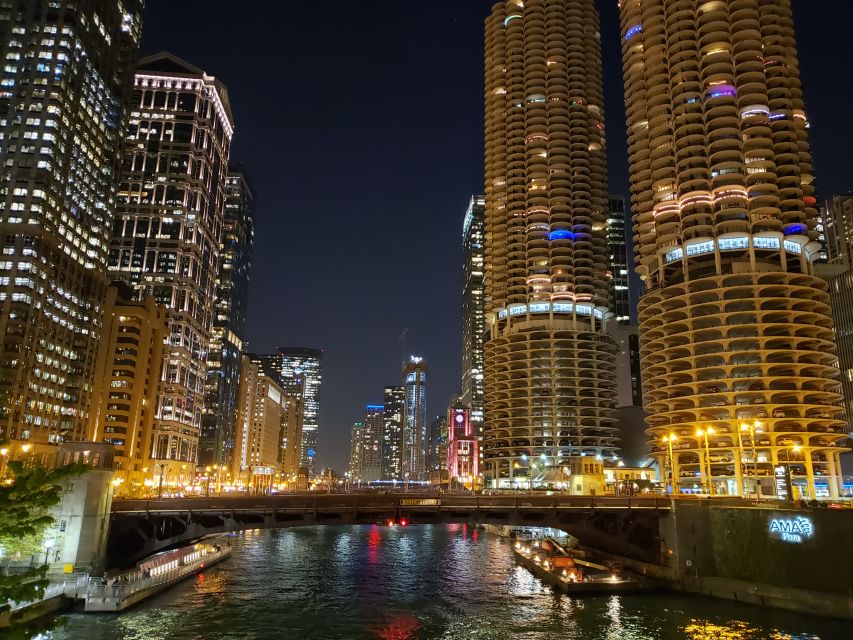
Willis Tower, still widely known by its former name, the Sears Tower, is one of the cruise’s major sights. It was once the tallest building in Chicago, and its size can be difficult to judge from the ground. From the river, the tower forms a strong reference point in the skyline.
The Chicago Board of Trade Building offers a sharp contrast. Its historic facade and formal appearance reflect an earlier age of finance and commerce. Seeing it in the same tour as Willis Tower makes Chicago’s architectural shifts easy to follow: solid classical forms give way to taller steel-and-glass structures.
You may already know the names of both buildings, but the boat changes your relationship with them. The guide can point out where they fit in the city’s development, while the changing angle from the river gives you views you would not get from a normal walking route.
Tribune Tower, the Wrigley Building, and early skyscraper style
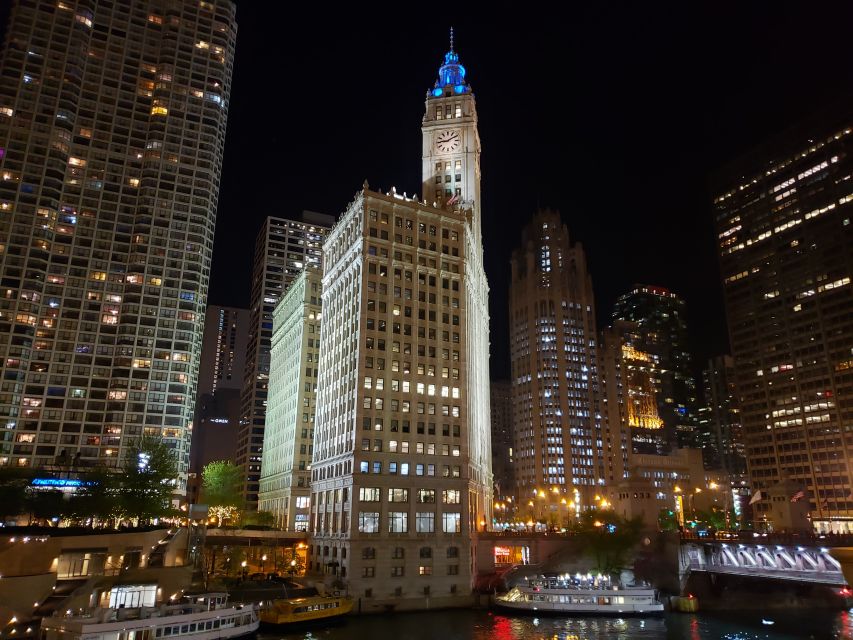
The Tribune Tower and Wrigley Building represent the ornate side of Chicago architecture. Their historic details make a useful contrast with the clean lines of later modernist towers.
The Wrigley Building is especially important as a visual marker because the cruise begins near it. Once you are on the river, it becomes part of the first chapter of the trip, helping you connect the dock, the bridge, and the buildings around you.
Tribune Tower rewards a slower look. From the water, you can examine its vertical emphasis and decorative treatment without being forced to cross busy streets. The guide’s stories give the building more meaning than a quick photograph from Michigan Avenue.
This is where the tour works best as a history lesson. Chicago is not presented as a collection of disconnected landmarks. The commentary links one period to another, showing how tastes and technology changed.
Aon Center, NBC Tower, and the modern skyline
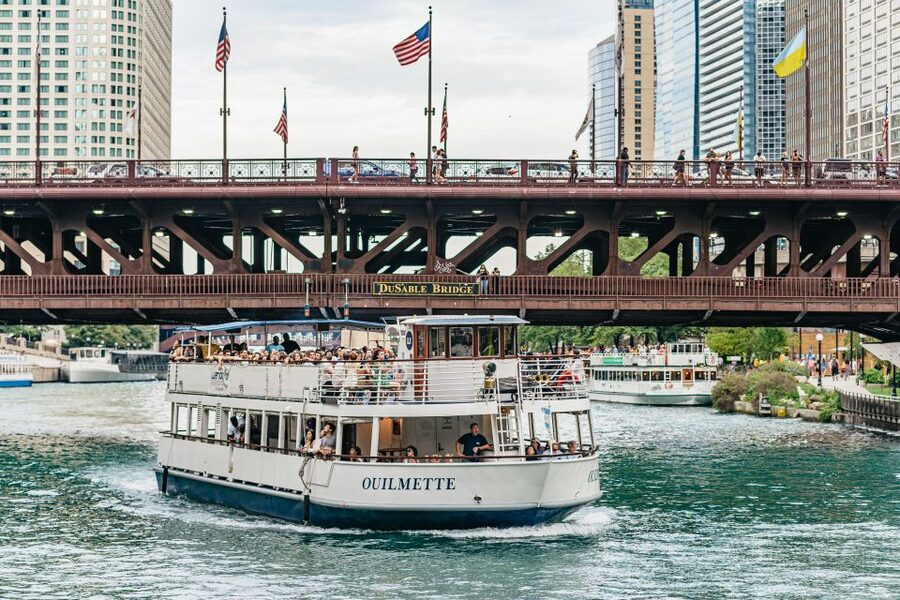
The Aon Center brings a tall, clean modernist form to the route. It helps you see how the city’s skyline moved away from heavy ornament toward simple planes and strong vertical lines.
The NBC Tower adds another style to the mix. Its design refers to older architectural traditions while functioning as a modern office building. This kind of contrast is exactly why I prefer seeing Chicago from the river. In a single view, you can compare buildings built decades apart.
Aqua at Lakeshore East pushes the skyline in a more recent direction. Its irregular balconies give the tower a rippling appearance, and the shape looks especially clear from the water. You are able to see how the building’s form affects its neighbors rather than viewing it as a lone tower.
Lake Point Tower offers another distinctive profile near the lakefront. These buildings show that Chicago’s architectural story did not stop with the classic downtown skyscrapers. The city continues to test new shapes and ideas.
Lake views and the return toward the Riverwalk
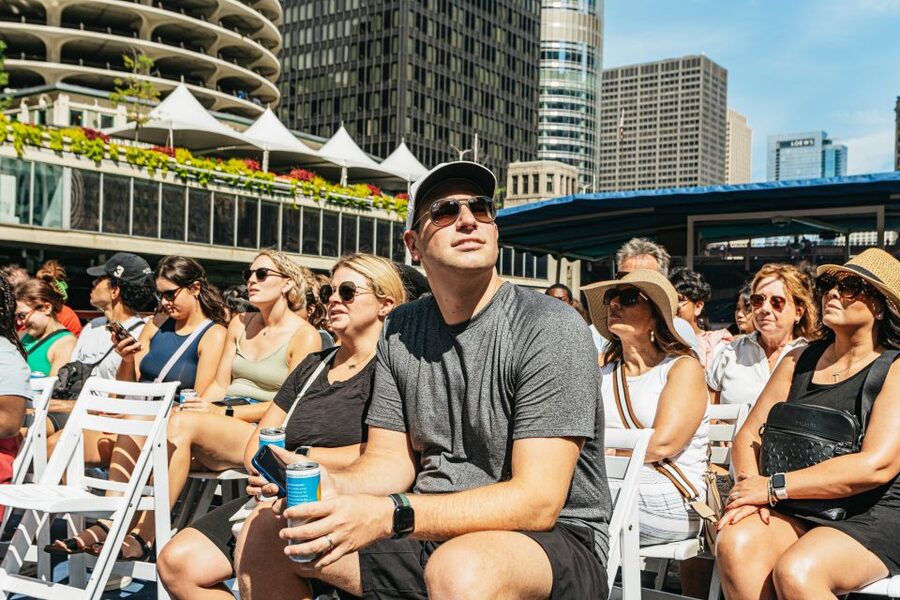
After the north and south branches, the boat returns along the river toward the Chicago Riverwalk and Lake Michigan. The change in direction matters. You see familiar buildings from a new angle, and the skyline opens up as the boat nears the lake.
The view toward the lake is one of the most scenic parts of the trip. A late afternoon or evening departure can add changing light to the buildings, while daylight gives you the clearest architectural detail. The cruise does not promise a particular sunset, so choose a time based on the type of view you want.
The stern and bow provide good places for photographs, and the grand staircase at the front gives you another memorable picture spot. Just remember that the most attractive photo position may not be the best place to hear the guide. For the fullest experience, I would listen from a central seat and move around during quieter stretches.
What the onboard service adds
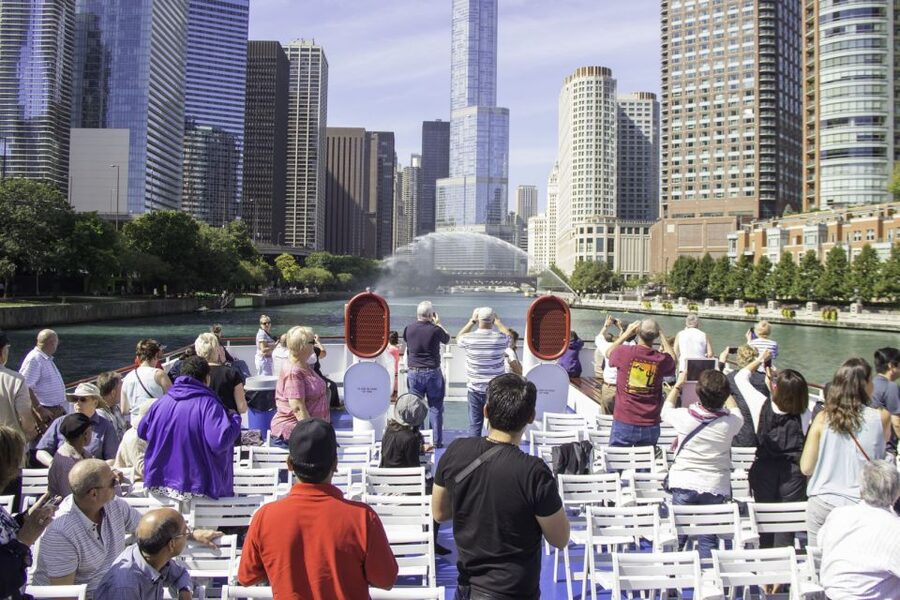
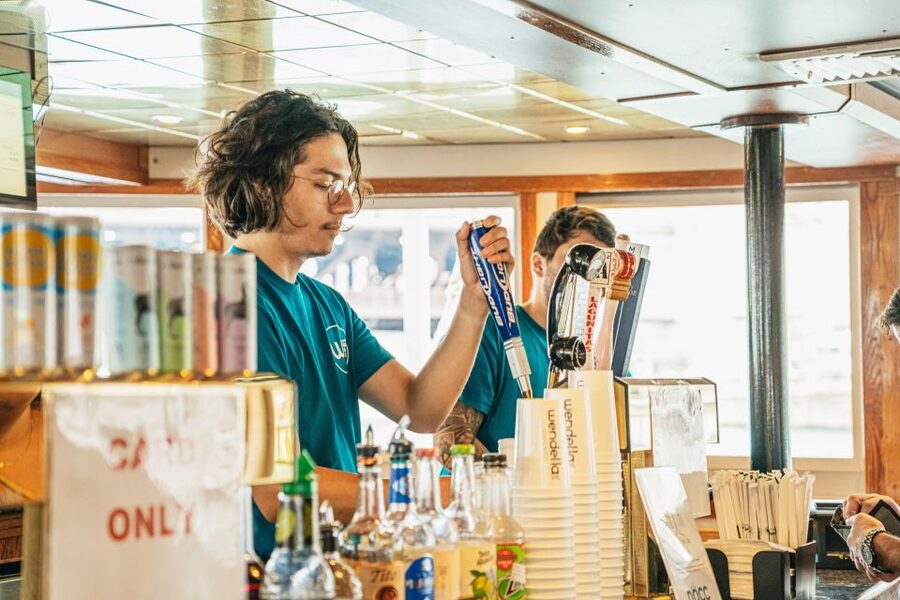
A full-service cash bar sells local beer, spirits, and other drinks, along with Garrett’s Popcorn. These are available for purchase, not included in the $44 ticket. You can also bring your own non-alcoholic beverages and food.
The bar is more than a minor convenience on a cold day. Several departures have been praised for giving passengers a warm indoor place to take a break between outdoor sections. If you visit in winter, the ability to step inside can make the difference between enjoying the commentary and spending the whole trip wishing it would end.
In warm weather, you may prefer the open deck for the air and wider photographs. The interior remains useful if rain, wind, or strong sun becomes uncomfortable. This flexibility makes the cruise practical across the year, not only during Chicago’s mildest months.
Guide quality matters more than the boat
The boat provides the views, but the guide determines how much you take away. This cruise has earned especially strong praise for guides who combine facts with humor. John has been described as funny and clear, Sarah as enthusiastic and well prepared, and Alex as engaging and insightful. Scotty D, Jack, Bobby, Lucas, Elisa, and Spearo have also received warm praise for making the trip lively.
That pattern matters because architecture tours can become dry when they rely only on names and dates. Here, you should expect stories about design, engineering, city growth, and the people behind the buildings, delivered in a friendly tone.
Sound is the main practical issue. Wind, engine noise, crowd movement, and your position on the boat can affect how well you hear. If the guide’s voice becomes hard to catch, move toward the central seating area or inside. I would not choose the far front simply for the photo opportunity.
Is $44 a fair price?
At $44 per person, the cruise costs more than a quick sightseeing ride, but you get 90 minutes of guided commentary and access to three river sections. You are also paying for a view of Chicago that would be difficult to recreate on foot.
The value is strongest if you want context, not just photographs. A shorter cruise may show the central skyline, while this route gives you a fuller sense of how the river connects different parts of the city. The open deck, indoor seating, restrooms, and bar add comfort, though snacks and drinks cost extra.
I would consider it good value for a first visit, an architecture fan, or anyone who wants a calm way to get oriented downtown. It is less compelling if you only want a quick ride or plan to spend the entire time indoors without looking closely at the buildings.
Who should book this Chicago River cruise?
You should consider booking if you want:
- A clear introduction to Chicago architecture
- A tour that works in cold weather as well as warm weather
- A guided experience with humor and historical detail
- Strong photo opportunities from the river
- A family-friendly activity, with children under three admitted free
- A relaxed way to see major landmarks without walking between them
It suits couples, families, architecture fans, and first-time visitors. The 90-minute length is long enough to feel substantial but short enough to fit beside museums, shopping, or a meal.
I would be more cautious if you need a quiet boat, dislike assigned-by-arrival seating, or have difficulty hearing live commentary in a busy setting. The tour is in English, and the guide is central to the experience.
Practical tips for a better cruise
Book ahead to avoid the ticket line and protect your place. Check the starting time carefully, since departures vary and availability changes.
Arrive early enough to find the dock near 400 North Michigan Avenue and choose your seat. Bring a layer even on a pleasant day. You can start outside, then move into the climate-controlled interior if the wind picks up.
Keep your camera ready, but do not spend all 90 minutes looking through it. The best part of the cruise is seeing how each building relates to the next. If you want to tip the guide, carry cash, since one passenger noted that a QR code or card option was not available.
Cancellation is free up to 24 hours before departure, and you can reserve now and pay later. That is useful when your Chicago schedule depends on weather or changing plans.
Should you book it?
Yes, if you want more than a skyline photo. At $44, this Wendella cruise gives you a long route, strong architectural coverage, indoor and outdoor seating, and guides who bring humor to the subject.
Choose an early or late departure based on your preferred light, arrive early for a good seat, and listen from a spot where the guide is easy to hear. If you do that, the Chicago River becomes more than a waterway. It becomes your clearest introduction to how this city grew upward.
FAQ
How long is the Chicago River architecture cruise?
The cruise lasts 90 minutes.
What parts of the river does the boat visit?
The boat travels along the main Chicago River, then continues along the north and south branches before returning toward the Chicago Riverwalk and Lake Michigan.
Where is the meeting point?
The closest address to most docks is 400 North Michigan Avenue, near the Wrigley Building. A dock employee can direct you to the boarding area.
Is seating assigned?
No. Seats on the decks are chosen on a first-come, first-served basis.
Is there indoor seating?
Yes. The vessel has a climate-controlled interior deck as well as open-air deck space.
Can I buy food and drinks onboard?
Yes. The boat has a full-service cash bar with local beer, spirits, and Garrett’s Popcorn. Beverages and snacks are not included in the ticket price.
Is the cruise available in English?
Yes. The live tour guide provides commentary in English.
Just added around Chicago
- Chicago River Sunday Funday Mimosa or Bloody Mary Party Cruise★ 4.0 · 18 reviews
- City Cruises Chicago: River Architectural Lunch Cruise★ 4.5 · 39 reviews
- Chicago By Night River & Lake Cruise★ 4.5 · 236 reviews
- Chicago River Architecture Tour Aboard a Historic Yacht★ 5.0 · 45 reviews
- Chicago River Cocktail Cruise★ 4.5 · 86 reviews
- Historical and Architectural Chicago Fireboat River & Lake Cruise★ 5.0 · 246 reviews
- Chicago River Architecture Tour and Big Bus Hop-on Hop-off Tour★ 4.0 · 38 reviews
- Magnificent Mile Tour With Optional 360 Chicago Upgrade★ 5.0 · 80 reviews
Chicago River Cruises, compared.
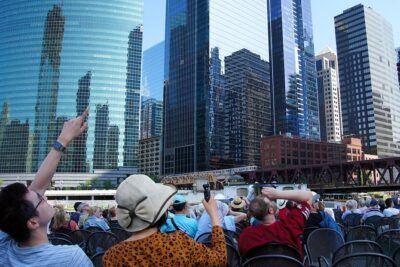
Chicago Architecture Center River Cruise aboard First Lady
Read our review →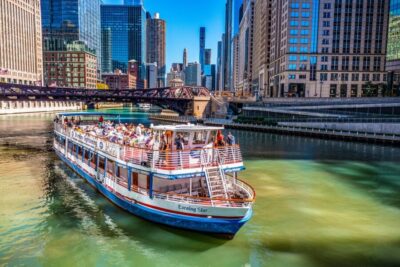
Architecture River Cruise Skip-the-Ticket Line
Read our review →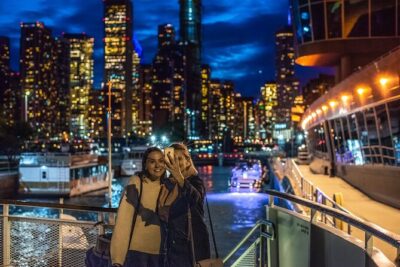
Chicago River 45-Minute Architecture Tour from Magnificent Mile
Read our review →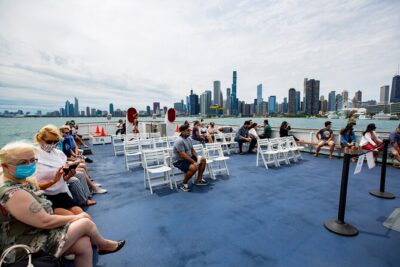
45-Minute Family-Friendly Architecture River Cruise
Read our review →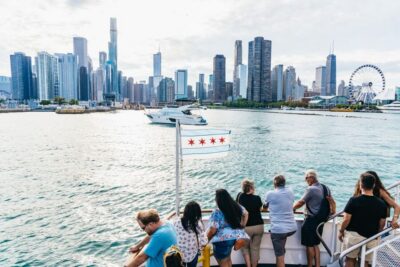
Browse the lists this tour appears in