
REVIEW · CAIRO
9 Days Private Guided Tour Treasures of Egypt Cairo & Nile Cruise & Abu Simbel
The Great Pyramid, a royal tomb built around 4,500 years ago, is only the beginning. This nine-day Egyptian itinerary links Cairo’s pyramids and museums with the temples of Luxor, a Nile cruise, Aswan, and the remarkable rock temples at Abu Simbel.
I like the private format, since your group can tour with its own vehicle and Egyptologist rather than follow a large coach. I also like the range: you get ancient monuments, Coptic Cairo, Islamic Cairo, and a slower stretch on the Nile. The tradeoff is pace. Nine days cover a lot of ground, and several sightseeing days begin early and run long.
Key points to know before booking
- Giza, Saqqara, and Memphis in one day: You see Egypt’s most famous pyramid, Djoser’s Step Pyramid, and the remains of the country’s first capital.
- Four nights of included dinners: Breakfast, six lunches, and four dinners are covered, which makes a packed schedule easier to manage.
- A private trip with only your group: Private transport and a qualified Egyptologist give you more room for questions and adjustments.
- Luxor and Aswan by Nile cruise: The cruise connects major temple sites while giving you a break from Cairo’s traffic and crowds.
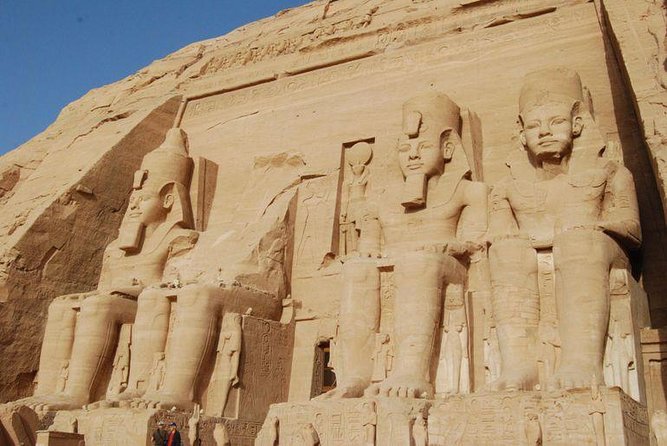
- Abu Simbel is included: The five-hour visit is a major reason to choose this itinerary over a shorter Nile program.
- Cairo bookends the journey: You begin and end in Cairo, with airport transfers included on arrival and departure.
Why this nine-day route works
This trip is built for a first visit to Egypt when you want the major sights handled in one organized package. You do not have to arrange separate transport between Cairo, Luxor, Aswan, and Abu Simbel, or work out how to fit the museums and religious sites around a cruise schedule.
The route also gives you useful contrast. Cairo introduces the scale and noise of modern Egypt. Luxor brings you face to face with temples and royal tombs. Aswan feels like a quieter finish beside the Nile, while Abu Simbel provides the grand final ancient site before you return to Cairo.
The price is $2,795 per person. That is not a bare sightseeing package. It includes private transport, a qualified Egyptologist, entrance fees for the listed attractions, eight breakfasts, six lunches, and four dinners. To judge the value, compare it with the cost and effort of arranging several guided day trips, domestic flights, cruise accommodation, meals, and admission tickets separately.
You should still ask for the exact hotel and cruise names before paying. The supplied details confirm the itinerary and included meals, but they do not identify the properties or ship. Those details matter, especially if you care about room location, cabin size, or the level of onboard service.
More Nile cruises in Cairo:
- Cairo: Dinner Cruise on the Nile River with Entertainment
★ 4.2 · 2,190 reviews - Cairo: Nile Sunset Dinner Cruise, Show & Optional Transfer
★ 4.1 · 2,184 reviews - Luxury Felucca on the Nile with Lunch
★ 5.0 · 994 reviews
Day 1: A simple arrival in Cairo
Your arrival day is deliberately light. An assistant meets you, helps with arrival formalities, and transfers you to your Cairo hotel.
That is useful after an international flight. You are not expected to visit a monument or begin a long sightseeing day immediately. The practical question is your arrival time, since the schedule says assistance is available on arrival but gives no fixed sightseeing activity for this day.
Use the evening to rest and prepare for an early start. The main touring begins the next morning, with Giza, Saqqara, and Memphis packed into one substantial day.
Day 2: Giza, Saqqara, and the first capital
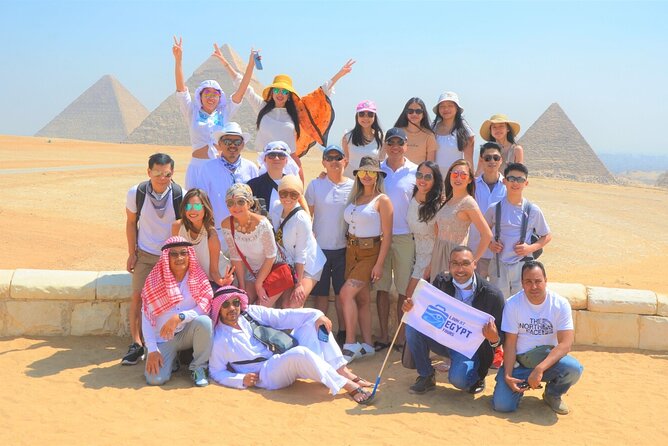
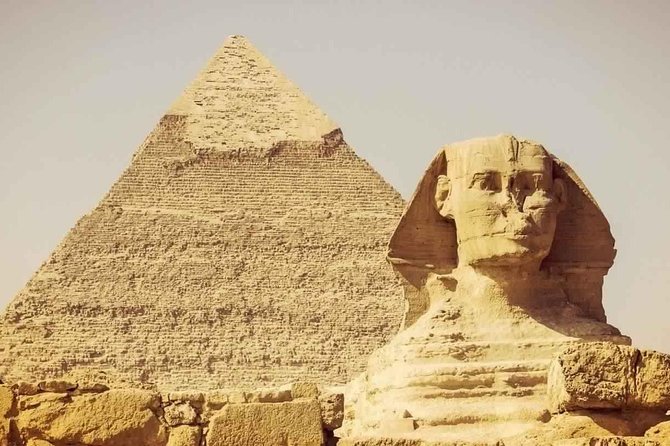
Giza is the obvious headline. You see the Great Pyramid, the other pyramids on the plateau, and the Sphinx, with time listed for the wider Giza Plateau visit. The tour also includes entry to a queen’s pyramid, giving you more than the usual roadside photo stop.
The scale is difficult to grasp from pictures. The pyramids were built between roughly 2590 BC and 2480 BC, and the Sphinx is one of the largest monolithic statues from the ancient world. Your guide can provide the essential context while you concentrate on the stones, angles, and sheer size.
The Giza visit is also your busiest photo stop. Bring water, wear practical shoes, and expect sun exposure. The supplied schedule allows three hours here, but the actual rhythm can depend on traffic, site conditions, and how much time you spend at the pyramid interiors.
Saqqara changes the story. Djoser’s Step Pyramid is an early experiment in large-scale stone construction, formed from stacked levels rather than the smooth-sided shape associated with Giza. The site has tombs and monuments spread across a broad area, so this is not simply a second pyramid photo opportunity.
You then continue to Memphis, ancient Egypt’s first capital. Today’s visit centers on the Mit Rahina Museum and the remains around it. This stop is smaller and less visually complete than Giza, but it helps explain how the old capital connected the pyramid fields and the Nile Valley.
I like this day because it moves from the most famous monument to earlier and less familiar stages of Egyptian building. The drawback is the amount of ground covered. If you want long, quiet visits inside tombs or pyramids, you may find the schedule brisk.
Day 3: Museum treasures and Cairo’s older quarters
The Egyptian Museum gives you three hours with a collection of about 120,000 ancient Egyptian objects, although only a portion is displayed at any one time. That scale can feel overwhelming, so your guide’s explanations are especially useful here.
Do not expect to absorb every room. Instead, use the visit to understand the range of Egyptian art, burial objects, sculpture, and everyday items across different periods. Three hours is enough for a guided overview, though not enough for every collection.
Khan el-Khalili brings a sharp change of scene. This historic souk is a place to browse, watch daily commerce, and buy souvenirs. Give yourself permission to look without purchasing. If you do shop, agree on prices before accepting an item, and keep your belongings close in crowded lanes.
The final stop is Coptic Cairo. The area includes the Babylon Fortress, the Coptic Museum, the Hanging Church, and the Greek Church of St. George. The tour also connects the district with the Christian tradition that the Holy Family visited the area.
The one-hour visit listed for Coptic Cairo is enough for a guided introduction, but not for every church and museum in detail. I like that this day does not treat Egypt as only a pharaohs-and-pyramids destination. You also see Islamic Cairo and Christian Cairo, which gives the capital a fuller human story.
More guided river trips in Cairo:
- 8 Days Essential Egypt Tour Cairo & The Nile With Hotels & flights & Guide Inc
★ 5.0 · 13 reviews - Chicago River: 1.5-Hour Guided Architecture Cruise
★ 4.8 · 8,046 reviews - Mekong Delta Guided Tour from Ho Chi Minh City
★ 4.5 · 7,192 reviews - Québec City: Guided Sightseeing River Cruise
★ 4.4 · 3,000 reviews
Day 4: Karnak and Luxor after the Cairo transfer
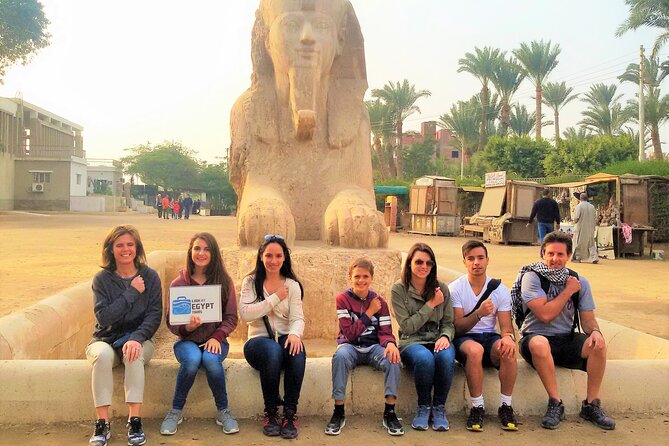
The itinerary moves to Luxor for two major east-bank temples. Karnak is the larger and more sprawling site, with construction linked to Amun and a history reaching back to around 2000 BC.
Three hours at Karnak gives you time to walk through its courtyards, columns, and ceremonial spaces with a guide. The scale can make the site feel like a city rather than a single temple. Listen for the explanation of how different rulers added to the complex over time, since that helps you read the layers instead of seeing only rows of stone.
Luxor Temple is more compact and was built around 1400 BC. Its position in the modern city makes it feel different from Karnak. You are looking at an ancient religious center while also being close to present-day Luxor.
Two hours here is a sensible amount of time for the main route. The day remains demanding, especially if it includes travel from Cairo and cruise boarding arrangements. Confirm how the Cairo to Luxor transfer is handled, since the supplied schedule names the sights but does not specify the transport method for this leg.
Day 5: Royal tombs on Luxor’s west bank
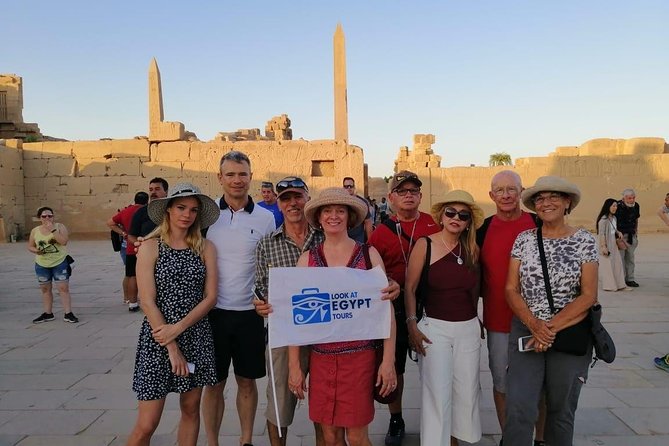
The Valley of the Kings is one of the strongest days of the trip. Pharaohs were buried here in tombs cut into the desert hills, and the valley is divided into East and West Valleys.
Your admission includes the site, but entrance rules for individual tombs can vary, and special tomb tickets may not be part of the package. Ask your guide which tombs are included on the day. The three-hour visit gives you time to enter several tombs if available, but heat, stairs, and narrow passageways can make the experience physically tiring.
The Temple of Hatshepsut follows. Its terraces sit below the cliffs at Deir el-Bahari, creating one of Luxor’s most striking settings. The temple tells the story of Hatshepsut, an Eighteenth Dynasty pharaoh, and differs from the underground tombs in both shape and atmosphere.
You finish at the Colossi of Memnon, two huge statues of Amenhotep III. The visit lasts about 40 minutes and is free, making it a short stop rather than a full attraction. It works well as a final look across the Theban Necropolis before returning to the cruise or hotel.
Take a hat, water, and shoes with good support. This is one of the days when the private vehicle matters. You can move between the west-bank sites without having to arrange each transfer yourself.
Day 6: Edfu and Kom Ombo by Nile
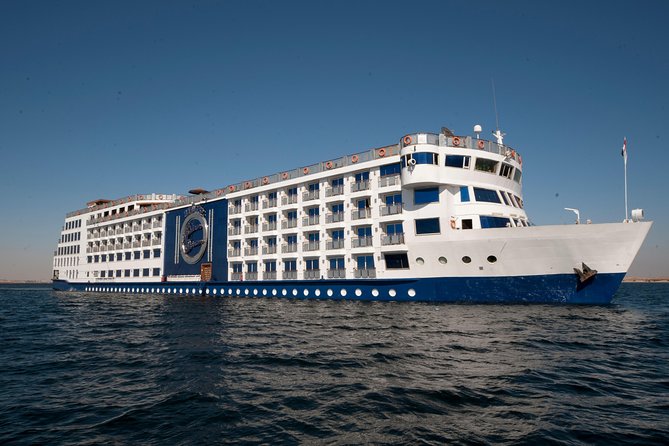
The Nile cruise becomes the main setting on this part of the journey. At Edfu, you visit the Temple of Horus, a Ptolemaic-era temple known for its strong preservation. The three-hour visit lets you study the reliefs, courtyards, and large architectural plan.
Edfu is valuable because the building remains clear enough for you to imagine how the temple functioned. Your guide can help separate the original religious purpose from the later layers of history.
Kom Ombo is unusual because it is a double temple. One side was dedicated to Sobek, the crocodile god, while the other honored Horus the Elder. The two-hour visit gives you time to see how the shared design reflects two religious traditions in one complex.
Cruising between sites is the pleasant idea behind this itinerary, but a cruise is not pure leisure. Boarding times, guided walks, and fixed meal schedules shape your day. Still, the water journey provides a needed pause after Cairo’s road traffic and Luxor’s long sightseeing hours.
Day 7: Abu Simbel and Philae
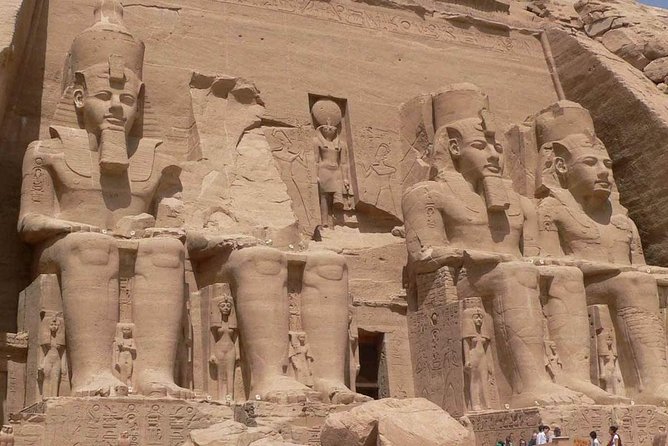
Abu Simbel is the farthest major excursion and one of the tour’s biggest advantages. The two temples were cut into rock near Lake Nasser, about 230 kilometers southwest of Aswan and close to the Sudanese border.
The schedule allows five hours, which covers the long outing and temple visit. The statues and facades are the main visual draw, but the site also carries a modern engineering story because the temples were relocated when the Aswan High Dam created Lake Nasser. That combination of ancient construction and modern preservation makes Abu Simbel unlike the other stops.
The trip is long, so do not choose this program expecting a relaxed morning. The reward is a pair of monuments that many shorter Egypt tours omit.
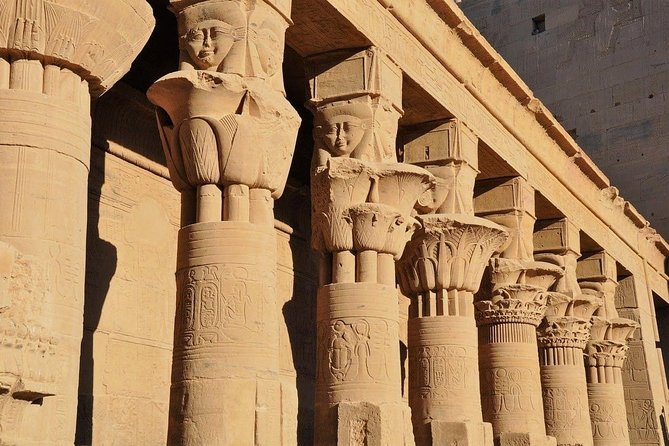
Philae offers a gentler contrast. The original temple complex was moved to an island in the reservoir of the Aswan Low Dam after the area was threatened by rising water. The two-hour visit gives you time to explore a site shaped by both ancient worship and modern conservation.
Together, Abu Simbel and Philae make a strong final sightseeing day. You get the distant monumental site and then a more measured temple visit near Aswan.
Day 8 and Day 9: Back to Cairo and home
After breakfast on the cruise, you check out and fly back to Cairo. A transfer takes you to your Cairo hotel, leaving time to relax rather than adding another major attraction.
The next day is departure. A transfer to Cairo International Airport is arranged around your final flight time.
The final Cairo night may feel like spare time, but it is useful. This schedule does not force another long tour before your flight, and it gives you a buffer after the cruise and domestic flight. Since no additional Cairo activity is listed, make sure you understand whether the hotel night on Day 8 is included in the package and which hotel will be used.
Meals, guides, transport, and pace
A qualified Egyptologist accompanies the sightseeing program, and private vehicle transport is included. The private setup is valuable in Egypt because long transfers and busy roads can wear you down. You are also touring with only your own group, not joining a public group.
The published meal allowance is eight breakfasts, six lunches, and four dinners. That covers much of the trip, but not every meal, so budget for additional food and drinks. Tipping for guides and drivers is not included.
The experience has used three guides during the nine-day program, according to the supplied guest account. That can mean each guide knows a particular area well, though some people prefer one guide for the entire trip. No guide names are provided, so ask who will lead each city before departure if that matters to you.
The tour is marked suitable for most people, but children must be accompanied by an adult. The long days, heat, stairs in tombs, and walking around temple complexes make comfortable footwear important.
Is $2,795 a good value?
For nine days, the cost is reasonable if you value organization and private touring. You are paying for the guide, private transport, site admissions, many meals, the cruise portion, airport transfers, and the connections between widely separated places.
The price is less attractive if you only want Cairo and Giza, since those can be visited with a shorter local program. It becomes more worthwhile when you use the full route, especially Abu Simbel, the Nile cruise, and the multiple Luxor sites.
Before booking, confirm the hotel category, cruise vessel, internal flight details, and exactly which pyramid and tomb admissions are covered. These are not minor points. They determine how comfortable the trip feels and how much extra you will spend.
The cancellation terms allow a full refund when you cancel at least six full days before the start time. A cancellation two to six days ahead receives a 50 percent refund, while cancellation less than two days ahead is not refunded.
Should you book this Egypt tour?
Book it if you want Egypt’s main ancient sites in one private, guided route and you are comfortable with early starts, long touring days, and a fixed schedule. The strongest reasons are the broad coverage, included Abu Simbel visit, Nile cruise, private vehicle, and entrance fees.
Choose a shorter or more flexible plan if you prefer unhurried museum visits, independent meals, or several free days. For a first visit, though, this route gives you a useful sweep from the pyramids to the pharaohs’ tombs, from Cairo’s religious quarters to Aswan’s river islands. Ask for the hotel and ship details first, then book if the program’s pace suits you.
FAQ
How long is the tour?
The private tour lasts approximately nine days.
Where does the tour begin?
The tour begins in Cairo, with arrival assistance and a transfer to your Cairo hotel.
Is this a private tour?
Yes. Only your group participates in the activity.
What time does the tour start?
The listed start time is 8:00 am.
Are entrance fees included?
Yes. Entry fees for all mentioned sites are included.
Are meals included?
The package includes eight breakfasts, six lunches, and four dinners.
Is a qualified Egyptologist included?
Yes. A qualified Egyptologist guide is included.
Is Abu Simbel included?
Yes. The itinerary includes the Abu Simbel Temple Complex, with about five hours allocated to the visit.
Are tips included?
No. Tips for guides and drivers are not included.
Just added around Cairo
- Private Egyptian Felucca Ride On The Nile With traditional lunch★ 4.0 · 63 reviews
- Tour to Giza pyramids Memphis Sakkara and Felucca on the Nile★ 5.0 · 16 reviews
- Private 60 min Felucca Ride on Nile and lunch in Cairo★ 5.0 · 35 reviews
- Cairo Private layover tour Giza pyramids,sphinx&Nile Felucca Boat★ 4.5 · 13 reviews
- 8 Day Stunning Cairo Pyramids and Nile cruise and Hurghada All inclusive★ 5.0 · 43 reviews
- Cairo Dinner Cruise show with belly dancer show on Nile river★ 4.5 · 20 reviews
- Private Day Tour to Giza Pyramids, Sphinx & Saqqara + Luxury Nile Dinner Cruise★ 5.0 · 12 reviews
- 1 -Hour Sailing Egyptian felucca ride on the Nile in Cairo★ 4.5 · 41 reviews
Cairo River Cruises, compared.

Dinner Cruise on the Nile River with Entertainment
Read our review →
Nile Sunset Dinner Cruise, Show & Optional Transfer
Read our review →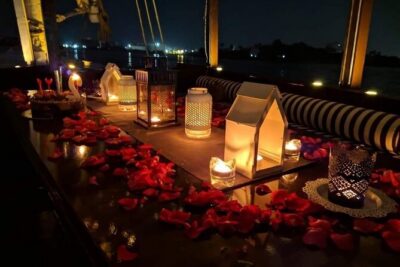
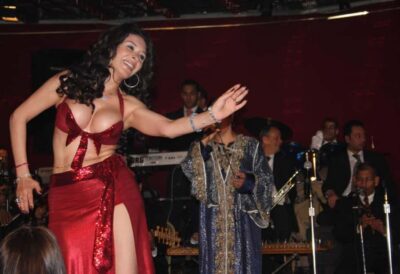
Nile Dinner Cruise with Belly Dancer Show with Pickup
Read our review →

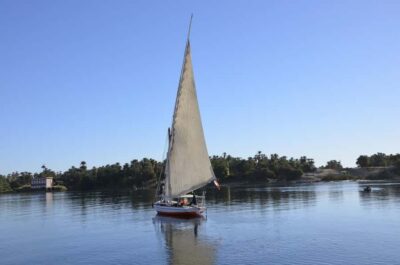
1 or 2-Hour Felucca Ride on the Nile with Transfers
Read our review →Browse the lists this tour appears in