
REVIEW · CAIRO
8 Days Essential Egypt Tour Cairo & The Nile With Hotels & flights & Guide Inc
Egypt in eight days means moving quickly, but this tour makes a sensible choice: it links Cairo’s pyramids and museums with a three-night Nile cruise and the temples of Upper Egypt. The result is a broad first look at the country, with airport help, hotel transfers, domestic flights, and a private guide included.
I like two things right away. First, the route covers the essential sights without making you arrange trains, flights, hotels, and port transfers yourself. Second, the private format lets your group travel with its own Egyptologist guide. Guides named in past trips include Amr Moses, Mustafa, Muhammed, Mahmood, and Amr, though your assigned guide may differ. The drawback is the pace: Cairo, Aswan, Luxor, and several major temples arrive in one tightly packed week.
Key points at a glance
- Three nights on the Nile: Full-board cruising connects Aswan with Kom Ombo, Edfu, and Luxor while you unpack only once.
- Private touring: Your group has its own Egyptologist guide rather than joining a large shared coach.
- Domestic flights included: Flights from Cairo to Aswan and Luxor to Cairo save long overland journeys.
- Cairo’s major sights: You visit Giza, Saqqara, Memphis, the Egyptian Museum, Coptic Cairo, and Khan Al-Khalili.
- Upper Egypt’s headline temples: Philae, Kom Ombo, Edfu, Karnak, Luxor Temple, and the Valley of the Kings fill the middle of the trip.
- Strong service focus: The package includes airport assistance, transfers, hotel and port pickup, and an escort for departure.
Why this eight-day Egypt route works
Egypt can be awkward to arrange independently. The sights are spread across a huge distance, domestic flights can complicate a short trip, and the best-known monuments require context to make sense. This package puts those pieces together for you.
The route also has a good visual rhythm. Cairo begins with giant stone monuments and crowded city streets. Then the Nile cruise slows the trip down, at least slightly, as temples appear along the river. Luxor finishes with some of Egypt’s most impressive ancient sites.
At $2,675 per person, the price is not a shoestring deal, but it includes substantial services: four nights in a five-star hotel, three nights on a full-board cruise, two domestic flights, meals listed in the package, transfers, airport assistance, and a private Egyptologist guide.
You should read the airfare wording carefully. The included flights are Cairo to Aswan and Luxor to Cairo. Your international flights to and from Egypt are not listed among the inclusions. Tips for guides, drivers, and assistants are also extra.
More Nile cruises in Cairo:
- Cairo: Dinner Cruise on the Nile River with Entertainment
★ 4.2 · 2,190 reviews - Cairo: Nile Sunset Dinner Cruise, Show & Optional Transfer
★ 4.1 · 2,184 reviews - Luxury Felucca on the Nile with Lunch
★ 5.0 · 994 reviews
Day 1: Cairo arrival with help at the airport
The first day is intentionally light. Staff meet you on arrival and provide visa assistance, then help get you settled for the Cairo portion of the trip.
That support matters after a long international flight. Past arrangements have included staff meeting visitors with name signs and helping from airport arrival through departure. The exact staff member can vary, but the service model is designed to keep you from handling every airport and transfer detail alone.
There is no major sightseeing scheduled on this day. That is sensible. Cairo is a large, demanding city, and you will appreciate having a quiet start before the monuments begin.
Day 2: Giza, Saqqara, and ancient Memphis
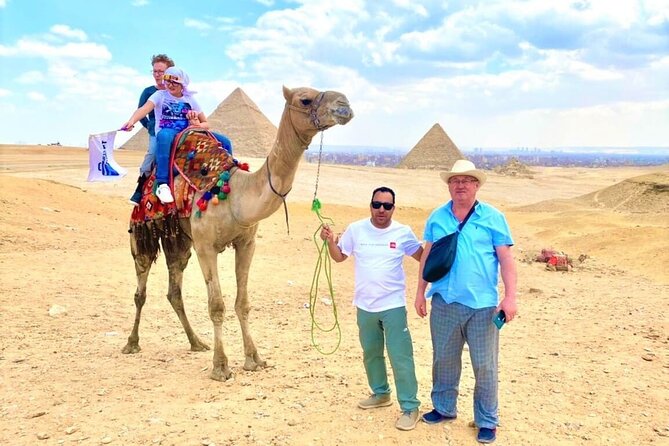
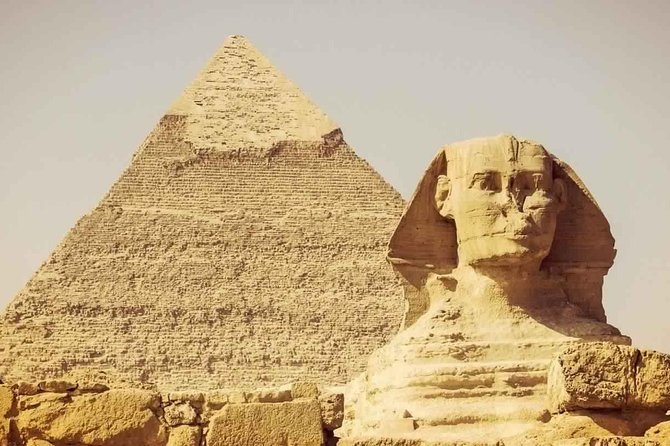
The first sightseeing day goes straight to Egypt’s most famous image: the Great Pyramids of Giza and the Sphinx. You have about three hours here, with admission included.
Giza is not just a quick photo stop. You can take in the scale of the pyramids, see the Sphinx from the plateau, and listen as your guide explains how the site functioned as a royal burial complex. The Great Pyramid is the only surviving monument of the ancient Seven Wonders, so this is one of those places that deserves a little time simply for its physical presence.
Still, three hours can feel short if you want to enter a pyramid, explore every viewpoint, and linger at the Sphinx. Ask your guide early how the time will be divided. Any special entry tickets or extras should be confirmed before the visit.
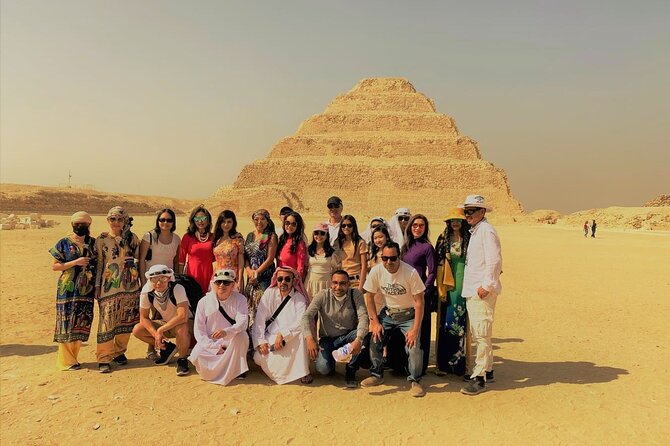
Saqqara follows, with another three hours listed. This is where the tour moves beyond the famous postcard. The Step Pyramid of Djoser, designed by Imhotep, is generally regarded as Egypt’s earliest large stone pyramid complex. Its six rising levels show an important stage in the development of pyramid building.
Saqqara is valuable because it gives you a sense of experimentation. The smooth-sided pyramids of Giza did not appear fully formed. Here, you see an earlier design and a broader funerary site, with tombs and monuments spread across the desert.
The day ends at the Mit Rahina Museum, near the remains of Memphis. Memphis served as an ancient capital of Lower Egypt, and the museum helps connect the grand monuments with the city that once administered much of the country. One hour is enough for a focused visit, though anyone fascinated by archaeology may wish for longer.
This is a demanding day in the sun. Wear a hat, carry water, and use comfortable shoes. The attractions are not all in one compact complex, so road time between them is part of the experience.
Day 3: Cairo’s museum, churches, and market
Day three gives you a useful change of pace. Instead of more desert monuments, you see objects, neighborhoods, and living parts of old Cairo.
The Egyptian Museum receives about three hours. Its collection contains around 120,000 ancient Egyptian items, with only a portion on display at any one time. Three hours lets your guide create a manageable route through a very large collection rather than leaving you to wander without a plan.
The museum is especially useful after Giza and Saqqara. You have already seen the monuments, so the objects inside can help explain how rulers, priests, artists, and ordinary workers fit into the larger culture. The volume of material can be tiring, and this is a place where a focused guide makes a real difference.
Next comes Coptic Cairo, scheduled for two hours. The area includes the Babylon Fortress, the Coptic Museum, the Hanging Church, the Greek Church of St. George, and other historic churches. This part of the trip reminds you that Egyptian history did not end with the pharaohs.
The final stop is Khan Al-Khalili, Cairo’s historic bazaar district. Admission is free, and two hours gives you time to look around, shop, and watch daily life unfold. This is a good place to slow down, but you should keep your expectations realistic. It is a busy commercial area, not a quiet archaeological site.
Your guide can help you understand prices and steer you toward the parts of the market that fit your interests. If you dislike shopping stops, say so clearly. The private format gives your group more room to shape the time than a large fixed coach tour would.
More guided river trips in Cairo:
- 9 Days Private Guided Tour Treasures of Egypt Cairo & Nile Cruise & Abu Simbel
★ 5.0 · 11 reviews - Chicago River: 1.5-Hour Guided Architecture Cruise
★ 4.8 · 8,046 reviews - Mekong Delta Guided Tour from Ho Chi Minh City
★ 4.5 · 7,192 reviews - Québec City: Guided Sightseeing River Cruise
★ 4.4 · 3,000 reviews
Day 4: Flying south and visiting Philae
The itinerary moves to Aswan by domestic flight, then to Philae Temple. The flight is included, which is one of the package’s strongest practical features. A long journey by road or rail would eat up valuable sightseeing time during an eight-day trip.
Philae sits on Agilika Island, about 12 kilometers south of Aswan. The temple complex was devoted mainly to Isis and remained a sacred place through the Greek, Roman, and Byzantine periods. You can see those layers in the architecture and decoration.
The site also carries a modern conservation story. Rising water threatened the original island, and an international rescue project moved the monuments block by block to their present setting. That fact adds meaning to the visit: you are not simply seeing an old temple, but a place saved from flooding and reconstructed with great care.
The planned visit lasts about five hours, making it one of the fuller stops on the itinerary. The day may feel tiring after the flight, but Philae rewards a slower visit. Ask your guide how the transfer and temple time are organized, since the listed stop includes the broader excursion, not just time among the columns.
Optional excursions to Abu Simbel and a Nubian village may be available on request. They are not part of the listed included visits, so confirm the extra cost, timing, and transport before adding either one. Abu Simbel in particular can change the pace of an already busy schedule.
Day 5: Sailing past Kom Ombo to Edfu
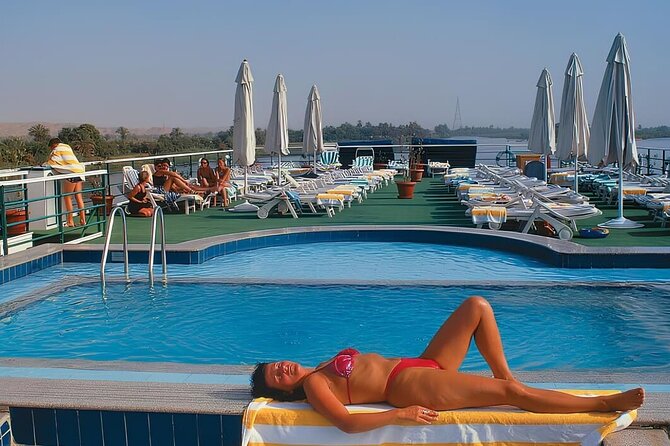
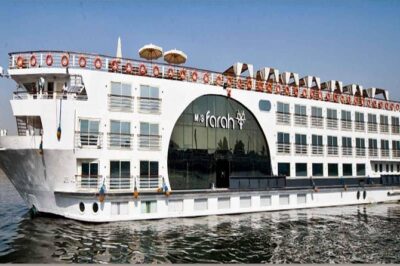
The Nile cruise now becomes the center of the trip. Three nights are included on a full-board vessel, listed as the Crown Jewel, Blue Shadow, or a similar ship. The exact ship matters because cabins and onboard facilities can differ, so confirm the assigned vessel before departure.
Kom Ombo is an unusual double temple built during the Ptolemaic period, from 180 to 47 BC. One section honors Sobek, the crocodile god, while the other is linked with Horus the Elder. The paired design gives your guide an easy way to explain how different cults and religious traditions could share one sacred complex.
The scheduled visit lasts two hours. That is enough to see the major carvings and layout without turning the stop into an all-day archaeology lesson. The riverside setting also makes Kom Ombo feel different from the inland monuments around Cairo.
Edfu Temple follows, with about three hours listed. Built between 237 and 57 BC, it is dedicated to Horus, the falcon-headed god. Sand buried much of the temple after the ancient cult ended, helping preserve its walls and roof.
That intact roof is the main reason Edfu feels so atmospheric. You get a stronger sense of what an ancient temple interior looked like than at many roofless sites. The carvings and inscriptions are also unusually complete, giving your guide plenty to explain.
The cruise itself provides breathing room between visits. Meals included are breakfast, lunch, and dinner for the listed cruise nights, so you are not constantly searching for food while moving between sites. You should still expect an active schedule, not a luxury retreat with long empty afternoons.
Day 6: Karnak, Luxor Temple, and the royal tombs
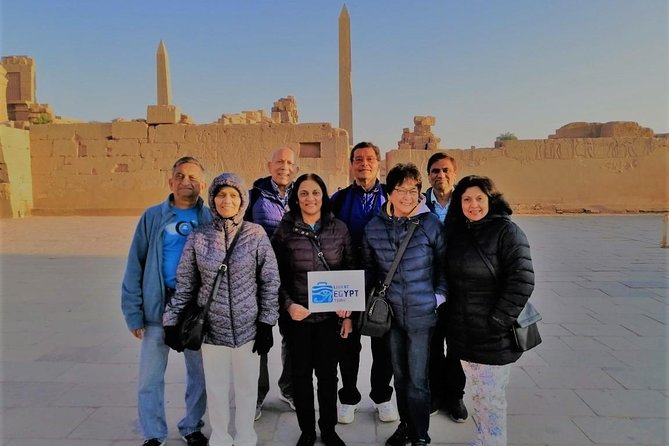
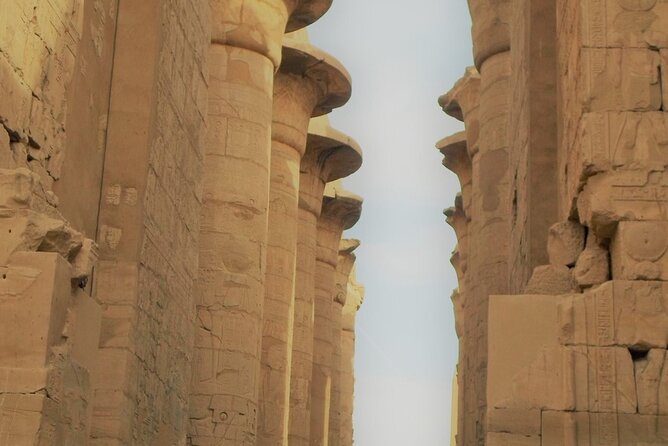
Day six packs in Luxor’s biggest attractions. It begins at Karnak Temple, a vast complex dedicated mainly to Amun and developed over many centuries. Two hours gives you time to see major areas such as the grand processional spaces and towering columns, though the site is large enough to reward a longer visit.
Luxor Temple follows for another two hours. Built around 1400 BCE, it sits in the modern city on the east bank of the Nile. Its location gives it a different feel from Karnak, which is more expansive and spread out.
Together, Karnak and Luxor Temple explain how ancient Thebes functioned as a major religious center. Your guide’s storytelling matters here because the scale can otherwise become a blur of columns, statues, and broken walls.
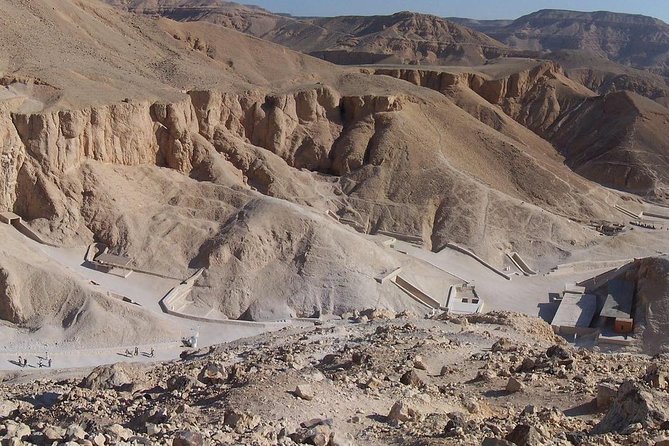
The afternoon crosses to the west bank and the Valley of the Kings. Three hours are scheduled for the royal tombs. The valley contains two main areas, the East Valley and West Valley, and the entrance ticket generally covers a set number of tombs rather than every tomb on the site. Ask your guide which tombs are open and which extra tickets are available if you have a particular interest.
The Valley can be hot and uneven underfoot. The tomb interiors may involve steps and narrow passages, so comfortable shoes are essential. Photography rules can change by tomb, and some areas may require an additional ticket.
The final stop is the Colossi of Memnon, two huge statues of Amenhotep III on the west bank. The visit is short, about 45 minutes, and admission is listed as free. It works well as a final stop because the statues are easy to view after a long day and provide a clear reminder of the scale ancient rulers aimed to project.
Day 7: Returning to Cairo by air
The Luxor to Cairo flight is included, saving you another long overland journey. The day is mostly a transfer day, so do not assume it provides a free afternoon for major sightseeing unless your confirmed schedule says otherwise.
This flight also means the tour can finish in Cairo rather than requiring an international departure from Luxor. If you plan to add a personal Cairo activity, confirm your flight time and transfer arrangements first. The package is organized around the listed schedule, and last-minute additions may not fit.
Day 8: Departure assistance
On the final day, staff escort you to the airport according to your flight details. This is a small but useful service, particularly for an early departure or a first visit to Cairo.
Your international flight home is not listed as included, so you arrange that separately. Keep your final evening and departure morning flexible until all flight and transfer times are confirmed.
Hotels, cruise, meals, and guide support
You receive four nights at a five-star hotel, listed as Hilton Pyramids Golf or a similar property, with breakfast and bed-and-breakfast arrangements. Hotel substitutions are possible, so ask for the confirmed property and location. In Cairo, location affects how much time you spend in traffic.
The Nile portion includes three full-board nights, with breakfast, lunch, and dinner on the ship. The package lists six breakfasts, five lunches, and three dinners overall. Since the schedule includes early starts and flight days, check which meals are included on each transfer day.
The private format is one of the better reasons to consider this tour. Past guide names include Amr Moses for Cairo, Mustafa, Muhammed, Mahmood, and other Egyptologists. You should not assume a particular guide will be assigned, but the service is designed around direct help rather than a large group moving through every stop together.
Tipping is not included. Set aside money for guides, drivers, and assistants, and ask the operator for current local guidance before you go.
Who should book this Egypt package?
I would choose this tour if you want the major highlights in one organized trip and prefer help with airports, transfers, domestic flights, and historical sites. It suits first-time visitors, families, and anyone who values a private guide but does not want to plan every connection.
It is also a good fit if you want to combine Cairo with a Nile cruise. The cruise breaks up the hotel-to-hotel routine and places several major temples along one practical route.
I would hesitate if you dislike early starts, frequent packing, or a fixed timetable. Eight days is enough for the headline sights, but not enough for leisurely exploration. You may also want more time in Cairo, an extra night in Luxor, or a longer cruise.
The price offers reasonable value when you use the included services: two domestic flights, seven nights of accommodation split between hotel and cruise, meals, transfers, airport support, admissions listed in the itinerary, and a private Egyptologist guide. Compare the hotel and ship names carefully, and confirm what any optional Abu Simbel or Nubian village visit costs.
Should you book it?
Book this tour if your priority is seeing Egypt’s essential monuments with the complicated transport handled for you. The strongest features are the private guide arrangement, the well-chosen Cairo and Nile route, and the included domestic flights.
Skip it if you want a slow trip with free days and independent wandering. For a first Egyptian visit on a tight schedule, though, this is a practical way to connect Giza, ancient Memphis, Aswan, the Nile temples, and Luxor without spending your holiday solving logistics.
FAQ
Is this a private tour?
Yes. Only your group participates in the private tour or activity, with a qualified Egyptologist guide.
How long does the tour last?
The tour lasts approximately eight days, from arrival assistance on day one to airport escort on the final day.
Are domestic flights included?
Yes. The package includes flights from Cairo to Aswan and from Luxor back to Cairo. International flights are not listed as included.
How many nights are spent on the Nile cruise?
You spend three nights on a full-board Nile cruise. The listed ships are the Crown Jewel, Blue Shadow, or a similar vessel.
How many hotel nights are included?
Four hotel nights are included at the Hilton Pyramids Golf or a similar five-star hotel.
Is a guide included?
Yes. A qualified Egyptologist guide is included, and the activity is private for your group.
Are meals included?
Yes. The package lists six breakfasts, five lunches, and three dinners. The cruise includes breakfast, lunch, and dinner for the three cruise nights.
Are tips included in the price?
No. Tips for guides, drivers, and assistants are not included.
Just added around Cairo
- Private Egyptian Felucca Ride On The Nile With traditional lunch★ 4.0 · 63 reviews
- Tour to Giza pyramids Memphis Sakkara and Felucca on the Nile★ 5.0 · 16 reviews
- Private 60 min Felucca Ride on Nile and lunch in Cairo★ 5.0 · 35 reviews
- Cairo Private layover tour Giza pyramids,sphinx&Nile Felucca Boat★ 4.5 · 13 reviews
- 8 Day Stunning Cairo Pyramids and Nile cruise and Hurghada All inclusive★ 5.0 · 43 reviews
- Private Day Tour to Giza Pyramids, Sphinx & Saqqara + Luxury Nile Dinner Cruise★ 5.0 · 12 reviews
- 1 -Hour Sailing Egyptian felucca ride on the Nile in Cairo★ 4.5 · 41 reviews
- Cairo Dinner Cruise show with belly dancer show on Nile river★ 4.5 · 20 reviews
Cairo River Cruises, compared.

Dinner Cruise on the Nile River with Entertainment
Read our review →
Nile Sunset Dinner Cruise, Show & Optional Transfer
Read our review →

Nile Dinner Cruise with Belly Dancer Show with Pickup
Read our review →


1 or 2-Hour Felucca Ride on the Nile with Transfers
Read our review →Browse the lists this tour appears in