
REVIEW · VIENNA
Vienna: 3.5-Hour Grand Danube River Cruise
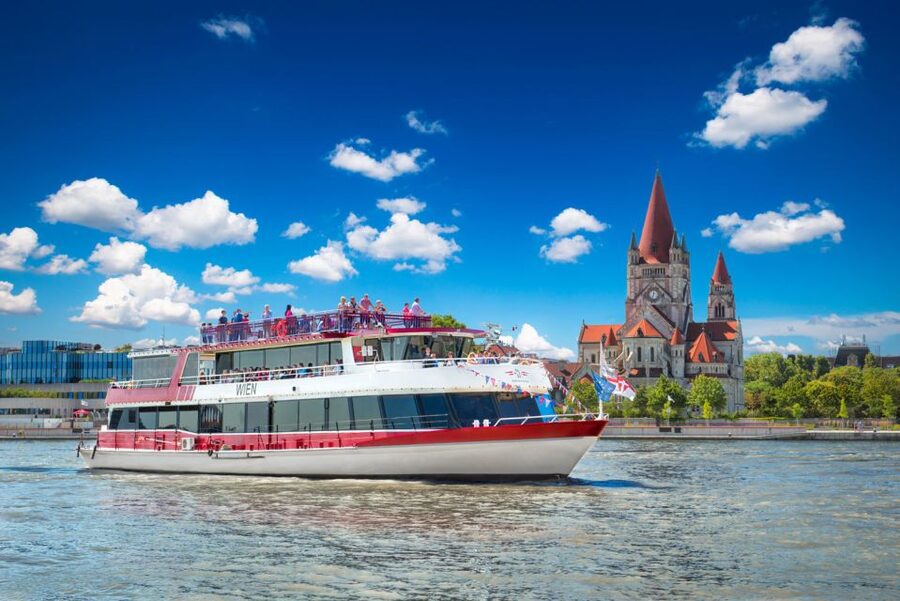
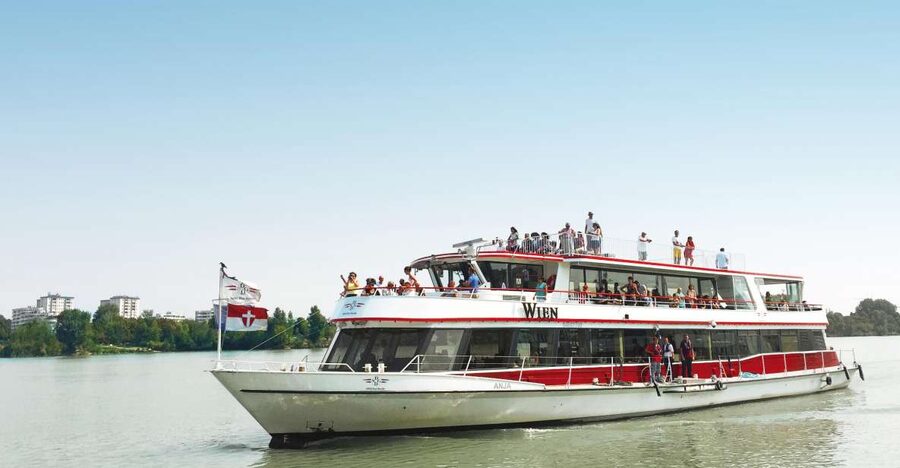
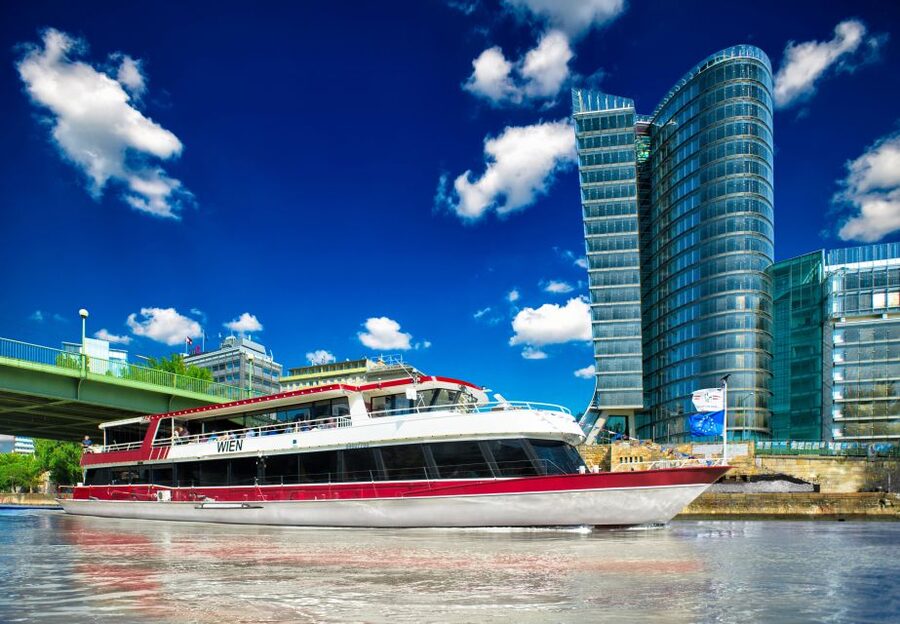
Vienna’s Danube cruise is most interesting when the ship moves between three different versions of the city: the leafy Prater area, the high-rise Danube district, and the older Danube Canal near the center. You travel aboard the MS Wien or the colorful MS Vindobona, a ship designed by Friedensreich Hundertwasser.
I like the slow, easy pace, especially after a day of museums and palaces. I also like the chance to watch the ship pass through two lock systems, a small bit of working river life that you cannot get from a city tram. The main drawback is that much of the trip involves open water, industrial edges, and waiting near locks, so this is not a nonstop parade of Vienna’s famous sights.
Key points to know before you book
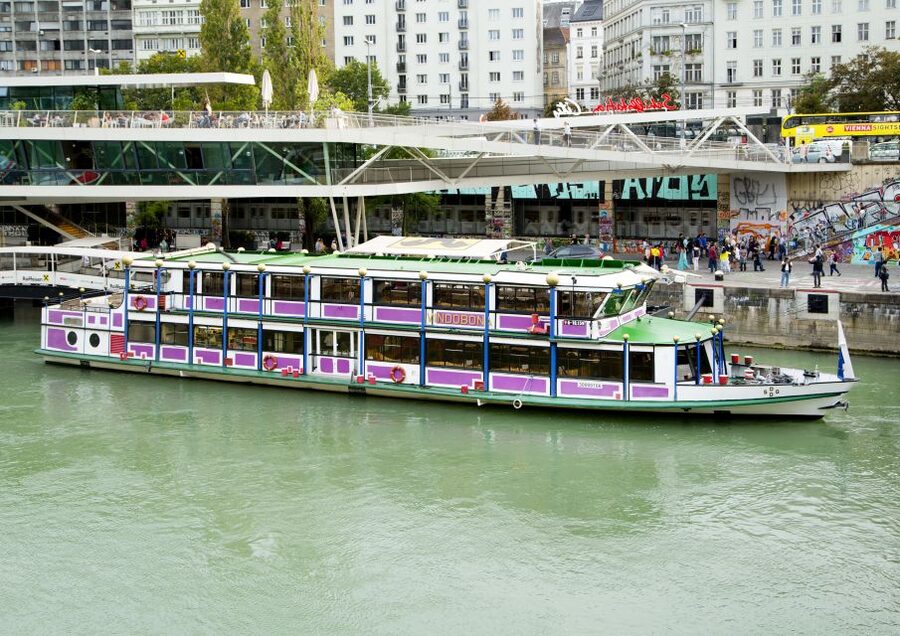
- Hundertwasser-designed boat: The MS Vindobona is an attraction in its own right, with distinctive colors and design by Vienna artist Friedensreich Hundertwasser.
- Three sides of Vienna: The cruise links green Prater scenery, the modern Danube district, and historic sights along the Danube Canal.
- Two lock systems: The Freudenau and Nussdorf areas add a practical, working-waterway element to the trip.
- Food is extra: You can order Viennese food and drinks in the onboard restaurant, but the $51 ticket covers the cruise only.
- Central start and finish: You board and return at the DDSG Blue Danube station at Schwedenplatz.
- Comfortable all-weather option: The boat has indoor seating and is wheelchair accessible, making it useful when the weather is uncertain.
Schwedenplatz is the right place to begin
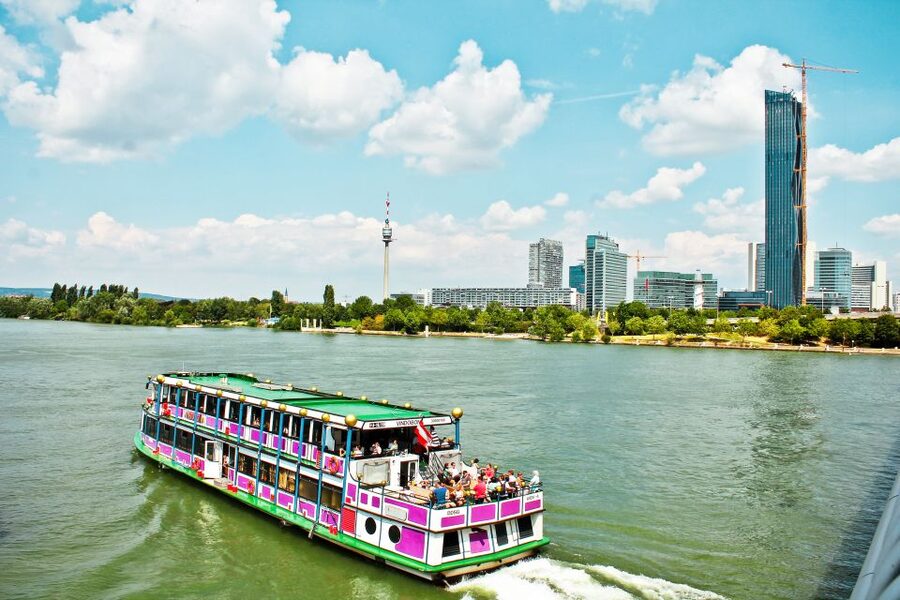
The cruise starts at the DDSG Blue Danube ticket office in the ship station at Schwedenplatz, a central and convenient point in Vienna. You return to the same meeting point at the end, so you do not need to arrange a second pickup or figure out public transportation from a distant dock.
The opening section passes the Urania observatory, one of the city’s familiar riverside landmarks. This early stretch helps you get your bearings. From the water, Vienna feels less like a collection of grand buildings and more like a city organized around its river channels, bridges, locks, and broad transport corridors.
The ship used may be the MS Wien or the MS Vindobona. If you board the Hundertwasser-designed MS Vindobona, take a few minutes to look at the vessel itself. Its unusual coloring gives the trip a playful Viennese touch, even before the city views begin.
More Danube cruises in Austria:
- Vienna: Skip-the-Line Entrance Ticket to the Danube Tower
★ 4.5 · 2,303 reviews - Danube Valley Day Trip from Vienna
★ 4.0 · 1,576 reviews - Vienna: Wachau Valley, Melk Abbey Tour with Danube Boat Trip
★ 4.5 · 1,413 reviews
The Prater brings Vienna’s green side
The first major part of the route is often called the green Vienna section. The boat moves toward the wooded Prater area, giving you a break from the formal center and its stone facades.
This is a useful part of the trip for anyone who wants to see how much open space Vienna has beyond the Ringstrasse. The Prater is not simply an amusement park. Its wider area includes woods and river-related spaces, and from the boat you get a quieter view of the city than you would from a sightseeing bus.
I would sit outside here if the weather is good. The open deck gives you a better sense of movement and makes it easier to take pictures. On a gray day, the indoor lounge is a sensible choice, since the boat is heated and the windows still give you a view.
The scenery is pleasant rather than dramatic. You will not see a continuous row of imperial monuments along this stretch. Instead, you get trees, water, broad riverbanks, and glimpses of the less polished edges of Vienna. That is part of the appeal, but it also explains why some people find the middle of the cruise slow.
Freudenau lock adds a working-river moment
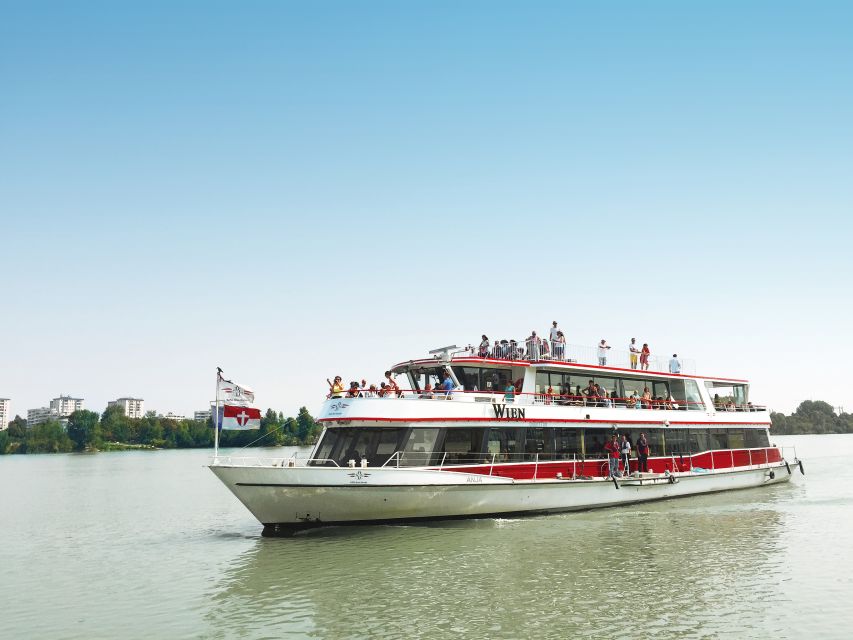
Downstream from the Freudenau lock, the boat docks at the Marina Wien station. The lock is one of the more memorable parts of the cruise because you see the ship adjust to different water levels instead of simply gliding along.
This process takes time. If you prefer constant sightseeing, the pauses may feel long. I think the locks give the trip a welcome change of pace, especially if you have never watched a passenger boat pass through one before.
The route may include a stop or passage near Marina Wien before continuing along the Danube Island area. The exact view from your seat depends on where you sit and which side of the boat is facing the bank, so move around when it is safe and practical. The boat is large enough to let you change viewing areas and take pictures from different spots.
Danube Island and the modern district
After the greener section, the cruise moves past the shores of Danube Island. You then see a grain silo converted into a hotel and a stadium, followed by the Reichsbrücke station.
This is the point where Vienna begins to look less imperial and more contemporary. The Danube Island area is tied to modern housing, recreation, transportation, and large-scale city planning. It is not the Vienna shown on every postcard, but it gives you a better idea of how the capital grew beyond its old center.
From the Reichsbrücke or Marina Wien station onward, the route focuses on modern Vienna. Look for the Danube plateau skyline, the Danube Tower, and the Millennium Tower. These landmarks are easier to appreciate from the river because you can see their position within the wider city rather than viewing them from street level.
The Danube Tower is especially easy to pick out. It gives the skyline a vertical focal point, while the Millennium Tower adds a more commercial, high-rise note. This part of the route works best on a clear day, when the skyline is easier to read.
Do not expect a close-up architectural tour. The cruise gives you broad views and context, not detailed explanations of every building. Commentary is available in German and English, but the amount and clarity can vary. If you want a highly narrated sightseeing experience, this may feel too quiet.
A few more river trips around Austria worth comparing
- Vienna: Danube River Cruise w/ optional Viennese Specialties
★ 3.0 · 1,017 reviews - Salzburg: Boat Ride on the Salzach River
★ 4.3 · 559 reviews - Salzburg: River Cruise, Dinner & Fortress Concert
★ 4.6 · 406 reviews - Mozart Concert and Dinner or VIP Dinner at Fortress Salzburg with River Cruise
★ 4.5 · 280 reviews
The Nussdorf locks turn the boat toward central Vienna
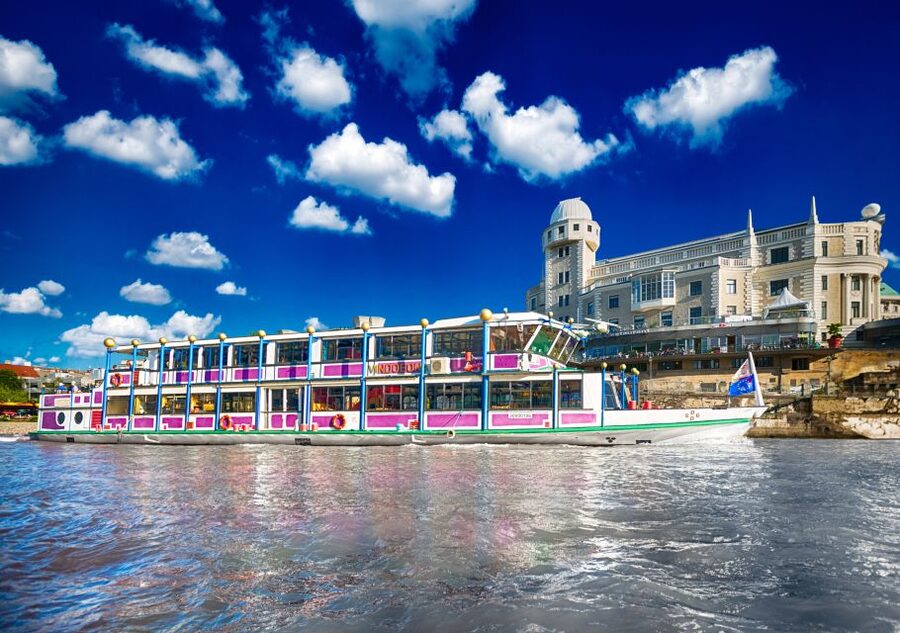
The ship reaches the Nussdorf lock system before entering the Danube Canal. This is another major operational feature of the route and one of the best reasons to choose the full 3.5-hour cruise instead of a shorter sightseeing ride.
The locks can create waiting periods, including time near bridges while the boat waits for passage. Bring patience. The cruise is designed as a leisurely outing, not a fast way to cover city sights.
Once the ship enters the Danube Canal, the character of the trip changes again. You are closer to central Vienna, and the banks feel more urban. The canal section is where the cruise connects most clearly with the historic city.
The Danube Canal brings the city closer
Along the canal, you pass the Hundertwasser District Heating Plant in Spittelau, the Roßau Barracks, the Ringturm, and the Urania observatory. The mix is unusual: industrial architecture, military buildings, office towers, and familiar city landmarks appear in one continuous water-level view.
The Spittelau heating plant is particularly distinctive. Its decorative Hundertwasser treatment turns an otherwise practical utility building into something people actively want to photograph. It also gives the cruise a local character that a standard palace tour cannot provide.
The Roßau Barracks and Ringturm add a more restrained architectural contrast. You see how Vienna’s central districts combine older institutions with postwar and modern construction. From a boat, these buildings appear as part of a larger urban system rather than isolated stops.
The return past Urania closes the loop neatly. You finish at Schwedenplatz, close to central Vienna, restaurants, public transport, and the city’s evening activity. Since the route returns to its starting point, the cruise fits easily into a day of sightseeing.
Onboard seating, food, and the best way to spend the time
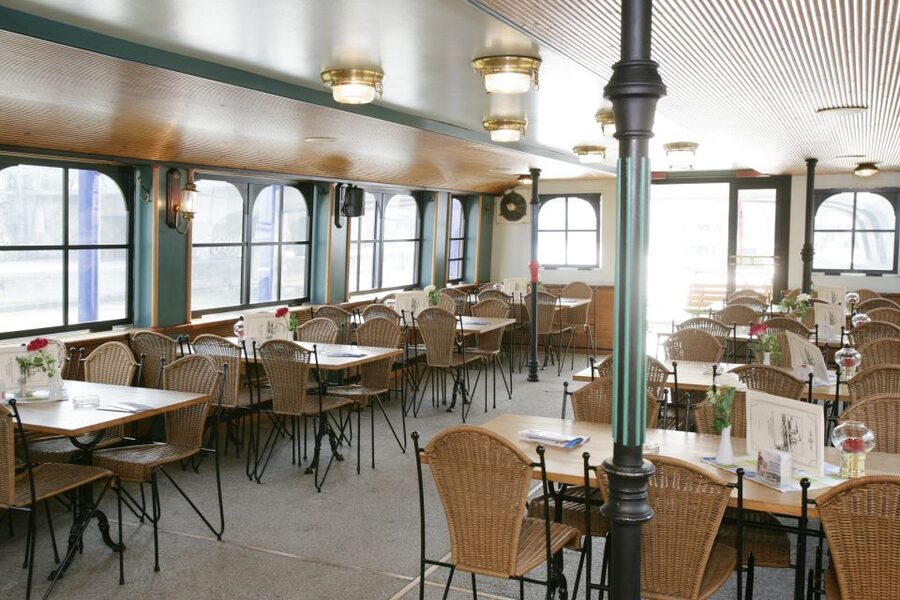
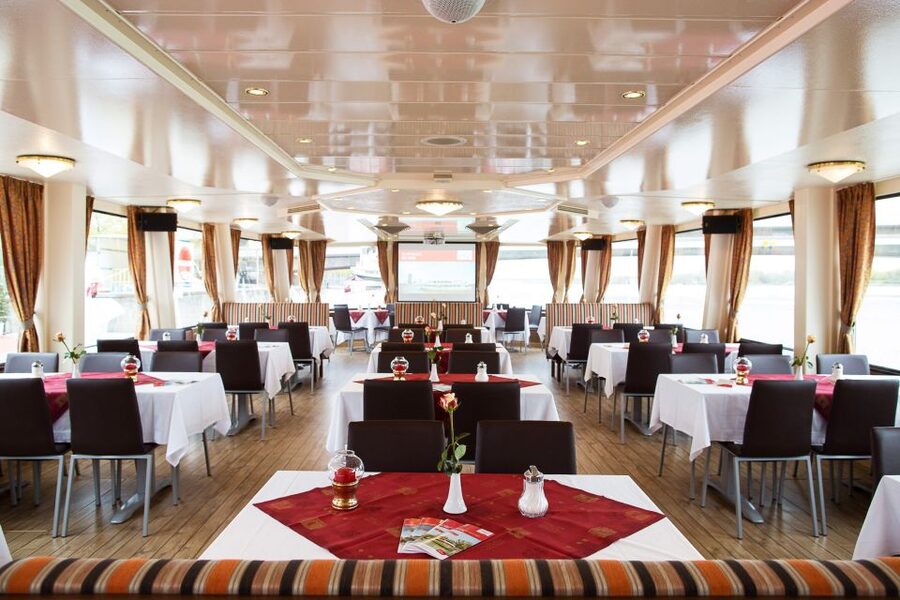
The ship has indoor restaurant and lounge seating, along with outdoor areas when conditions allow. The interior is especially useful on cool or rainy days, and the heated cabin means poor weather does not automatically ruin the outing.
Food and drinks are not included in the ticket, but you can buy them onboard. Viennese dishes are available, along with wine and other drinks. If you want a more relaxed occasion, reserve or request a table if possible and treat the cruise as a long lunch or afternoon break.
Service is generally part of the experience. Staff can bring food and drinks to your table, and card payment is accepted onboard. Prices are described as reasonable for a boat setting, though I would still think of the meal as an optional extra rather than part of the basic value calculation.
I like the idea of ordering a drink and watching the water, but I would not book this cruise solely for the food. The strongest reason to go is the route itself. Dining improves the experience by filling the slower stretches, particularly while passing through locks or open river sections.
For views, I would spend time both outside and inside. Sit outside during the Prater and skyline sections, then move indoors for comfort during longer waits. If you stay in one place for all 3.5 hours, you may miss the best angle on one side of the boat.
Commentary is useful, but not the main attraction
German and English are supported, and announcements provide information about parts of the route. Still, the narration is not always constant. Some areas have clear speakers indoors and outside, while other sections may pass with little explanation.
That matters because the cruise shows many buildings that are not immediately recognizable. Without regular commentary, you may know you are looking at a tower, silo, or industrial building without understanding why it matters.
I see this as a sightseeing cruise with commentary, not a full guided tour. If you like looking, photographing, and relaxing without a steady stream of facts, the quiet works well. If you want detailed information about Vienna’s architecture and history, bring your own guidebook or use the cruise as a visual introduction rather than your main history lesson.
Music is not a central feature. Do not book this expecting a continuous program of Viennese classical music. The atmosphere comes from the river, the ship, the changing city, and the chance to sit for several hours.
Is $51 a fair price?
At $51 per person, the cruise is not the cheapest way to see Vienna. You are paying for 3.5 hours on the water, a central departure point, indoor seating, onboard service, and the full route through the Danube and Danube Canal.
The value depends on how you like to see a city. If you want a fast checklist of palaces, churches, and museums, a boat cannot compete with walking or public transportation. Much of the route is outside the postcard center, and the lock systems can take up a noticeable amount of time.
I think the price is fair for a relaxed half-day outing, especially if you use the ship as a comfortable restaurant and sightseeing platform. It is also good value for visitors who have already seen central Vienna and want a different view of the city.
The ticket makes less sense if you expect every minute to be filled with famous sights or detailed commentary. You are buying time, comfort, and a broad look at Vienna’s river districts more than a concentrated monument tour.
Who will enjoy this Vienna Danube cruise?
I would recommend it to couples, families, and solo visitors who want a quiet break from walking. It works well on a spare afternoon, especially when you would like to sit down but still see something new.
It is also a good choice for anyone interested in urban design. The route shows Vienna’s green spaces, modern towers, industrial buildings, bridges, locks, and central canal architecture in one trip.
The cruise suits visitors who enjoy taking pictures, ordering a drink, and watching the city pass at a slow pace. It may frustrate you if you need constant action, close views of major monuments, or a guide speaking throughout the entire trip.
The wheelchair accessibility is an important practical advantage. Since the trip lasts 3.5 hours, comfortable seating and access to the indoor areas matter more than they would on a short harbor ride.
Booking flexibility and practical details
You can reserve now and pay later, which helps if your Vienna schedule is still shifting. Free cancellation is available up to 24 hours before departure for a full refund.
The host or greeter service is offered in German and English. Check the available starting times when you book, since departure times are not fixed in the information provided here.
The cruise starts and ends at the Schiffstation Wien City, at Schwedenplatz. Food and drinks cost extra. Plan on the full 3.5 hours, and do not schedule a tight museum reservation immediately afterward.
Should you book the Grand Danube River Cruise?
Book it if you want to see Vienna from a different angle, enjoy a long and comfortable ride, and like the idea of passing through two lock systems. The Hundertwasser-designed MS Vindobona, the Prater greenery, the modern Danube skyline, and the canal architecture give the trip more variety than a simple river loop.
Skip it if your priority is a tightly narrated tour of Vienna’s famous historic center. The route includes quiet and industrial stretches, and the commentary may not explain every sight in detail.
For the best experience, choose a day with decent weather, sit outside for the scenic sections, move indoors when the boat slows at the locks, and budget separately for a drink or meal. At $51, this is a leisurely city experience rather than a bargain attraction, but it offers a pleasant three-and-a-half-hour pause with views you cannot get from the pavement.
FAQ
How long is the Vienna Grand Danube River Cruise?
The cruise lasts 3.5 hours.
Where does the cruise start?
It starts at the DDSG Blue Danube ticket office in the ship station Schiffstation Wien City at Schwedenplatz.
Where does the cruise end?
The cruise returns to Schwedenplatz and ends at the original meeting point.
Which ships operate on the cruise?
The experience operates aboard the MS Wien and the MS Vindobona. The MS Vindobona was designed by artist Friedensreich Hundertwasser.
What languages are available?
The host or greeter service and tour information are available in German and English.
Is food included in the ticket?
No. Food and drinks are not included, but you can buy them onboard in the restaurants and lounge areas.
Is the cruise wheelchair accessible?
Yes, the activity is wheelchair accessible.
Can I cancel the booking?
Yes. You can cancel up to 24 hours in advance for a full refund. You can also reserve now and pay later.
Just added around Austria
- Salzburg: River Cruise & Best of Mozart Fortress Concert★ 3.9 · 14 reviews
- Salzburg: River Rafting Trip for Beginners★ 4.8 · 102 reviews
- Salzburg: White Water Rafting on the Salzach River★ 4.7 · 125 reviews
- From Melk: 5-Hour Wachau River Cruise★ 4.5 · 103 reviews
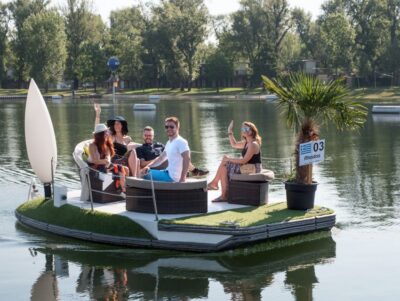
- Vienna: Private Floating Island E-Boat Rental on Danube★ 4.4 · 12 reviews
- Austria, Salza river “Double Ducky” kayak adventure★ 4.9 · 17 reviews
- Krems: Wachau Valley River Cruise with 3-Course Meal★ 4.5 · 254 reviews
- Mozart Concert and Dinner or VIP Dinner at Fortress Salzburg with River Cruise★ 4.5 · 280 reviews
Vienna River Cruises, compared.
Skip-the-Line Entrance Ticket to the Danube Tower
Read our review →
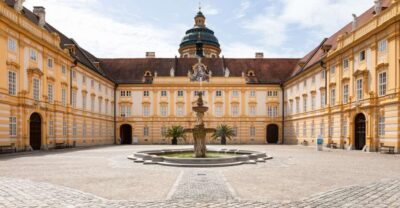
Wachau Valley, Melk Abbey Tour with Danube Boat Trip
Read our review →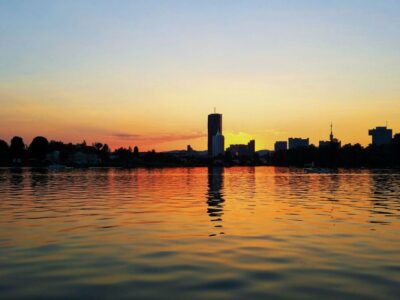
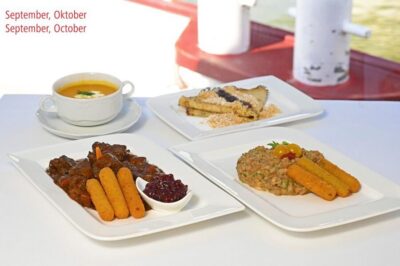
Danube River Cruise w/ optional Viennese Specialties
Read our review →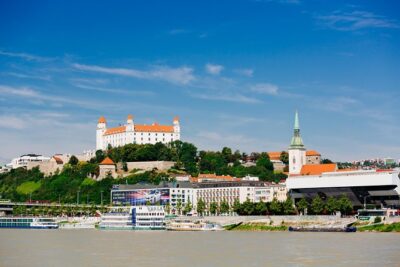
Bratislava Day Trip from Vienna With Catamaran Cruise on Danube
Read our review →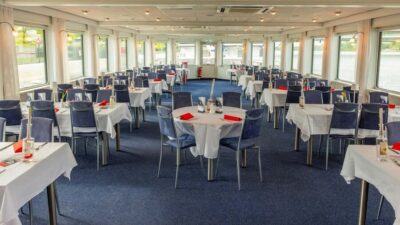
Browse the lists this tour appears in