
REVIEW · PARIS
Paris: Hop-On Hop-Off Seine Cruise Pass with 9 Stops
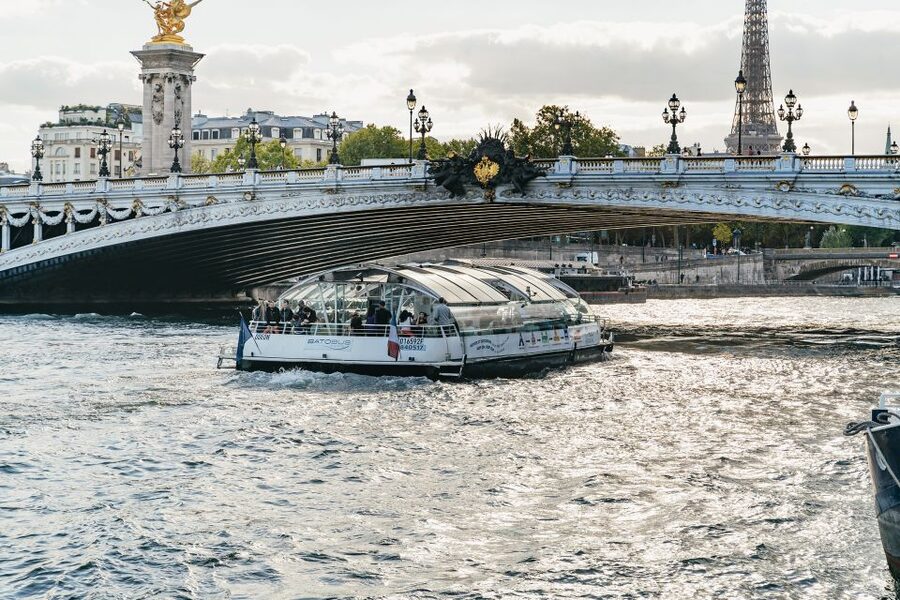
The clever part of this Paris experience is that the Seine becomes your transport route. Instead of squeezing onto the Metro or walking between every major sight, you can ride a heated, glass-covered Batobus, step off near a museum or neighborhood, and return to the river when your feet need a break. I especially like the 24-hour or 48-hour flexibility and the broad views from the outside terrace. The main catch is that this is transport with sightseeing value, not a fully narrated cruise, so you should use the webapp if you want context.
I also like that you can begin at any of the nine stops, not just at the Eiffel Tower. Boats generally come about every 20 to 25 minutes, though crowded departures can affect your plans, and the glass roof can feel hot in strong summer sun. Bring a charged phone, fold large strollers, and leave luggage behind.
Key points to know before you board
- Nine useful stops: Board near the Eiffel Tower, Musée d’Orsay, Saint-Germain-des-Prés, Notre-Dame, Jardin des Plantes, Hôtel de Ville, the Louvre, Place de la Concorde, or Invalides.
- One pass, many short rides: Your 24 or 48 hours begin when you first scan and board, so you can fit the service around your sightseeing day.
- A calmer alternative to the Metro: The boat avoids street traffic and many subway stairs, making it a pleasant way to rest between attractions.
- Good views, limited narration: The glass cabin and terrace give you strong photo angles, while the multilingual webapp supplies information about monuments and nearby sights.
- Useful in hot or cold weather: The boats are heated, but the enclosed glass can become warm on sunny days.
- Best for flexible sightseeing: You can make a full loop for an overview or hop off repeatedly to build your own Paris route.
Why the Seine works so well as your Paris shuttle
Paris is compact on a map, but its sights are spread across both banks of the river. A walk from the Eiffel Tower to the Louvre takes time, and the Metro can involve stairs, transfers, and crowded platforms. Batobus gives you a moving rest stop between those places.
You can sit inside, watch bridges and grand façades pass by, then step off when a stop matches your plans. The boat is not the fastest way to reach every part of Paris, but it is a pleasant way to connect the central sights without dealing with road traffic.
The value improves if you use the pass more than once. At $27 per person, a 24-hour ticket makes the most sense when you plan several rides and at least two or three stops. The 48-hour option is better if you prefer a slower schedule. You can sightsee for part of the day, use the boat to return to another area, and continue the next day without buying another ticket.
A full circuit takes about two hours, depending on operating conditions. I suggest doing one complete loop early in your first day if you are new to Paris. It gives you a clear sense of the river, the stop order, and the distance between the major sights. After that, use Batobus as transport rather than treating every ride as a formal cruise.
More Seine cruises in Paris:
- Paris: 1-Hour Seine Cruise departing from the Eiffel Tower
★ 4.4 · 77,472 reviews - Paris: Seine Cruise & Crepe Tasting near the Eiffel Tower
★ 4.4 · 11,231 reviews - Paris: Seine River Panoramic Views Dinner Cruise
★ 4.3 · 10,611 reviews
Starting at Port de la Bourdonnais and the Eiffel Tower
The main starting point is Port de la Bourdonnais, directly by the Eiffel Tower. It is an easy place to begin if the tower is your first Paris sight, though you do not have to start here. You can also board at any of the other stops.
From the water, the Eiffel Tower looks different from it does in the Champ de Mars. The river gives you a little distance, which helps you frame the entire structure in a photograph. The outside terrace is the best spot for pictures, although seats can be limited when the boat is busy.
The nearby Cité de l’Architecture is a useful extra stop for anyone interested in French buildings and design. It covers French architectural heritage from the 12th to the 18th century. If you are visiting the tower, you could easily spend a morning in the area before using Batobus to continue east.
Musée d’Orsay and the left bank
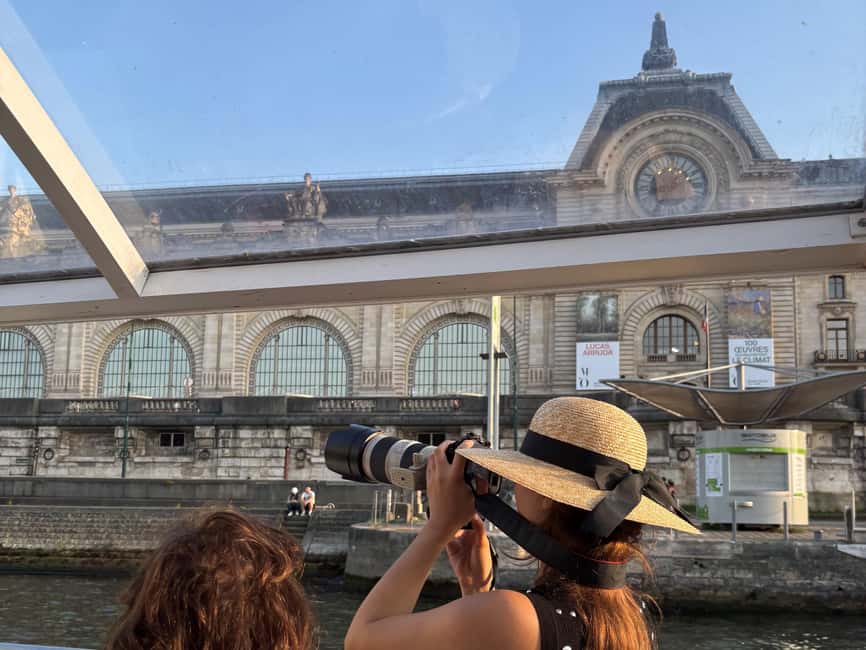
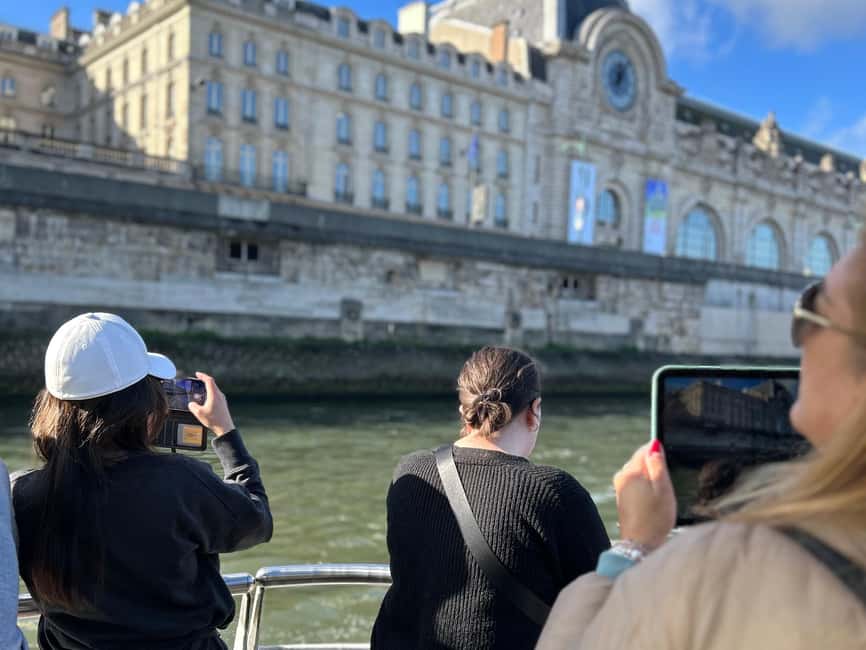
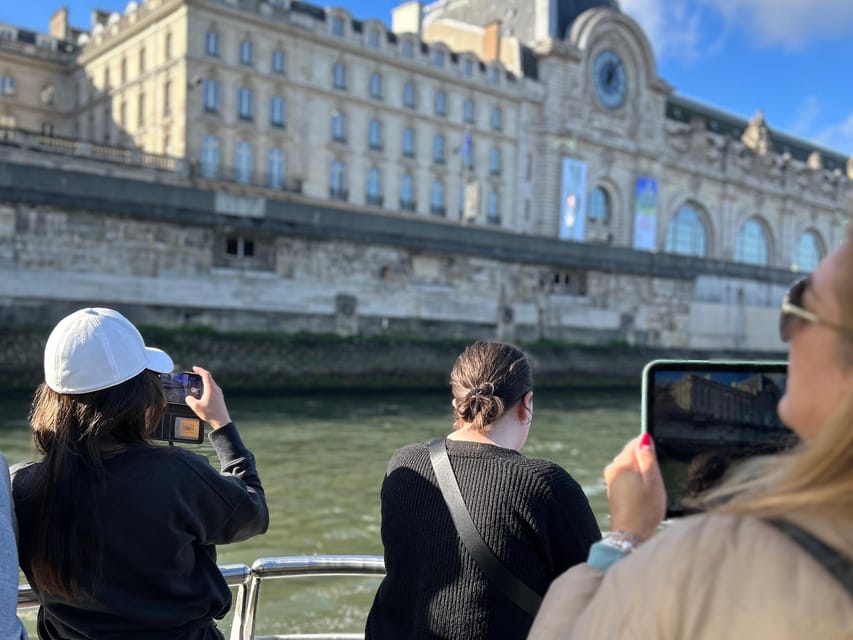
The Musée d’Orsay stop, at Quai de Solférino, puts you close to one of Paris’s finest art museums. The former railway station now holds major works by Monet, Renoir, Van Gogh, and other artists. The stop is especially useful because the museum is close to the river and easy to combine with a ride.
I would not plan to visit the museum and the Louvre in the same short block of time. Both need attention, and rushing through either one weakens the experience. Use Batobus to separate them: see the Musée d’Orsay, take the boat toward another stop, and return to art later if your pass still has time.
The river section here is also good for simply sitting outside. You get views of bridges, stone embankments, and the long front of the historic buildings along the Seine. On a clear day, the terrace offers better photographs than the glass cabin, but on a cold day the heated interior is a welcome trade.
Saint-Germain-des-Prés and the literary Paris stop
The Saint-Germain-des-Prés stop is at Quai Malaquais, close to the Institut de France and the cafés associated with Parisian writers and intellectual life. Café de Flore and Les Deux Magots are nearby, along with narrow streets, bookshops, and old façades.
This is a good place to leave the river and wander without a strict target. You can have a meal, browse shops, or walk through the area before returning to the quay. The stop is not beside one single blockbuster sight, so it works best for you if you want neighborhood atmosphere rather than a quick museum visit.
Keep track of the quay where you need to reboard. A short walk around Saint-Germain can turn into a longer stroll, and the river stop may not be directly beside every café or street you want to see.
Same river, a completely different day on the water:
- Paris: Evening River Cruise with Music
★ 4.4 · 22,721 reviews - Paris: Illuminations River Cruise with Audio Commentary
★ 4.3 · 12,340 reviews - Paris: Louvre Museum Entry Ticket With Host and River Cruise
★ 4.6 · 9,926 reviews - Paris: Eiffel Tower Access by Elevator & Seine River Cruise
★ 4.6 · 7,329 reviews
Notre-Dame and the Latin Quarter
The Notre-Dame stop at Quai de Montebello is one of the most useful on the route. It puts you near Notre-Dame Cathedral and the Latin Quarter, where cafés, bookshops, and student life fill the streets around the river.
The cathedral is close enough to combine with a walk through the surrounding historic center. You can also use this stop as a meal break. One practical approach is to ride from the Eiffel Tower or Invalides, get off at Notre-Dame, explore the island and Latin Quarter, then return to the same river route.
This stop can be busy, especially around popular visiting hours. The boat is a relaxing break from the crowds, but do not assume every departure will have an open seat. If you are traveling with children, the combination of a short boat ride and a walk near Notre-Dame can be easier than stringing together several Metro journeys.
Jardin des Plantes and Cité de la Mode
At Quai Saint-Bernard, the Jardin des Plantes stop gives you access to Paris’s main botanical garden. It is a good change of pace after museums and grand monuments. You can walk among planted areas and use the gardens as a quieter pause in the middle of a sightseeing day.
The Cité de la Mode et du Design adds a more contemporary contrast nearby. This stop is less essential if your Paris schedule is limited to one day, but it becomes more useful with a 48-hour pass. You can spend time here without feeling that you are missing the central monuments.
The stop also helps break up the route geographically. Instead of using the boat only between the Eiffel Tower, Louvre, and Notre-Dame, you can use the southern stretch of the Seine to reach a different part of central Paris.
Hôtel de Ville and the Marais
The Hôtel de Ville stop at Pont d’Arcole sits near Paris City Hall and offers access to the Pompidou Centre and the Marais. The area combines major civic architecture with galleries, boutiques, cafés, and older streets.
This is another stop where you should allow walking time. The boat gets you close to the district, but it does not replace exploring on foot. I like using Batobus to arrive here, then wandering through the Marais before continuing toward the Louvre or Notre-Dame.
If modern art is on your list, the Pompidou Centre makes this stop especially useful. If not, the neighborhood itself can fill an afternoon. The route works well for flexible plans because you are not locked into a guided group timetable.
The Louvre stops and planning your museum day
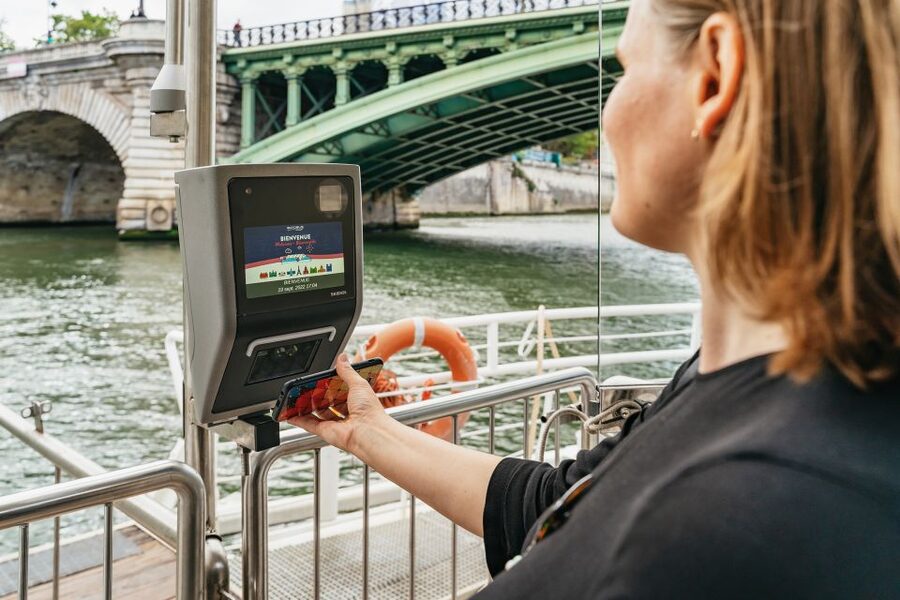
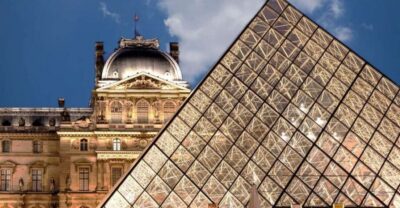
Batobus serves the Louvre near Pont Royal and Pont du Carrousel. This is one of the strongest links on the route, since the museum is enormous and usually deserves several hours by itself.
The boat will not get you through the Louvre faster, but it can simplify the day around it. You might arrive by river, visit the museum, then walk toward another stop or board again when you are ready for a rest. The water gives you a clean break after time indoors.
Plan the Louvre before you board if you have limited time. Decide which parts of the museum matter most, since a short visit cannot cover everything. The stop is also useful even if you are not entering the museum. The surrounding riverbanks, bridges, and courtyards offer plenty to see.
Place de la Concorde and the grand west end
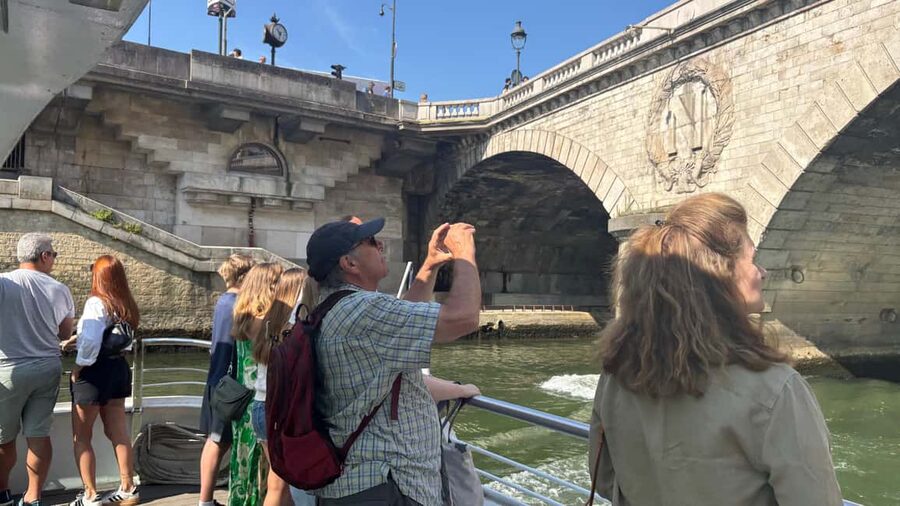
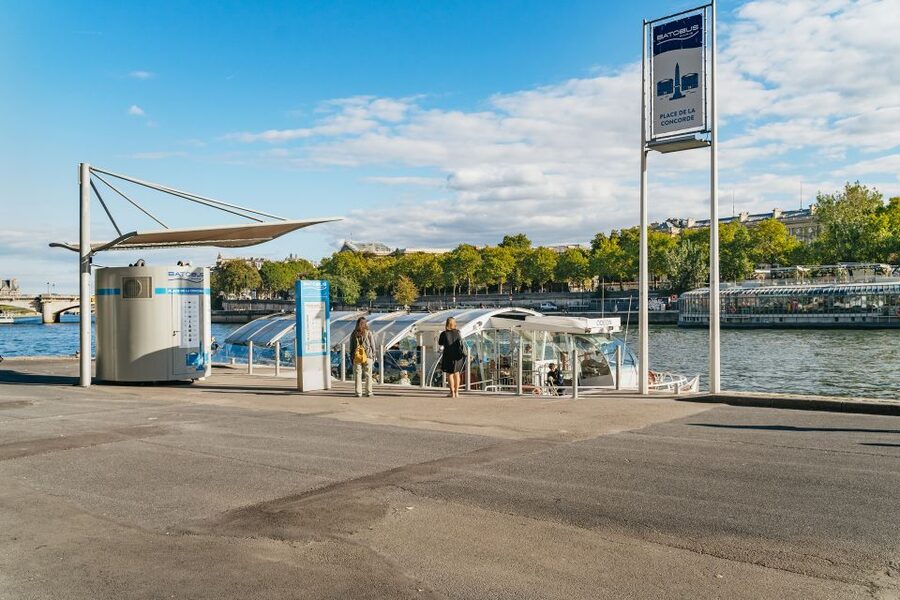
The Place de la Concorde stop opens onto one of Paris’s largest and most formal squares. From here, you can walk toward the Grand Palais and Petit Palais, or continue toward the luxury shops around Avenue Montaigne.
This is a convenient stop for a broad Paris panorama. You can connect major monuments, museums, and grand avenues in one walk, then return to the river without retracing the entire route by Metro.
The area feels more spread out than Saint-Germain or the Latin Quarter. Give yourself extra time if you plan to reach several attractions from this stop. It is a good place for an afternoon walk, but less useful if you want to step off and see one sight immediately beside the quay.
Invalides and Pont Alexandre III
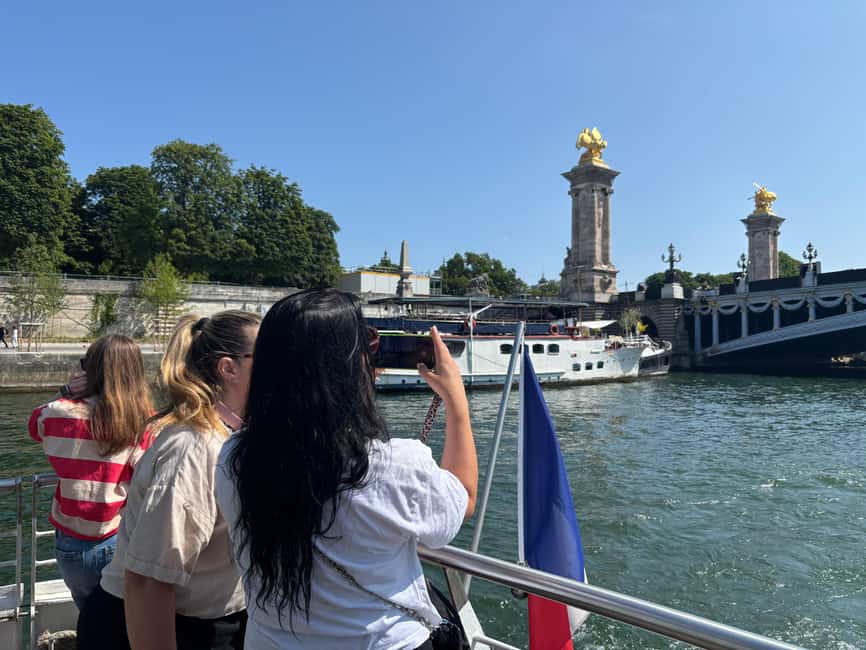
The Invalides stop, listed at Port des Invalides, brings you near the Hôtel des Invalides and Napoleon’s tomb. The nearby Pont Alexandre III is one of Paris’s most ornate bridges, with strong views in both directions along the Seine.
This stop is particularly rewarding for photographs. The bridge, river, and domed Invalides complex create a strong view from the water and from the embankment. The terrace is worth using here, weather permitting.
Invalides is also a practical link between the Eiffel Tower area and the central museums. If you are planning a full loop, it gives you another place to break the ride and continue on foot.
What the boat is like on board
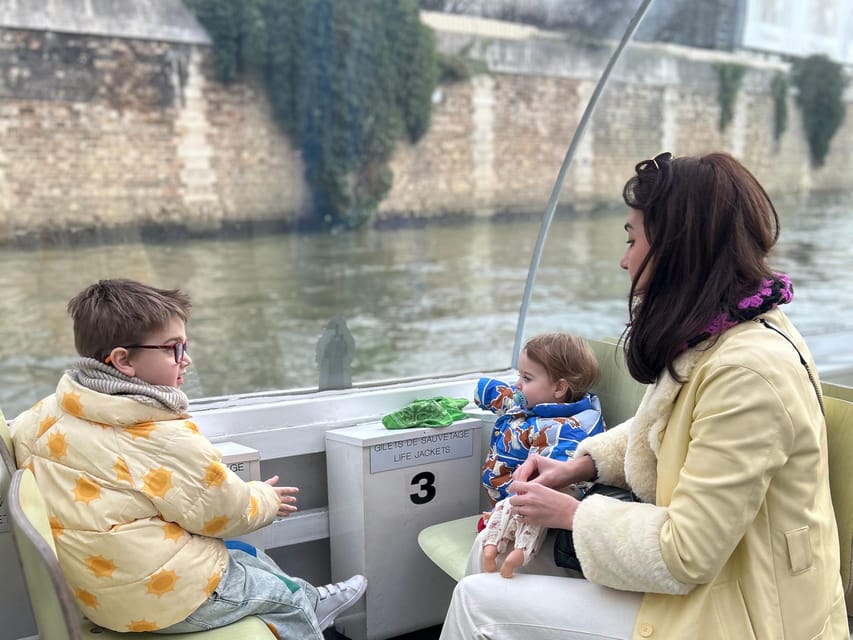
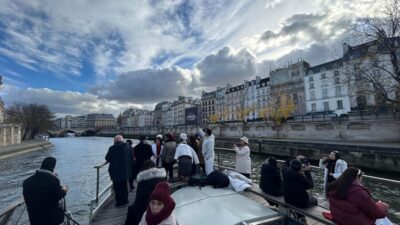
The Batobus boats are heated and enclosed by glass, with an outside terrace for open-air views. The arrangement gives you two very different rides. Inside, you are protected from cold weather and rain. Outside, you get clearer photographs and a more direct view of bridges and monuments.
The glass roof has one drawback: on warm, sunny days, the cabin can feel hot, and the glass may not always be perfectly clear. If the weather is mild, the terrace is usually the better choice. In winter, the heated interior matters more, and the service can still be comfortable.
There is no standard live guide narrating every sight in the way a dedicated sightseeing cruise might. Download or open the interactive webapp on your charged smartphone. It provides commentary and information about monuments and things to do near each stop in English, French, Italian, Spanish, and German.
The webapp changes how useful the ride feels. Without it, you mainly get views and transport. With it, you can learn what you are seeing and make better use of each stop.
Timing, crowds, and small practical details
Your pass starts when you first use it, not when you reserve it. Scan your ticket each time you board. You can use the ticket up to 30 days after the booked date, according to the operating terms supplied with the experience.
Boats are generally spaced about 20 to 25 minutes apart, while a full circuit takes roughly two hours. Build in some waiting time if you have a museum reservation or another fixed appointment. Batobus is flexible, but it is not a substitute for a precise taxi schedule.
For the listed winter period, from November 3, 2025, through March 31, 2026, the first and last departures from the Eiffel Tower stop are shown as 10 a.m. to 5 p.m. Monday through Thursday, and 10 a.m. to 7 p.m. Friday through Sunday. Check the current operating hours before planning an evening ride.
Large bags and luggage are not allowed. Baby carriages are permitted only if they fold. The service is not suitable for wheelchair users, and seating can become tight when the boat is full, especially with children and pushchairs.
Free cancellation is available up to 24 hours before the activity, and you can reserve while paying later. Those terms are useful if your Paris schedule is still changing.
Who will get the most from Batobus
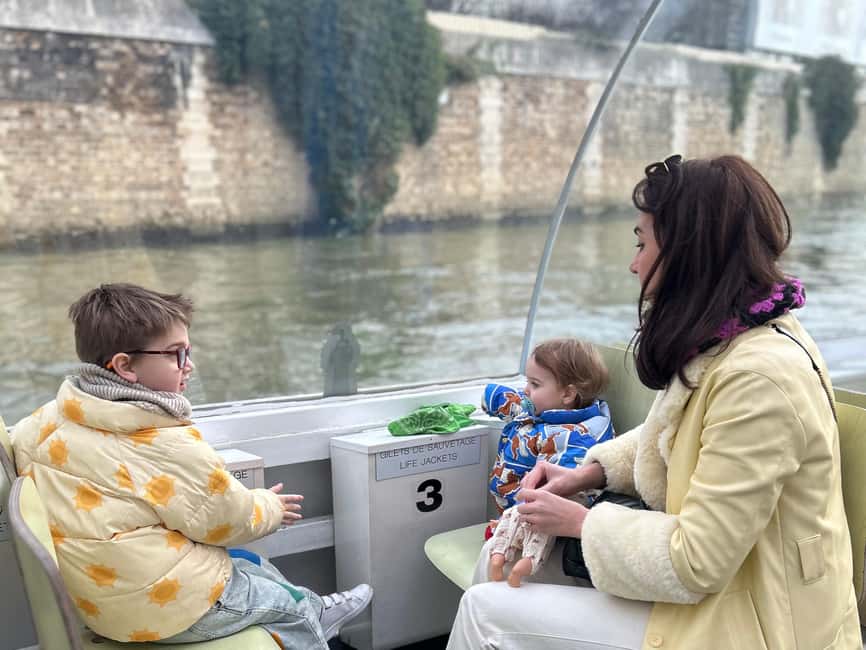
I would choose this pass for a first Paris visit that includes several Seine-side sights. It is also a strong fit for families, older travelers, and anyone who wants a break from stairs and long walks. The river ride gives children a change of scene without requiring another museum ticket.
A 24-hour pass suits a concentrated day. Start with a full loop, then get off at two or three stops that match your interests. A 48-hour pass gives you room to linger at the Louvre, Musée d’Orsay, or Notre-Dame without turning every ride into a race.
I would not choose it as your only transport for every part of Paris. The route serves central Seine locations, not every neighborhood, and the boat can take longer than the Metro. I would also avoid relying on it if you need guaranteed arrival at a fixed time.
Should you book the Batobus pass?
Book it if you want sightseeing and transport in the same ticket, especially if the Eiffel Tower, Louvre, Musée d’Orsay, Notre-Dame, and Invalides are already on your plan. The strongest value comes from repeated use, not from taking one scenic loop and getting off.
Choose the 48-hour pass if you like a relaxed pace or are visiting Paris for several days. Choose 24 hours if you can group your main stops into one well-planned day. Bring your phone, use the webapp, watch the service hours, and expect the glass cabin to feel warm in summer.
At $27, Batobus is a sensible buy for a flexible central Paris itinerary. It will not replace walking, museum planning, or the Metro, but it can make the city feel less tiring and give you some of the best views of Paris between stops.
FAQ
How long is the Batobus pass valid?
You can choose a pass valid for 24 or 48 consecutive hours. The validity begins when you first scan and use the ticket on board.
Where can I board the Batobus?
You can board at nine stops: Tour Eiffel at Port de la Bourdonnais, Musée d’Orsay, Saint-Germain-des-Prés, Notre-Dame, Invalides, Jardin des Plantes, Hôtel de Ville, Louvre, and Place de la Concorde.
Can I start at a stop other than the Eiffel Tower?
Yes. You can board at any of the nine Batobus stops listed for the route.
Is the boat heated?
Yes. The boats are heated and glass-covered, and they also have a terrace for outdoor views.
Is commentary available during the ride?
An interactive webapp provides information about monuments and things to do near the stops. It is available in English, French, Italian, Spanish, and German.
Can I bring a stroller or luggage?
Fold-up baby carriages are allowed. Large bags and luggage are not allowed, and non-folding strollers are not permitted.
Is the service suitable for wheelchair users?
No. The activity is listed as unsuitable for wheelchair users.
Just added around Paris
- The Official Emily in Paris Champagne Seine Cruise★ 4.9 · 27 reviews
- Paris: Seine Cruise with Snack/Optional Eiffel Tower Ticket★ 4.2 · 210 reviews
- Paris: Bastille Day Dinner Cruise on the Seine River★ 4.1 · 84 reviews
- Paris: The Rodin Museum and Seine River Cruise★ 4.6 · 45 reviews
- Paris: Seine River Private Guided Pontoon Boat Cruise★ 5.0 · 133 reviews
- Paris: Loire Valley Castles Tour with Wine Tasting★ 4.9 · 22 reviews
- Paris: Seine River Dinner Cruise with Live Music★ 3.6 · 18 reviews
- Paris: Sightseeing Cruise on the Seine with 3-Course Lunch★ 4.6 · 33 reviews
Paris River Cruises, compared.
1-Hour Seine Cruise departing from the Eiffel Tower
Read our review →
Illuminations River Cruise with Audio Commentary
Read our review →
Seine Cruise & Crepe Tasting near the Eiffel Tower
Read our review →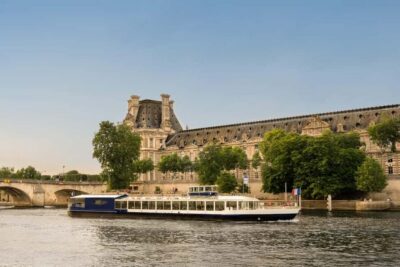
Louvre Museum Entry Ticket With Host and River Cruise
Read our review →
Eiffel Tower Access by Elevator & Seine River Cruise
Read our review →
3-Course-Dinner Cruise on the Seine with live music
Read our review →Browse the lists this tour appears in