
REVIEW · ASWAN
Enjoy 4-Day 3-Nights Nile Cruise includes Tours from Aswan to Luxor
The best part of this four-day Nile cruise is the way it links Egypt’s major river sights without making you repack every morning. You see Philae Temple, Kom Ombo, Edfu, and Luxor while your cabin, meals, and transport move with you. I like the onboard pool and the slow hours on deck, when Nubian islands, villages, and feluccas give you a better sense of the Nile than any road transfer can.
I also like that the tour handles the awkward pieces: pickup from your Aswan hotel, airport, or train station, a motorboat to Philae, a horse-drawn carriage to Edfu, and a final transfer to your Luxor hotel, airport, or train station. The main consideration is cost at the monuments. Entrance fees are not included and run about $50 per person, while drinks are also extra.
Key points to know before booking
- Four days, three nights aboard a five-star Nile cruise: Meals run from lunch on day one through breakfast on day four.
- A strong line-up of temples: You visit Philae, Kom Ombo, Edfu, Luxor Temple, Karnak, Hatshepsut’s Temple, and the Valley of the Kings.
- A guide-led private experience: Only your group participates, with an Egyptology guide and air-conditioned minivan transport.
- The boat is part of the experience: Use the swimming pool, join afternoon tea, watch the river from the sun deck, and attend the evening disco.
- Edfu includes a traditional carriage ride: The horse-drawn carriage connects the riverboat with the Temple of Horus.
- Extra costs are easy to overlook: Plan for entrance fees of about $50 per person, drinks, and any requested language supplement.
Why this Aswan to Luxor sailing works well
A Nile cruise is most useful when you want to see several ancient sites without turning the trip into a string of long drives. This route gives you three nights on board and combines guided sightseeing with stretches of open time on the river.
The price is $398 per person. That includes the cruise cabin, meals, transport, guiding, listed sightseeing, portage when needed, and door-to-door assistance from arrival in Aswan through departure in Luxor. For a private activity with a five-star boat, that is a solid package, though the final cost rises once you add entrance fees and drinks.
You also get a swimming pool, afternoon tea, and an evening disco. These are not the reason to come to Egypt, but they matter after a hot temple visit. The boat gives you a place to rest instead of sending you straight back into a vehicle.
The private format is especially useful for families and small groups. The itinerary can be amended on request, and group discounts are offered. The pace is still fairly full, so you should expect early sightseeing and several major monuments in a single day.
More Nile cruises in Aswan:
- 4-Days Nile Cruise From Aswan To Luxor including Abu Simbel and Hot Air Balloon
★ 5.0 · 3,142 reviews - 4-Day 3-Night Nile Cruise from Aswan to Luxor&Abu Simbel+Balloon
★ 5.0 · 2,023 reviews - 4-Day 3-Night Nile Cruise from Aswan to Luxor including Abu Simbel, Air Balloon
★ 4.5 · 612 reviews
Day 1: Aswan, the High Dam, and Philae Temple
Your local representative collects you from an Aswan hotel, train station, or airport. That broad pickup arrangement makes this a practical starting point if you have arrived by overnight train or domestic flight.
The first major stop is the Aswan High Dam. It is a large modern engineering project rather than an ancient monument, and it helps explain how Egypt controls the Nile for power and irrigation. It also gives you a useful introduction to the way the river shapes life in southern Egypt.
From there, you take a Nile motorboat to Philae Temple. The boat ride is not just transport. Philae sits on an island, so reaching it by water gives the visit a fitting sense of arrival. The temple is dedicated mainly to Isis and was moved to higher ground after the construction of the High Dam threatened the original island site.
This is one of the most appealing stops on the trip because the temple and river setting belong together. You get time for photographs, though your guide will also help explain the reliefs and religious stories. The tour description does not promise a specific amount of free time, so expect the visit to follow the day’s organized schedule.
Lunch is served on board, followed by afternoon tea and dinner. There is also an evening disco. You can disembark in Aswan if the boat schedule allows, but the listed plan has you sleep aboard the cruise.
The first night is a good test of your cabin and the boat’s atmosphere. A past guest specifically appreciated being upgraded to the top floor by guide Ramey, which placed the cabin near the sun deck and reduced noise. Upgrades are not promised, so ask about cabin location when booking if quiet matters to you.
Day 2: River views and the double temple at Kom Ombo
Day two is built around sailing. You pass villages, islands, and long stretches of Nile scenery while the boat heads toward Kom Ombo. This is where the cruise earns its keep. Instead of watching Egypt through a minivan window, you can sit on deck with Egyptian tea and see the river at a slower pace.
The scenery is not empty. You may notice cultivated land close to the water, small settlements, and islands that make the Nile feel like a living corridor rather than a backdrop to monuments. The schedule also leaves room for photos, which is helpful because the views change constantly as the boat moves.
Kom Ombo Temple is unusual because it is a double temple. One side honors Sobek, the crocodile-headed god, while the other is dedicated to Haroeris, the falcon-headed god. The paired design gives your guide plenty to explain, including the way two religious traditions could share one complex.
The site also connects ancient belief with the river. Sobek was linked to the Nile and fertility, so the temple’s location beside the water feels appropriate. You may also see the crocodile connection represented in the temple displays and carvings.
Kom Ombo can be hot and exposed, so carry water. Drinks are not included in the package, and the operator specifically lists them as an extra cost. After the visit, the boat continues toward Edfu, where you spend the night.
Day 3: Edfu, Horus, and the Esna Lock
After breakfast, you visit Edfu Temple, dedicated to Horus, the falcon god. Edfu is widely valued for its preservation, and its large entrance pylons, courts, and inner rooms help you picture how an Egyptian temple was arranged.
The ride from the cruise boat to the temple is by traditional horse-drawn carriage. That detail adds local character, but it also means the transfer is part of the day’s set program rather than a simple walk from the dock. The package includes the horse and carriage.
Your Egyptology guide is important here. Edfu has plenty of carved scenes and religious symbols, and a guided explanation helps turn them into a story rather than a procession of stone walls. The guide names supplied for this experience include Ahmed, Mohammed, Ramey, and Sayed, though your assigned guide can vary. Sayed is available as an example of a French-speaking guide, and other languages can be arranged for an additional charge.
After Edfu, you sail toward Luxor through Esna and pass through the famous Esna Lock. Locks are a practical part of river navigation, but they can also be an entertaining pause in the cruise. The boat has to adjust its level before continuing, giving you another reason to spend time on the sun deck.
Afternoon tea and Egyptian tea during sailing are included parts of the onboard rhythm. This is one of the least hurried portions of the route, so it suits you if you enjoy watching the river and taking photographs as much as visiting ruins.
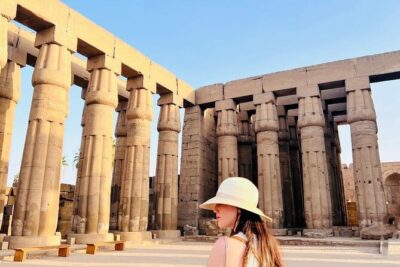
In the evening, you visit Luxor Temple. The temple is in the modern city, so this is a striking change from the quieter river sites. Its columns and courtyards take on a different mood after sunset, though the exact timing depends on the operating schedule and river arrival.
You sleep on board in Luxor. That saves you another hotel change and puts you in position for the West Bank and Karnak visits the next day.
A few more river trips around Aswan worth comparing
- From Aswan: 4-Day Nile Cruise from Aswan to Luxor with Guide
★ 4.1 · 593 reviews - 4-Day 3-Night Nile Cruise from Aswan to Luxor – Private Tour
★ 5.0 · 369 reviews - 4 Days Nile Cruise from Aswan to Luxor including Abu Simbel and Hot Air Balloon
★ 4.5 · 356 reviews - 4-Day 3-Night Nile Cruise from Aswan to Luxor With Balloon and Abu Simbel
★ 5.0 · 327 reviews
Day 4: The Valley of the Kings and Luxor’s East Bank
After breakfast, you leave the boat and visit the Ancient Theban Necropolis on Luxor’s West Bank. The Valley of the Kings contains more than 60 tombs cut into the mountain cliffs, although the tombs open to the public can vary. Your entrance fee allowance should cover this point, but the overall package does not include monument admissions.
The valley is not simply a collection of decorated rooms. It shows how royal burial customs shifted away from the more obvious pyramid form. Inside the tombs, painted corridors and chambers focus on the pharaoh’s journey to the afterlife. Conditions can be tight and hot, so comfortable walking clothes and water will help.
Next comes the Temple of Hatshepsut. Built into the cliffs, it has broad terraces and a strong visual connection with the surrounding rock. Hatshepsut’s position as a female pharaoh gives the site added interest, and your guide can explain the images and political story behind the temple.
You then stop at the Colossi of Memnon, the surviving statues from the funerary temple of Amenophis III. This is a shorter stop than the Valley of the Kings or Karnak, but the huge seated figures make an easy photo break. The tour describes them as the only remains of the funerary temple.
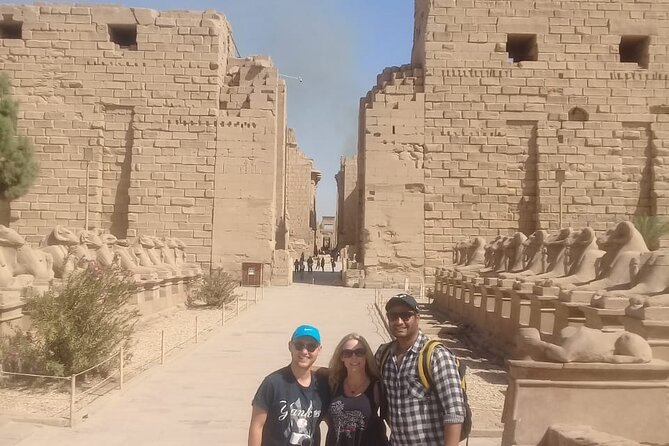
The final major visit is Karnak Temple on Luxor’s East Bank. Karnak is vast, and you should not expect to understand it all in one quick circuit. Its courts, columns, obelisks, and sacred spaces were built and altered over many centuries, so the guide’s explanations are particularly useful.
The day combines several major sites, which makes it efficient but busy. If you prefer a slow visit at every monument, ask about amending the itinerary before booking. The operator says the route is flexible, but changes should be agreed in advance rather than assumed on the day.
After Karnak, you are transferred to Luxor train station, Luxor airport, or a Luxor hotel. That final transfer is a real convenience, especially if you are continuing to Cairo by train or flying onward.
What the boat adds to the trip
The boat is not just a floating hotel. It gives the route its central pleasure: time on the river between temple visits. You can swim, sit on the sun deck, take afternoon tea, or join the evening disco.
The listed accommodation is three nights on a five-star cruise boat, with a cabin equipped with standard facilities. The exact ship name and cabin layout are not provided, so I would confirm those details if the vessel itself is important to your decision.
Meals are included from lunch on the first day through breakfast on the last day. That covers lunch, dinner, and breakfast during the cruise, but drinks are not included. The arrangement makes budgeting easier, though it does mean you will eat according to the boat’s schedule.
Shopping tours are also listed as included. If you prefer to spend every spare minute at monuments or on deck, ask how much time is allocated to shopping. It is a useful point to clarify before departure.
Guides, vehicles, and the private format
The tour includes a licensed Egyptology guide, qualified drivers, and an air-conditioned minivan for land transport. The guide is one of the most important parts of the experience because the monuments are large and full of symbols that are easy to miss.
Past guide assignments have included Ahmed, Mohammed, Ramey, and Sayed. Ahmed was praised for friendly explanations, Mohammed for making the trip fun and memorable, Ramey for helping with a cabin upgrade, and Sayed for offering French-language guidance. These names are useful examples, not a guarantee of who will lead your group.
Only your group participates, which gives you more control than a large shared coach. You can ask questions without waiting for a crowd, and the itinerary can be adjusted on request. The trade-off is that a private tour may not have the same price advantages as a large group, although group discounts are available.
Most people can participate, and the tour is near public transportation. Portage and meet-and-assist service are included, which helps at arrival and departure points.
Is $398 good value?
At $398 per person, the package covers a lot: three nights aboard the boat, full-board meals, door-to-door transfers, a guide, minivan transport, the listed sightseeing, horse and carriage at Edfu, and assistance with arrival and departure.
You should add about $50 per person for entrance fees. Drinks are extra, and a different language may carry an additional fee. Those costs do not make the tour poor value, but they mean the headline price is not your complete spending figure.
The strongest value comes from the convenience. You do not need to arrange separate transport between Aswan, Kom Ombo, Edfu, and Luxor, and you avoid finding accommodation for the three cruise nights. Families, first-time visitors, and anyone on a tight schedule will likely appreciate that structure.
Who should book this Nile cruise?
I would choose this trip if you want the main Aswan to Luxor sights in four days, prefer a private group, and like having meals and transport arranged. It is also a good fit if you enjoy a mix of guided sightseeing and relaxed time beside a swimming pool.
It may be less suitable if you want complete independence, long unstructured visits, or a quiet boutique boat with no group entertainment. The evening disco and scheduled meals give the cruise a social holiday feel.
Before booking, confirm the cabin position, the boat name, the language of your guide, and how the shopping stops fit into the day. If you are comfortable with the extra entrance fees and a fairly busy final day, this is a practical way to connect Aswan and Luxor.
FAQ
How long is the Nile cruise?
The experience lasts approximately four days and includes three nights aboard the cruise boat.
Where does the tour begin?
The tour begins in Aswan, with pickup available from an Aswan hotel, train station, or airport.
Where does the tour end?
The final transfer can take you to a Luxor hotel, Luxor Airport, or Luxor Train Station.
What meals are included?
Meals are included from lunch on the first day through breakfast on the fourth day. The package includes breakfast, lunch, and dinner during the cruise period.
Are entrance fees included?
No. Entrance fees are paid separately and are estimated at about $50 per person for all the listed sites.
Are drinks included?
No. Drinks are not included in the tour price.
Which monuments are visited?
The route includes the Aswan High Dam, Philae Temple, Kom Ombo Temple, Edfu Temple, Luxor Temple, the Valley of the Kings, Hatshepsut’s Temple, the Colossi of Memnon, and Karnak Temple.
Is the tour private?
Yes. Only your group participates in the activity.
Is a guide included?
Yes. A qualified Egyptology guide is included. Other languages can be arranged for an additional cost.
Can the itinerary be changed?
The itinerary is described as flexible, and amendments can be requested. Arrange changes before the tour rather than assuming they can be made during the trip.
Is the Edfu carriage ride included?
Yes. The horse and carriage transfer to Edfu Temple is included.
Can I cancel for a full refund?
Yes, if you cancel at least 24 hours before the experience starts. Cancellations or changes made less than 24 hours before the start time are not accepted for a refund.
Should you book it?
Book this cruise if you want Egypt’s classic southern sights handled in one tidy package, with a private guide, meals, transfers, and three nights on the Nile. The extra entrance fees and busy fourth day are the main points to weigh.
For many people, the combination of temple visits and river time is worth more than arranging each piece separately. Confirm your cabin, guide language, and final costs, then this four-day route makes a sensible first look at the Nile between Aswan and Luxor.
Just added around Aswan
- Sailing Nile Cruise from Aswan to Luxor for 2 Nights★ 4.5 · 139 reviews
- 4-Day Nile Cruise: Aswan to Luxor & Abu Simbel + Hot Air Balloon★ 4.5 · 35 reviews
- 4-Days Aswan sails Nile Cruise Luxor &Abu Simbel.Hot air Balloon★ 4.5 · 77 reviews
- Sailing Nile cruise from Aswan to Luxor includes tours for 3 nights★ 5.0 · 16 reviews
- Sailing Nile cruise from Aswan for 2 nights★ 4.0 · 11 reviews
- 8 Nights Egypt Tour,Cairo,Luxor,Aswan&Abu Simbel,Nile Cruise,Hot Air Balloon★ 4.5 · 11 reviews
- 2 nights Nile cruise includes tours from Aswan to luxor★ 4.5 · 64 reviews
- (Wonderful 3-Nights Nile Cruise from Aswan to Luxor & Balloon)★ 4.5 · 17 reviews
Aswan River Cruises, compared.
4-Days Nile Cruise From Aswan To Luxor including Abu Simbel and Hot Air Balloon
Read our review →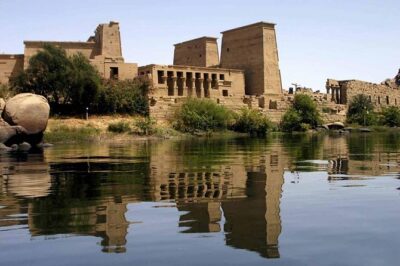
4-Day 3-Night Nile Cruise from Aswan to Luxor&Abu Simbel+Balloon
Read our review →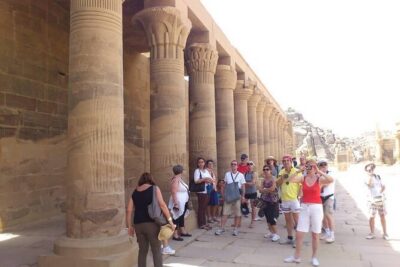
4-Day 3-Night Nile Cruise from Aswan to Luxor including Abu Simbel, Air Balloon
Read our review →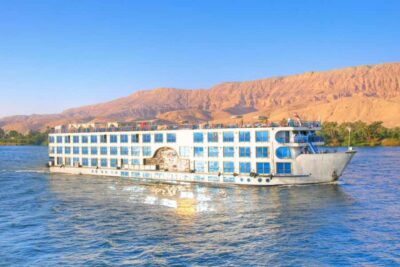
4-Day Nile Cruise from Aswan to Luxor with Guide
Read our review →4-Days Nile Cruise From Aswan To Luxor including Abu Simbel and Hot Air Balloon
Read our review →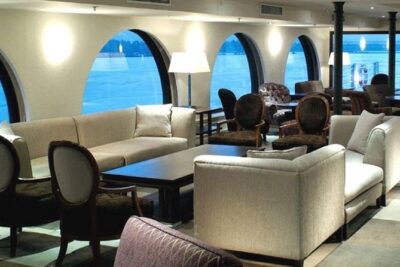
4-Day 3-Night Nile Cruise from Aswan to Luxor – Private Tour
Read our review →4 Days Nile Cruise from Aswan to Luxor including Abu Simbel and Hot Air Balloon
Read our review →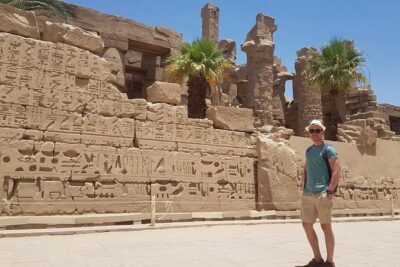
4-Day 3-Night Nile Cruise from Aswan to Luxor With Balloon and Abu Simbel
Read our review →Browse the lists this tour appears in