

REVIEW · GERMANY
Cologne: Crime on the Rhine guided tour
Cologne’s cathedral quarter has more than grand churches and cheerful beer halls. On this two-hour crime walk, you follow old cases involving failed executions, prison cells, murder, hostage-taking, and the harsh punishments once handed out in the city. The stories unfold at the places where they happened, or as close as modern Cologne allows.
I like the tour’s wide sweep across different periods, from medieval ideas of honor to a case connected with the Gladbeck hostage-takers. I also like its strong value at $17, especially if you want a city walk with a sharper edge than the usual sightseeing route. The main drawback is that wartime destruction and modern rebuilding mean some original crime scenes have little left to see, and one recent participant found the guide hard to hear at times.
Key points to know before you go
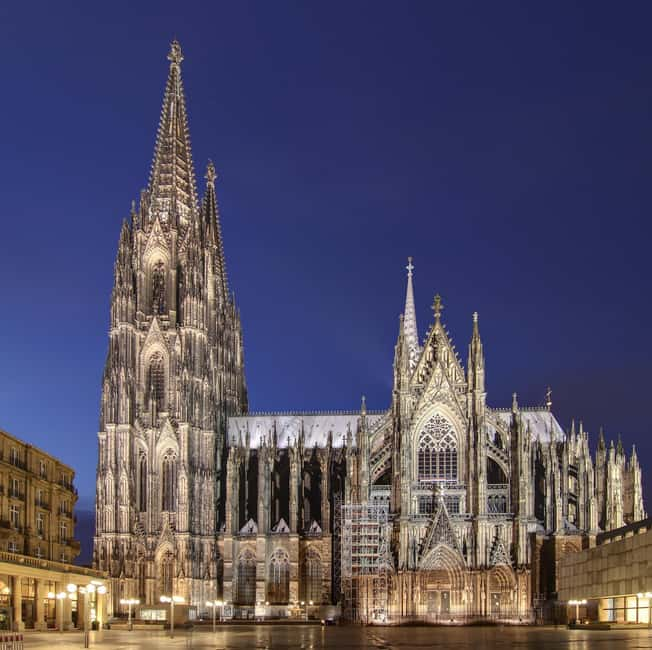
- Roncalliplatz reveals the cathedral’s darker side: Learn how the archbishop’s prison once functioned and why a fight near the cathedral led to a failed execution.
- The Finance Court marks a grim legal milestone: This is tied to the last death sentence imposed in West Germany.
- Breite Straße connects history with recent crime: The route includes the Gladbeck hostage-takers and the tension surrounding that notorious case.
- The stories span many centuries: Expect medieval honor codes, alcoholism, murder, disguise, books, and the death penalty.
- German is the only tour language: Some material is presented in its original language, so German comprehension matters.
- The walk runs in all weather: Wear good shoes and bring clothing suited to rain or snow.
Cologne’s crime stories begin beside the cathedral
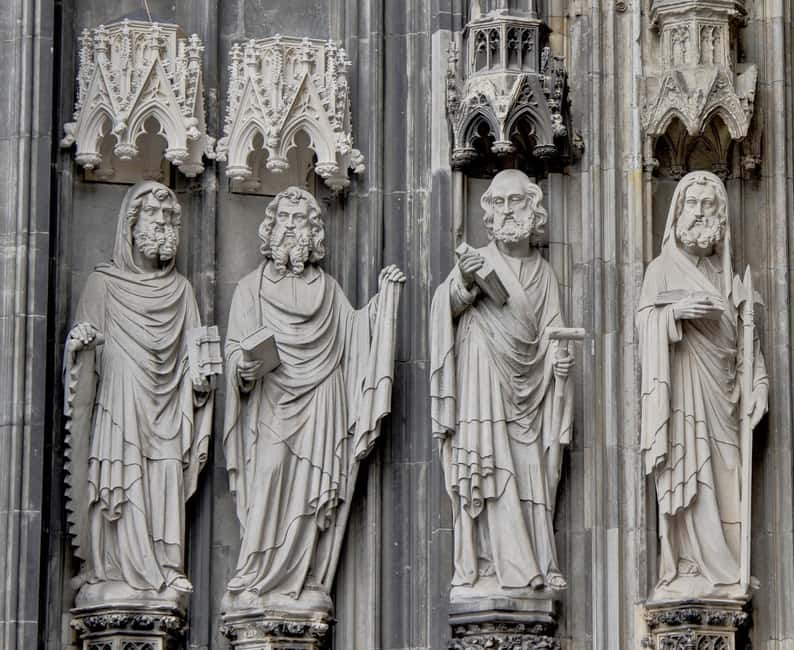
The meeting point is the Kreuzblume on Kardinal-Höffner-Platz, opposite Café Reichard. That puts you right by Cologne Cathedral, an easy place to find if you are already exploring the old town. Look for the guide wearing a Kölngeflüster name tag.
The setting gives the tour an immediate advantage. You are not starting in a distant neighborhood or spending the first part of the walk getting oriented. You begin in the center of Cologne, where church power, public life, trade, and punishment once crossed paths.
The opening stories focus on crimes and penalties in the cathedral area. One question sets the tone: how could a scuffle in or near the cathedral lead to an execution that failed? Another asks why buying a book could end at the gallows. These are not just tales of wrongdoing. They show how authorities once treated disorder, reputation, religion, and property.
I like this approach because it makes familiar streets feel less polished and predictable. You may have already photographed the cathedral, but the tour asks you to picture the square as a place of authority and fear, not only as a postcard backdrop.
More Rhine and Moselle cruises in Germany:
- Cologne: Top Sights Rhine River Cruise – Skyline Tour
★ 4.4 · 3,030 reviews - Düsseldorf: City Sightseeing Cruise on the Rhine
★ 4.1 · 2,954 reviews - Koblenz: Rhine Valley Castles and Palaces Boat Tour
★ 4.4 · 1,824 reviews
Roncalliplatz and the archbishop’s prison
Roncalliplatz is one of the key stops. Today, it is part of the public space around the cathedral. The tour uses it to explain the archbishop’s prison and the power held by religious authorities in earlier Cologne.
This is a useful reminder that punishment did not always belong to a modern police force or state court. Church officials also had authority, and a prison connected with the archbishop could carry serious weight. The story of the failed execution after a scuffle near the cathedral gives that setting a human scale. A small act of violence could trigger consequences that now seem wildly out of proportion.
You should not expect a preserved prison interior or a theatrical reconstruction. The appeal is in hearing the account at the original site and then comparing the modern square with the older world beneath it. One practical point matters here: much of central Cologne was destroyed during the Second World War, and later rebuilding changed the appearance of many locations.
That means the tour works best if you enjoy historical imagination. You will often be standing on a modern street while the guide explains what once occupied the same ground. If you need visible ruins at every stop, this may feel thin. If you enjoy connecting present-day places with lost settings, the lack of surviving structures becomes part of the story.
From honor in the Middle Ages to a cassock disguise
The walk moves across several kinds of crime. Medieval honor receives attention, showing how personal standing and public respect could shape behavior and punishment. In a society where reputation mattered greatly, an insult was not always a private matter. It could lead to violence, retaliation, or legal trouble.
The tour also tells why a cassock once dressed a murderer. That detail captures the strange mix of religion, disguise, and crime found in older cases. It is the sort of image that stays with you because it is specific and hard to reduce to a simple lesson.
Another story concerns a murder during a pope’s visit. The subject gives the guide a chance to explain how major religious events could heighten pressure in the city. The point is not simply that a crime occurred during an important visit. It is that public ceremony, crowds, status, and security have long created their own risks.
These accounts should appeal to you if you like history told through individual actions rather than dates and rulers. The tour does not present Cologne as a list of buildings. It uses people who broke rules, lost control, defended their honor, or tried to escape justice.
The baker, alcoholism, and ordinary lives gone wrong
Not every case involves famous officials or dramatic public events. The story of a baker whose life was nearly ruined by alcoholism brings the subject closer to everyday Cologne.
That story matters because crime tours can become too focused on killers, executions, and shocking headlines. A case involving addiction and work shows how personal problems could affect a family, a trade, and a person’s place in the community. You get a sense of how older societies judged weakness and wrongdoing, often with little understanding of the causes behind them.
The tone is not described as grim from start to finish. The guide presents the material as entertaining and sometimes amusing, while still dealing with real crime and punishment. That balance is important. You are signing up for an unvarnished true-crime walk, but not necessarily two hours of horror.
I would choose this tour for an adult who likes social history as much as sensational crime. It offers stories about how people lived and failed, not just how authorities punished them. The subject matter remains unsuitable for children under 16.
More guided river trips in Germany:
- Berlin: 1-hr Boat Tour with Bilingual Live Guide (DE/EN)
★ 4.5 · 778 reviews - Guided tour in Mainz on the Rhine in german and english
★ 4.9 · 163 reviews - Mainz: guided evening tour of the Rhine riverbank/old town in German and English
★ 4.9 · 106 reviews - Reil, Mosel: Guided organic wine tasting and cellar tour
★ 4.8 · 84 reviews
The Finance Court and West Germany’s last death sentence
The Finance Court provides one of the most striking modern legal stops. It is connected with the last death sentence imposed in West Germany.
This point helps the tour move beyond medieval tales. Cologne’s criminal past is not sealed away in the distant past. The death penalty, legal judgment, and the question of punishment continued into modern German history. For you, that creates a useful contrast between older executions near the cathedral and later legal systems operating in a very different political and social setting.
The stop is also a reminder to pay attention to the difference between a place’s present purpose and its historical association. A court building may look formal and ordinary today, but its connection to a final death sentence gives it a heavier meaning during the walk.
The tour does not claim to offer a full legal history of Germany. Instead, it uses selected cases to make a point about changing ideas of justice. You will hear how punishment once functioned as public spectacle, then consider how modern courts handled the most serious penalties.
Breite Straße and the Gladbeck hostage-takers
Breite Straße brings the route into more recent memory with the Gladbeck hostage-takers. This case is one of the tour’s links between Cologne’s older crimes and modern criminal notoriety.
The inclusion of Breite Straße is valuable because it shows that crime history is not limited to ancient alleys or vanished prisons. A busy city street can carry memories of events that still feel close to the present. The contrast between daily shopping and a notorious hostage case gives the stop its force.
You may find this section more immediately understandable than the medieval stories. Modern streets, modern institutions, and modern media change how you think about the event. At the same time, the tour keeps its attention on the location rather than turning into a general lecture on crime in Germany.
As with other stops, the place itself may not look dramatic. Cologne is a living city, and Breite Straße is not presented as a preserved crime scene. The guide’s storytelling does the work. Stand close, listen carefully, and picture the street under very different circumstances.
Hühnergasse and the value of a small street
Hühnergasse is another stop built around a question: what is the story behind this unusual name and place?
Small lanes often make good history stops because their names survive even after their original purpose has disappeared. Hühnergasse gives the guide a chance to connect a modest street with the wider story of Cologne’s past. You may not find a large monument or an obvious explanation in the pavement. That is precisely why the guide’s account matters.
This is one of the tour’s more atmospheric moments. Instead of focusing only on courts, prisons, or execution sites, the walk asks you to notice the city’s minor streets. Crime history can hide in names and corners, not just in grand buildings.
If you like urban details, you will probably enjoy this stop. If you prefer every story to come with a visible structure or memorial, keep your expectations in check. One practical point from the tour’s format is clear: some places have changed so much that the story is more important than what remains on view.
How the two-hour format works for your day
Two hours is a sensible length for this subject. It gives the guide enough time to cover several periods without turning the walk into an all-day commitment. You can fit it into a morning or afternoon of sightseeing, or use it as an evening activity near the cathedral and old town.
Expect a walking tour rather than a staged show. The included service is the city walk with a live German-speaking guide. The route ends near the cathedral and old town, so you finish in a useful area for food, drinks, and further sightseeing.
Wear comfortable shoes. Cologne’s center is easy to explore on foot, but two hours of standing and walking still calls for sensible footwear. The tour operates in rain and snow, so bring weather-appropriate clothing rather than hoping for a perfect forecast.
The walk is wheelchair accessible, which makes it a practical option for many visitors with mobility needs. Still, the supplied details do not specify the exact surface or conditions at each stop, so you may want to confirm any personal access requirements before booking.
The group rules also matter. Pets are not allowed, except assistance dogs. Alcohol and drugs are prohibited, and party groups, including bachelor and bachelorette groups, are not accepted. This is a focused cultural walk, not a pub crawl dressed up as history.
Is $17 a fair price for Cologne crime history?
At $17 per person, this is a good-value guided walk if you can follow German. You receive two hours of live interpretation at central Cologne locations, including several sites that you might pass without understanding their connection to crime and punishment.
The value comes from the guide’s selection and timing. You could walk through Roncalliplatz, Breite Straße, and the cathedral quarter for free, but you would not automatically know about the archbishop’s prison, the failed execution, the Finance Court’s death sentence, or Hühnergasse.
The price is less attractive if you speak little German or want a visual tour with many surviving buildings. Some locations have been altered or rebuilt, and one participant specifically wished that more of the original scenes had survived. That is not a fault the guide can solve, but it affects what you get for your money.
A useful booking safeguard is the free cancellation available up to 24 hours before the start time. You can also reserve now and pay later, which helps if your Cologne schedule is still shifting.
Who should book this walk?
I would recommend it to adults and older teenagers who enjoy true crime, legal history, church power, and unusual city stories. It is especially suitable if you have already seen Cologne Cathedral and want a different way to understand the streets around it.
German ability is essential. The live tour is in German, and some content appears in its original language. If you only know a few German phrases, you may miss the detail that gives these cases their meaning.
You should also be comfortable with serious subjects. The tour covers murder, executions, hostage-taking, alcoholism, and punishment. The presentation may include humor, but the cases themselves are not light entertainment.
The strongest part is the storytelling. Several ratings describe the delivery as lively, clear, amusing, and easy to follow. One person found the guide too quiet, so stand near the guide if hearing is a concern, especially in a busy city center.
Should you book the Crime on the Rhine walk?
Book it if you want specific Cologne stories rather than a standard sightseeing loop. The mix of cathedral power, medieval honor, death sentences, modern hostage-taking, and odd street history gives the walk a useful range.
Skip it if you need English, want preserved crime scenes, or prefer a family-friendly activity for young children. For German-speaking visitors aged 16 and up, $17 is a modest price for two hours of guided local history, especially when you treat the city streets themselves as the setting.
FAQ
What language is the Crime on the Rhine tour conducted in?
The live tour guide speaks German. Some content is also shown in its original language.
How long does the tour last?
The walking tour lasts two hours.
Where does the tour meet?
Meet at the Kreuzblume, opposite Café Reichard, on Kardinal-Höffner-Platz, 50667 Cologne.
Where does the tour end?
The tour ends near Cologne Cathedral and the old town.
Is the tour suitable for children?
No. The activity is not suitable for children under 16.
Does the tour operate in bad weather?
Yes. The walk takes place in rain and snow, so bring weather-appropriate clothing and wear comfortable shoes.
Just added around Germany
- Cologne Rhine River 1-Hour Sightseeing Cruise★ 3.5 · 204 reviews
- Rhine River Evening Panorama Cruise in Cologne★ 3.5 · 29 reviews
- Berlin sightseeing boat tour on the Spree★ 4.0 · 93 reviews
- Laughing Spree – English Comedy Show on a Boat★ 5.0 · 123 reviews
- Berlin Spree River Sightseeing Cruise Experience★ 3.0 · 12 reviews
- Mannheim: Segway Tour along the Neckar River★ 5.0 · 15 reviews
- Dresden: Scavenger Hunt to Elbe River & Castles★ 4.7 · 15 reviews
- Rostock: Electric Boat Rental on the Warnow River★ 4.8 · 106 reviews
Germany River Cruises, compared.
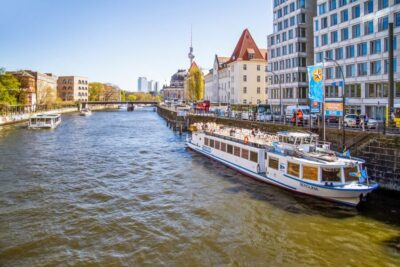
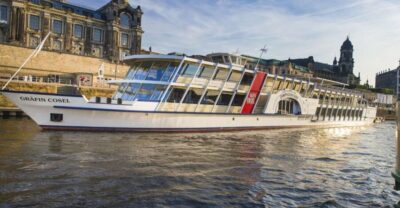
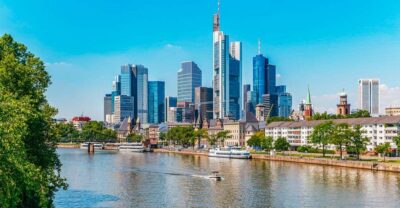
Frankfurt: River Main Sightseeing Cruise with Commentary
Read our review →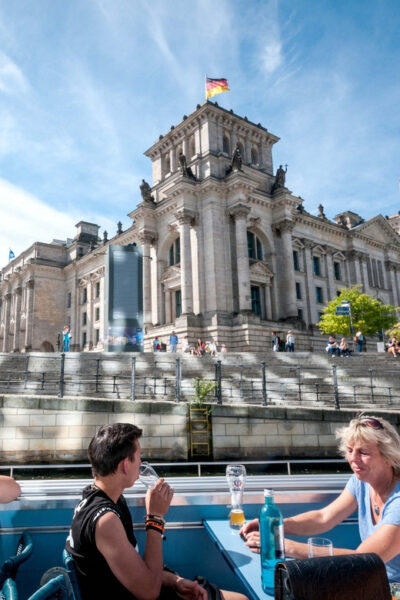
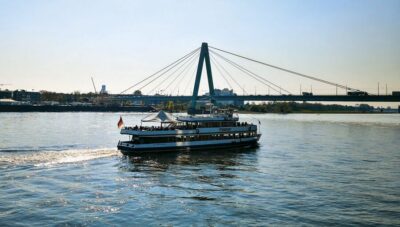
Cologne: Top Sights Rhine River Cruise – Skyline Tour
Read our review →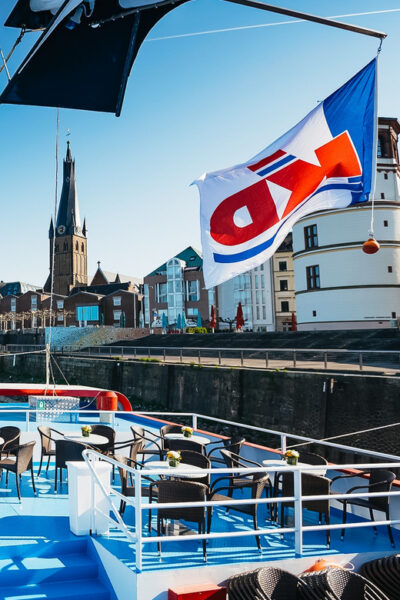
Düsseldorf: City Sightseeing Cruise on the Rhine
Read our review →
Heidelberg: Neckar River Sightseeing Boat Tour with Drink
Read our review →
Dresden: Elbe River Cruise to Pillnitz Castle
Read our review →Browse the lists this tour appears in