
REVIEW · BUDAPEST
River Cruise ticket and Walking Tour in Budapest
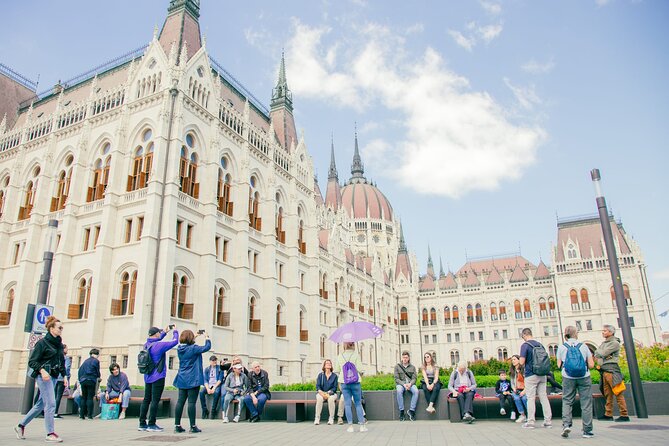
Budapest makes a strong first impression from the river, but its best stories are tucked into the streets beside it. This two-and-a-half-hour walking tour and river cruise links grand buildings, solemn memorials, playful statues, and sweeping Danube views in one compact outing. I especially like the mix of serious history and small local details, from St. Stephen’s mummified right hand to the belly-rubbing Fat Policeman statue.
I also like the small group limit of 20 people and the chance to book an afternoon departure. Guide Panna is repeatedly singled out for humor, patience, clear explanations, and a well-judged pace. The main drawback is that most stops are exterior visits, and museum or building admission is not included, so you should not expect an in-depth look inside Parliament or the Basilica.
At a glance
- The route connects major Budapest sights: St. Stephen’s Basilica, Parliament, Shoes on the Danube Bank, Chain Bridge, and Margaret Island all appear within one short program.
- Guide Panna receives special praise: Expect an English-speaking guide who adds stories, answers questions, and keeps the walk interactive.
- The best timing may be the afternoon: You can finish as Budapest’s lights begin to come on, adding a fine evening view from the river.
- The tour balances weighty and lighthearted stops: The Holocaust memorial is deeply moving, while the Fat Policeman and Little Princess statues add a touch of fun.
- The price is $71.20 per person: That is most useful if you value a guide plus a cruise ticket, rather than simply a list of outdoor sights.
- The meeting and ending points are central: Begin at St. Stephen’s Basilica and finish at Vigadó tér, Budapest Dock #6.
Why this Budapest combination works
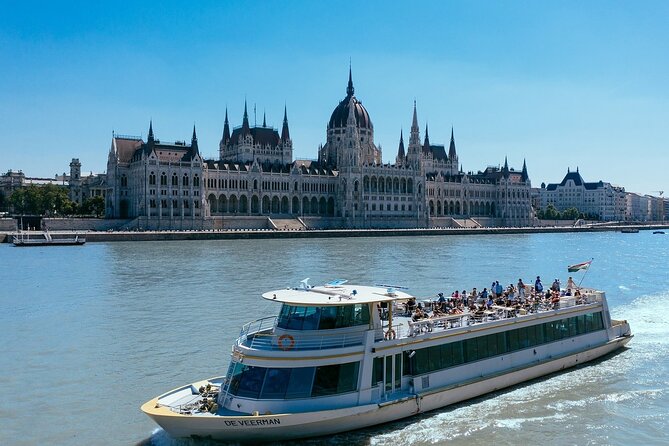
I like this experience because it gives you two ways to read the city. On foot, you are close to the stonework, statues, memorials, and street life. From the Danube, the riverfront opens up and Budapest’s scale becomes easier to grasp.
The walking portion also gives context to sights that can otherwise blur together. Parliament is not just a grand Gothic Revival building. The Chain Bridge is not only a photogenic crossing. The guide connects each place to Hungarian politics, religion, memory, architecture, or daily life.
At $71.20, the value depends on how much structure you want. You are paying for an English-language guide, a river cruise ticket, and a route that covers several major landmarks without requiring you to plan the connections yourself. You are not paying for entry into museums or the interiors of the buildings listed.
That distinction matters. If your ideal tour means going inside Parliament, climbing through the Basilica, or spending a long time at each site, this is not that kind of visit. If you want a well-paced introduction before exploring Budapest on your own, the format makes good sense.
More walking tours in Budapest:
- Walking Tour Budapest incl. the Shoes on the Danube Bank
★ 5.0 · 387 reviews - Budapest Night Walking Tour with Danube River Cruise
★ 4.5 · 155 reviews - Porto Walking Tour, Lello Bookshop, River Cruise and Cable Car
★ 5.0 · 3,354 reviews
Starting at St. Stephen’s Basilica

The tour begins at St. István Bazilika, one of Budapest’s key religious buildings. Its neoclassical exterior gives you an immediate lesson in the city’s grand scale, but the most memorable detail is inside: the basilica holds the mummified right hand of St. Stephen, Hungary’s first king.
You do not enter during this tour, and admission is not included. Still, the guide’s short explanation helps you understand why the church matters. Its construction took about a century, and its 96-meter height matches that of Parliament, creating a symbolic balance between religious and state power.
The ten-minute stop is best treated as an introduction, not a full church visit. If you want to see the relic or examine the interior, plan a separate visit at another time.
A lucky stop with the Fat Policeman
The Fat Policeman Statue offers a quick change of mood. This bronze figure has a round belly, curled mustache, and a friendly expression linked to the Austro-Hungarian era’s gendarmerie.
The local custom is simple: rub his belly for good luck. It is an easy photo stop, and the five-minute visit gives the walking route some personality. Budapest has no shortage of monumental buildings, so a slightly silly statue helps keep the tour from becoming a long march through formal architecture.
Do not expect a major historical site here. Its value is the small story and the chance to notice the city’s sense of humor.
Parliament and Hungary’s national symbols

The Hungarian Parliament is the visual heavyweight of the route. Set beside the Danube, this Gothic Revival building is one of Europe’s largest legislative structures and one of Budapest’s most recognizable sights.
The exterior visit lasts about ten minutes. That is enough for an introduction, some photographs, and an explanation of why Parliament carries such weight in Hungarian public life. The building also holds the Holy Crown of Hungary, used for centuries in the coronation of the country’s kings.
Again, there is no interior admission in this experience. If you want to see the crown and the grand halls inside Parliament, you will need a separate ticket. The benefit here is orientation: you learn what you are looking at before returning later, or you simply enjoy the building from the riverfront without committing more time.
More entry tickets in Budapest:
- Paris: Louvre Museum Entry Ticket With Host and River Cruise
★ 4.6 · 9,926 reviews - Paris: Louvre Reserved Ticket and River Cruise Combo
★ 4.0 · 6,054 reviews - Chicago: Architecture River Cruise Skip-the-Ticket Line
★ 4.8 · 4,325 reviews - London: Thames River Cruise with Optional London Eye Ticket
★ 4.5 · 3,900 reviews
A quiet pause at the Shoes on the Danube Bank
The Shoes on the Danube Bank memorial is the emotional center of the walking route. Dozens of iron shoes line the waterfront, recalling Jewish people who were forced to remove their shoes before being killed and thrown into the river during World War II.
The memorial is direct and spare. There are no elaborate displays to compete with the setting. The empty shoes do the work, and the position beside the Danube makes the stop especially powerful.
The planned visit is about ten minutes, but do not feel obliged to treat it like a quick photo stop. This is a place for attention and respect. The guide’s historical explanation adds needed context, while the memorial itself gives you a moment to reflect on the thousands of Jewish victims murdered in Hungary during the Holocaust.
This stop also provides useful balance. Budapest is often presented through imperial buildings, bridges, and café culture. The memorial reminds you that the city’s past includes events that demand a quieter tone.
The Hungarian Academy of Sciences and the riverfront
The Hungarian Academy of Sciences brings the route back to architecture and public life. Its neoclassical building sits along the Danube, where the setting is almost as important as the facade.
The Academy has played a major role in scientific work in Hungary and in supporting the Hungarian language. That point is worth noting because language is closely tied to the country’s cultural identity. Even a brief explanation can show you that Budapest’s grand institutions are not only political or religious. They also represent education, research, and national culture.
This is a five-minute stop, so expect a concise look rather than an academic lecture. The riverside location makes it a good place to pause, look across the water, and prepare for the city’s more decorative architecture nearby.
Gresham Palace and Budapest’s Art Nouveau side

Gresham Palace is one of the route’s most attractive architectural stops. The former luxury apartment building is now home to the Four Seasons Hotel, but you can still appreciate its Art Nouveau details from outside.
The building reflects Budapest’s early twentieth-century confidence, with ornate design and a prime position near the Danube. Its connection to famous visitors, including Queen Elizabeth II, Prince Charles, Beyoncé, and Brad Pitt, adds a modern note to the story, though the building itself is the main attraction.
The ten-minute stop works well for photographs and for noticing the contrast between the formal neoclassical Academy and Gresham’s more decorative style. You will not be touring the hotel’s rooms, and the experience does not include interior admission. Think of this as an architectural lesson from the pavement.
Crossing the Chain Bridge story

Széchenyi Chain Bridge was the first permanent bridge linking Buda and Pest. Opened in 1849, it became a physical and symbolic connection between the two sides of the city.
The bridge is known for its stone lions and iron chains, but its importance goes beyond the design. It represents unity and progress, while its long life has carried it through wars, political upheaval, and countless sunsets over the Danube.
The ten-minute stop is a highlight for anyone who wants a clear sense of Budapest’s layout. Looking along the river from the bridge helps you understand how Buda and Pest face each other, and why the Danube is central to the city’s identity.
The exact amount of time spent walking across the bridge is not specified, so you should not assume this is an extended crossing or a full Buda Castle visit. The program does touch the Buda side in its broader route, but the listed stops focus on riverside landmarks rather than a detailed tour of the castle district.
The Little Princess and the playful side of the city
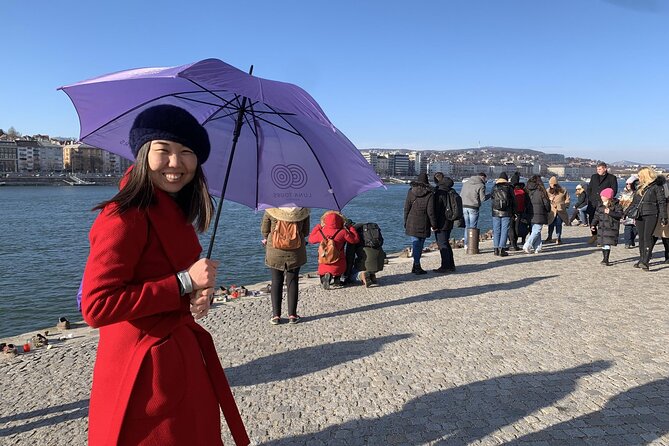
The Little Princess Statue is a small bronze figure along the Danube. Created by sculptor László Marton, she is shown in a playful pose and has become one of the city’s familiar public sculptures.
This ten-minute stop is another reminder that Budapest is not only grand avenues and national monuments. The statue has an informal charm that works well after the more serious Shoes on the Danube Bank memorial and the imposing Parliament.
It is also a useful photography stop. Since the tour has a limited group size, you should have a better chance of hearing the short story and getting a clear look than you might on a large sightseeing outing.
Margaret Island and the change of pace
Margaret Island is the route’s greenest stop. Set in the Danube, it offers gardens, open space, and views from Margaret Bridge. The island is suited to a slower kind of visit, with room for strolling, cycling, or simply looking back toward the city.
The island also has historical interest. Medieval ruins, including the remains of a Dominican convent, connect its peaceful setting to Budapest’s earlier centuries.
Only five minutes are assigned here, and the island is large enough that this cannot be a full exploration. Treat it as a brief introduction and a chance to see a quieter side of the city. If you want gardens, ruins, or a long walk, return independently with more time.
Seeing Budapest from the Danube
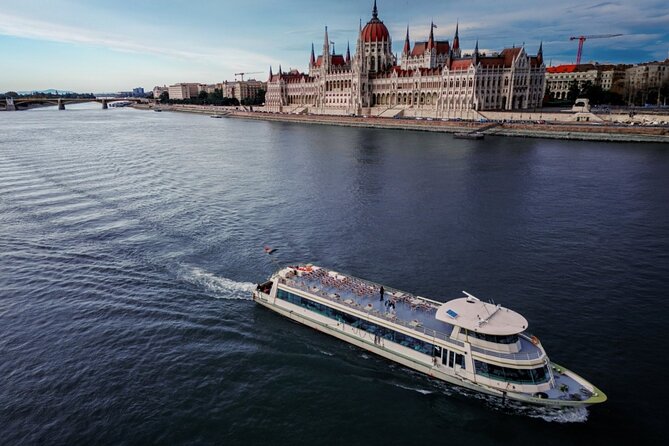
The river cruise is the part that changes the view most. From street level, buildings can feel disconnected. From the water, Parliament, the bridges, the riverbanks, and the hills of Buda come together in one broad scene.
The experience includes a cruise ticket, and drinks are available on the boat. The precise cruise length and departure sequence are not stated, so you should allow the full approximate duration of two hours and 30 minutes rather than planning another appointment immediately afterward.
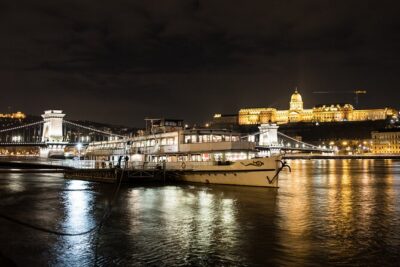
An afternoon departure is a smart choice if available. You may see the city in daylight and then watch the lights come on as the experience finishes. That timing was specifically praised by the guide’s past customers, and it suits Budapest especially well because the riverfront looks different as the day fades.
The boat portion also gives your feet a break after the walking stops. You still need to be comfortable moving between several locations, but the combination is less tiring than a walking-only sightseeing program.
Panna and the guide-led pace
Panna is the guide name most closely associated with this experience. She is described as humorous, informative, patient, and willing to answer many questions. Those qualities matter more than a memorized list of dates.
A good city guide helps you connect details. St. Stephen’s relic, the equal height of the Basilica and Parliament, the Holy Crown, the Chain Bridge, and the Academy’s language role become parts of one story rather than isolated facts.
The pace also receives strong approval. The route includes many stops, but none is meant to become a lengthy lecture. The format should suit you if you want useful explanations and time for questions without spending half a day inside a single museum.
The group limit is 20 people, which is small enough to make an interactive walk possible while still being larger than a private tour. If you have a question, ask it. The experience is designed to work better as a conversation than as a silent procession.
Meeting point, timing, and practical value
You begin at St. Stephen’s Basilica in Budapest’s 1051 district and finish at Vigadó tér, Budapest Dock #6, also listed as Budapest Dock #6. Both points are central, and the start is near public transportation.
The mobile ticket is useful for a sightseeing day when you do not want to carry paper. Confirmation is provided at booking, and the experience is offered in English.
The full program lasts about two hours and 30 minutes. With 10 listed stops, the time at individual places is short, usually five or ten minutes. That makes the tour efficient, but it also means you should not expect long independent pauses at every landmark.
Free cancellation is available if you cancel at least 24 hours before the start time. Changes or cancellations made less than 24 hours ahead are not accepted for a refund, and the cut-off follows local time.
Who should book this experience?
I would choose this tour for a first visit to Budapest, especially if you want a quick sense of how the city fits together. It covers religion, politics, architecture, wartime memory, public art, bridges, greenery, and the Danube in one outing.
It also suits you if you prefer a guide who explains stories rather than simply pointing out buildings. The repeated praise for Panna’s humor, patience, and answers suggests that the human side of the tour is a major part of its appeal.
You may want something else if your priority is interior access. The Basilica, Parliament, Gresham Palace, and other buildings are viewed from outside, and museum tickets are not included. Likewise, Margaret Island and the Buda side receive only a brief look rather than a long, detailed exploration.
Should you book the Budapest river cruise and walking tour?
Book it if you want an efficient introduction with a mix of walking and river views, and if $71.20 feels reasonable for a guided route plus the cruise ticket. The afternoon timing can add a pleasant bonus as the lights appear along the Danube.
Skip it if you already know central Budapest well, want extensive time inside Parliament or the Basilica, or prefer to explore each site at your own pace. For most first-time visitors, though, this is a practical way to get your bearings, hear the stories behind the sights, and finish with one of the city’s finest views.
FAQ
How long does the experience last?
The experience lasts approximately two hours and 30 minutes.
What language is the tour offered in?
The tour is offered in English.
Where does the tour begin?
It begins at St. Stephen’s Basilica, Budapest, 1051 Hungary.
Where does the tour end?
It ends at Vigadó tér, Budapest, 1051 Hungary, at Budapest Dock #6, also identified as the fifth pontoon.
Is the river cruise included?
Yes. The experience includes a river cruise ticket.
Are drinks available during the cruise?
Drinks are available on the boat.
Are museum or building admission tickets included?
No. Museum tickets are not included, and the listed stops at the Basilica, Parliament, and other buildings are exterior visits.
How many people can join the tour?
The maximum group size is 20 people.
Just added around Budapest
- Mulled Wine Danube Cruise with Audio Guide in Budapest★ 4.5 · 11 reviews
- Cocktail Cruise and City Views on the Danube in Budapest★ 4.0 · 236 reviews
- Wine & Food Tasting Cruise on the Danube★ 3.5 · 10 reviews
- Budapest Széchenyi Spa with Danube Cruise and Optional Dinner★ 4.0 · 122 reviews
- Private Guided Tour to Szentendre & Visegrád Castle (Danube Bend)★ 5.0 · 93 reviews
- Private Danube Bend Experience with a comfortable air conditioned car★ 5.0 · 10 reviews
- Budapest Danube Pizza Cruise with Welcome Drink★ 4.0 · 134 reviews
- Scenic Danube River bend hills & the Art Town: Private Car Tour★ 5.0 · 48 reviews
Budapest River Cruises, compared.
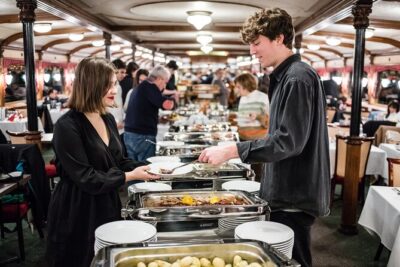
Budapest Danube Cruise and Dinner Options, Live Music and Dance
Read our review →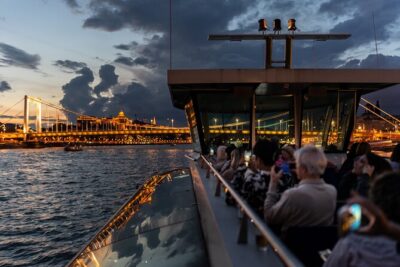
Budapest Danube River Sightseeing Night Cruise with Drink
Read our review →
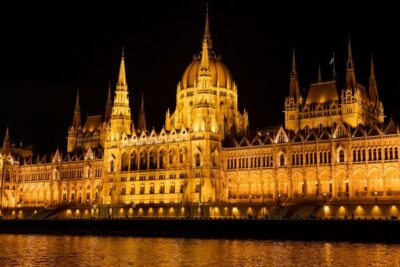
Candlelit Dinner River Cruise with Live Music
Read our review →
Budapest Danube River Candlelit Dinner Cruise with Live Music
Read our review →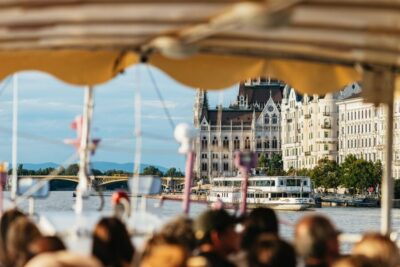

Budapest Evening Cruise with Entertainment and Drink Options
Read our review →Browse the lists this tour appears in