
REVIEW · ASWAN
Aswan to Luxor: 4-Day Private Nile Journey
The best part of this four-day trip is the way it links Egypt’s greatest sights without making you repack every night. You arrive in Aswan, board a three-night Nile cruise, and finish at Luxor after visiting temples, tombs, and ancient royal monuments along the river.
I like the practical all-in-one format, especially the included transfers, meals, guide, cruise excursions, and entrance fees to the listed sites. I also like the small maximum group size of 10, which should make temple visits easier to manage. The main drawback is the tight schedule, with early starts and several major sites packed into short visits.
Key points to know before booking
- Three nights on the Nile: The cruise provides your accommodation, meals, and transport between Aswan and Luxor.
- A strong ancient-Egypt route: You visit Philae, Kom Ombo, Edfu, Karnak, Luxor Temple, Hatshepsut, and the Valley of the Kings.
- Abu Simbel is extra: The optional road trip takes about three and a half hours each way from Aswan.
- Full-board package: Breakfast, lunch, and dinner are included for all three cruise nights, but drinks are not.
- Small group format: The maximum group size is 10 people, with an Egyptologist guide handling the sightseeing.
- Useful one-way finish: The journey begins in Aswan and ends at Luxor Airport, making it a good fit for a wider Egypt trip.
Why the Aswan to Luxor route works so well
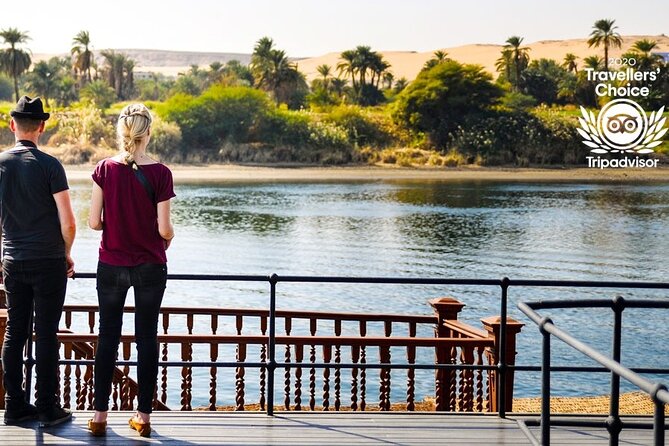
This is one of the easiest ways to see Upper Egypt. Instead of arranging separate cars, hotels, guides, and train rides, you follow the Nile north on one cruise. Your room travels with you, and the cruise ship becomes a comfortable base between excursions.
The route also has a natural rhythm. Aswan gives you island temples and granite quarries. Kom Ombo and Edfu add distinctive temples along the river. Luxor then delivers the biggest collection of monuments, from the enormous Karnak complex to the royal tombs west of the Nile.
The cruise schedule begins on a Friday, Monday, or Wednesday, so you need to fit your Aswan arrival around those departure days. Pickup is offered, and the tour ends in Luxor, with transfer to Luxor Airport on the last day. Domestic flights are not included, so allow time and budget for getting to Aswan and continuing from Luxor.
The advertised price is $840 per person. That is not a bare sightseeing tour. It covers three nights aboard a five-star standard cruise, full-board meals, the main excursions, transfers in an air-conditioned vehicle, guide service, and entrance fees to the listed attractions. Drinks, gratuities, domestic flights, Abu Simbel, the optional Luxor hot-air balloon ride, and the extra ticket for Tutankhamun’s tomb cost more.
For a short Egypt trip, that bundle has real value. You are paying for convenience as much as for the monuments. The tradeoff is that you have less control over the daily pace than you would with a private car and separate hotels.
More Nile cruises in Aswan:
- 4-Days Nile Cruise From Aswan To Luxor including Abu Simbel and Hot Air Balloon
★ 5.0 · 3,142 reviews - 4-Day 3-Night Nile Cruise from Aswan to Luxor&Abu Simbel+Balloon
★ 5.0 · 2,023 reviews - 4-Day 3-Night Nile Cruise from Aswan to Luxor including Abu Simbel, Air Balloon
★ 4.5 · 612 reviews
Day 1: Philae, the Unfinished Obelisk, and settling aboard
Your Aswan arrival starts with a meet-and-assist service at the airport. The guide is expected to wait at the exit door with a sign bearing your name, which is useful after a flight when the airport feels unfamiliar.
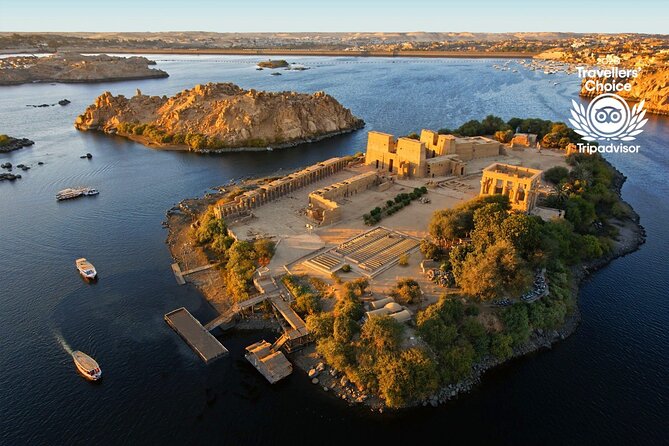
The first major visit is the Temple of Philae. You reach it by motorized boat, crossing to Agilika Island. That short boat ride gives the visit a proper sense of arrival, and the setting is one of the most memorable parts of the trip.
Philae was dedicated to Isis, one of ancient Egypt’s most important goddesses. Its carvings also show the long period when Egyptian, Greek, and Roman religious traditions overlapped. Look closely at the reliefs and you will see a site that belongs to more than one era, rather than a single neatly defined period.
The temple was dismantled and rebuilt on higher ground when the Aswan High Dam threatened to flood the original island. That rescue effort is worth remembering as you walk through the complex. You are not simply looking at an old temple. You are seeing a monument that was taken apart, moved, and reconstructed to preserve it.
Next comes the Unfinished Obelisk in Aswan’s granite quarries. The huge stone reveals how ancient workers shaped monumental granite. Because the obelisk was abandoned before completion, you can see the incomplete form rather than only the polished final product.
The first day lasts about two hours for the listed sightseeing, not including airport arrival and transfers. Admission fees are covered as part of the package, despite the short stop descriptions indicating tickets separately. After the visits, you settle into the cruise ship for the first night.
Day 2: Choosing Abu Simbel before sailing to Kom Ombo
Day two offers the trip’s biggest optional decision. You can leave early from Aswan by car for Abu Simbel, about three and a half hours each way. That means roughly seven hours on the road, plus time at the temples, so this is a demanding addition to an already full journey.
Abu Simbel is one of Egypt’s most dramatic sites. The main temple has four colossal statues of Ramses II on its façade, each about 70 feet tall. Nearby, the temple of Queen Nefertari adds a second monument and gives the visit more range than a single royal shrine.
Like Philae, Abu Simbel was moved to protect it from the waters created by the Aswan High Dam. The engineering effort behind the relocation is part of the site’s appeal. If seeing the great statues is a personal priority, the long drive may be worth the cost and fatigue. If you prefer a calmer cruise day, skip it and remain with the main schedule.
Abu Simbel is not included in the $840 price. The extra cost is not stated, so you will need to confirm it before booking or before departure. The same applies to any other optional activity.
The included visit on this day is Kom Ombo, reached by cruise. You leave the ship and walk to the temple, which sits above the river. Kom Ombo was built for two gods: Haroeris, a form of Horus associated with the sun, and Sobek, the crocodile god.
The double dedication gives the temple an unusual layout. Its design reflects two religious traditions operating side by side, and Sobek’s presence makes this stop different from the more familiar royal temples. The site is smaller than Karnak, but that is part of its advantage. You can understand its plan without facing the scale of a vast temple complex.
The stop lasts about two hours. Since visits along the Nile can be hot and exposed, comfortable walking shoes and protection from the sun will make a real difference. The cruise then continues north.
Day 3: Edfu, Karnak, and Luxor Temple
The third day includes the Temple of Horus at Edfu, followed by the major monuments on Luxor’s east bank. The schedule description places Edfu and the Luxor visits together, so confirm the exact morning timing with your operator. Cruise schedules can affect when you leave the ship and how long you have ashore.
Edfu’s Temple of Horus is one of Egypt’s best-preserved ancient temples. Built in 230 BC under Ptolemy III, it has a clear plan, tall walls, strong reliefs, and surviving color. The falcon-headed Horus was associated with the sky, kingship, and protection.
This is a useful stop because it lets you picture how temple worship worked. The walls, courtyards, halls, and reliefs are not scattered ruins. They form a coherent religious complex, and a good guide can explain how each section served its purpose.
After the cruise reaches Luxor, you cross to the east bank for Karnak. This is not a quick photo stop. Karnak grew under generations of pharaohs, each adding structures and inscriptions to the complex. Its Great Hypostyle Hall is the visual centerpiece, with massive columns rising about 80 feet.
The scale can be hard to grasp from photographs. Walk among the columns and you will understand why Karnak feels less like one temple and more like a sacred city built over centuries. Your Egyptologist guide is especially useful here, since the carved scenes and royal names can otherwise blur together.
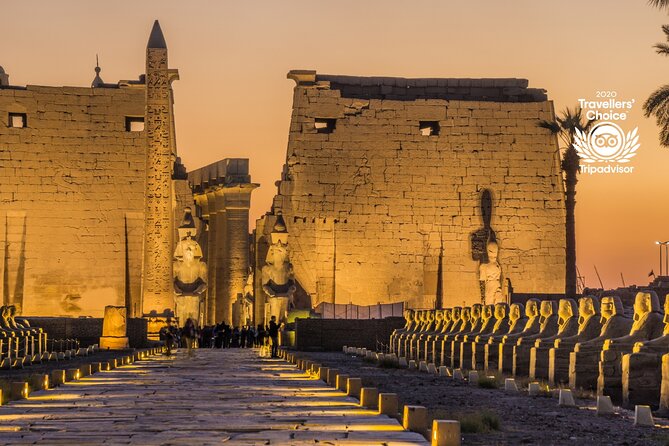
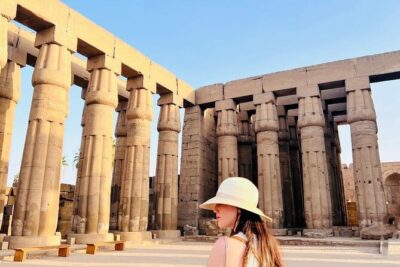
The visit continues to Luxor Temple. Three large statues of Ramses II frame the front, followed by the courtyard of Ramses II and the long colonnade associated with Amenhotep III. Luxor Temple feels more compact than Karnak, but its preserved columns and formal approach make it easier to read as a single ceremonial space.
The two east-bank temples work well together. Karnak shows the scale and layered growth of Egypt’s religious center. Luxor Temple gives you a more focused sequence of pylons, courtyards, and columns. The day is full, though, and you may feel that you have only begun to absorb one site before moving to the next.
The guide can make or break this part of the journey. One guide named Tamer receives especially strong praise for clear organization and service. Guide assignments can vary, but the tour does provide a qualified Egyptologist rather than leaving you to decode the monuments alone.
A few more river trips around Aswan worth comparing
- From Aswan: 4-Day Nile Cruise from Aswan to Luxor with Guide
★ 4.1 · 593 reviews - 4-Day 3-Night Nile Cruise from Aswan to Luxor – Private Tour
★ 5.0 · 369 reviews - 4 Days Nile Cruise from Aswan to Luxor including Abu Simbel and Hot Air Balloon
★ 4.5 · 356 reviews - 4-Day 3-Night Nile Cruise from Aswan to Luxor With Balloon and Abu Simbel
★ 5.0 · 327 reviews
Day 4: The Valley of the Kings and Luxor’s west bank
The final morning moves to the west bank of the Nile, where the ancient Theban necropolis occupies the dry hills beyond modern Luxor. The first stop is the Colossi of Memnon, two enormous seated figures that once guarded a much larger temple complex.
The statues are quick to see, but they help introduce the west bank’s purpose. This side of the river was linked with burial and the afterlife, while the east bank held major temples and urban religious activity.
The Temple of Hatshepsut is more substantial. Built for Egypt’s first female pharaoh, it rises in terraces against the cliffs. Its architecture is unlike the broad, enclosed temple forms at Karnak and Luxor. The setting gives it a strong visual identity, and the guide can explain Hatshepsut’s position as a ruler and the way the monument presented her authority.
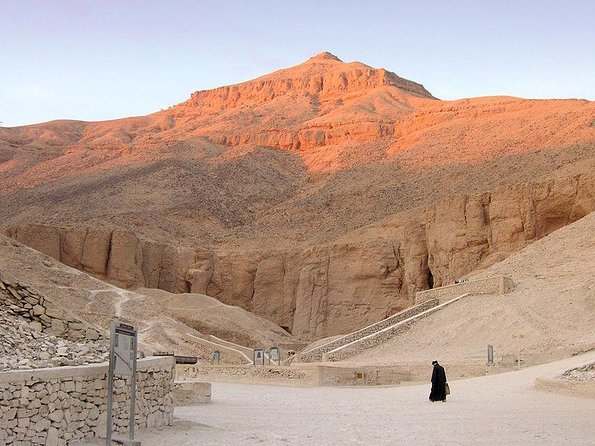
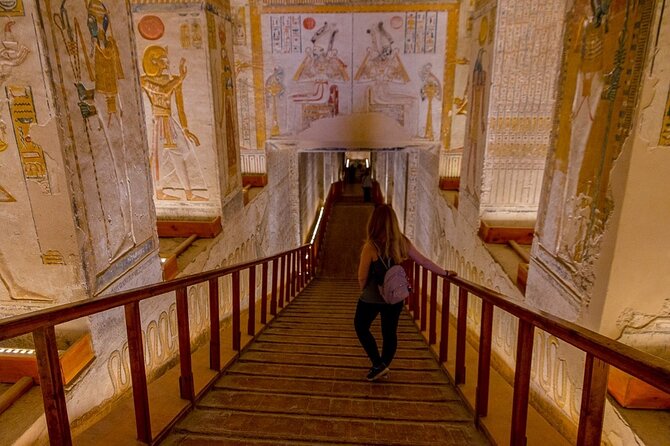
The main event is the Valley of the Kings. For roughly 500 years, pharaohs and nobles were buried in tombs cut into the valley’s rock. The area is a UNESCO World Heritage Site and includes the tomb of Tutankhamun, the young king whose burial chamber was found by Howard Carter in 1922.
The general package includes the Valley of the Kings visit, but the extra ticket for Tutankhamun’s tomb is paid on the spot. That distinction matters. If you want to enter the famous chamber, bring extra money and allow for the additional ticket. The tomb is historically famous, but the larger valley visit includes other burial chambers that may offer a fuller sense of how royal tomb decoration developed.
The final sightseeing portion lasts about four hours. You then transfer to Luxor Airport. Since the tour leaves from Aswan and finishes in Luxor, it works especially well if you are continuing by air from Luxor or ending your Egypt trip there.
Life aboard the cruise ship
The ship is described as a five-star standard cruise, with full-board accommodation. Breakfast, lunch, and dinner are included for all three nights, and the meals are served as part of the cruise package. The available feedback places strong emphasis on the crew, with staff described as polite, attentive, and helpful.
That matters because three nights on a ship is long enough for service to affect the whole experience. You will have time between shore visits to rest, watch the river, and recover from temple walks. Drinks are not included, so keep that separate from your food budget.
The cruise is not a luxury hotel review with detailed cabin specifications. Information about cabin size, pool facilities, internet access, and exact dining arrangements is not provided. I would ask those questions before booking if ship amenities are important to you.
The smaller group limit is another practical advantage. With no more than 10 people, you should have a better chance to hear the guide and ask questions than in a large coach group. It does not make the schedule private, but it should make the sightseeing less cumbersome.
What the price includes, and what it does not
At $840 per person, the price is easiest to judge as a four-day package rather than as a ticket to individual temples. Included are:
- Airport meet-and-assist service
- Qualified Egyptologist guides
- Three nights aboard the cruise
- Breakfast, lunch, and dinner for three days
- Listed Nile excursions
- Entrance fees to the stated sites
- Air-conditioned vehicle transfers
- Assistance during the stay and excursions
- Transfer to Luxor Airport
You pay extra for domestic flights, drinks, gratuities for the cruise crew, guides, and drivers, Abu Simbel, the Luxor hot-air balloon ride, and Tutankhamun’s tomb ticket.
The strongest value comes from the logistics. A private car, separate accommodation, meals, entrance tickets, and a guide would take time to arrange and compare. Here, the main route is already assembled. The weaker point is flexibility. You cannot easily linger for half a day at Karnak or change the order of the stops.
Who should book this Nile journey?
I would recommend it to you if this is your first visit to Egypt and you want the classic Aswan to Luxor route in a compact format. It suits people who value organized transport, a guide at every major site, and a hotel room that moves along the river.
It also works well for couples, families, and small groups who want a manageable maximum group size. The full-board setup reduces daily planning, and the one-way finish avoids returning to Aswan.
You should think twice if you dislike early departures, fixed schedules, or long road trips. Abu Simbel is particularly demanding. The schedule also leaves limited time for wandering independently in Luxor, so add extra nights there if you want museums, markets, or a slower look at the city.
The excellent 4.9 rating, 99 percent recommendation figure, and praise for the crew and guide service support the idea that this is a well-run package. Still, the ship details are limited, and optional costs can add up. Ask about the exact vessel, cabin, Abu Simbel fee, departure time, and drinks policy before paying.
Should you book it?
Book this trip if you want Egypt’s essential Nile route with meals, monuments, transfers, and an Egyptologist guide handled in one package. The combination of Philae, Kom Ombo, Edfu, Karnak, Luxor Temple, Hatshepsut, and the Valley of the Kings gives you a strong first look at Upper Egypt.
Skip it if you want an unhurried schedule or plan to spend most of your time at Abu Simbel, in Luxor, or inside individual tombs. For most first-time visitors, though, the convenience and range make $840 a reasonable price, provided you budget separately for flights, tips, drinks, Abu Simbel, and Tutankhamun’s tomb.
FAQ
How long is the Aswan to Luxor cruise?
The experience lasts approximately four days and includes three nights aboard the Nile cruise.
On which days does the cruise depart?
Cruises are scheduled to begin every Friday, Monday, or Wednesday.
What sites are visited during the journey?
The route includes Philae, the Unfinished Obelisk, Kom Ombo, the Temple of Horus at Edfu, Karnak, Luxor Temple, the Colossi of Memnon, Hatshepsut’s Temple, and the Valley of the Kings.
Is Abu Simbel included?
No. Abu Simbel is an optional road trip from Aswan and takes about three and a half hours each way.
Are meals included?
Yes. Breakfast, lunch, and dinner are included for three days. Drinks aboard the cruise are not included.
Does the tour end at Luxor Airport?
Yes. After the west-bank sightseeing on day four, the tour provides a transfer to Luxor Airport. Domestic flights are not included.
Just added around Aswan
- Sailing Nile Cruise from Aswan to Luxor for 2 Nights★ 4.5 · 139 reviews
- 4-Day Nile Cruise: Aswan to Luxor & Abu Simbel + Hot Air Balloon★ 4.5 · 35 reviews
- 4-Days Aswan sails Nile Cruise Luxor &Abu Simbel.Hot air Balloon★ 4.5 · 77 reviews
- Sailing Nile cruise from Aswan for 2 nights★ 4.0 · 11 reviews
- 8 Nights Egypt Tour,Cairo,Luxor,Aswan&Abu Simbel,Nile Cruise,Hot Air Balloon★ 4.5 · 11 reviews
- Sailing Nile cruise from Aswan to Luxor includes tours for 3 nights★ 5.0 · 16 reviews
- 2 nights Nile cruise includes tours from Aswan to luxor★ 4.5 · 64 reviews
- (Wonderful 3-Nights Nile Cruise from Aswan to Luxor & Balloon)★ 4.5 · 17 reviews
Aswan River Cruises, compared.
4-Days Nile Cruise From Aswan To Luxor including Abu Simbel and Hot Air Balloon
Read our review →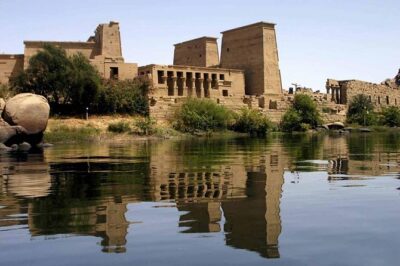
4-Day 3-Night Nile Cruise from Aswan to Luxor&Abu Simbel+Balloon
Read our review →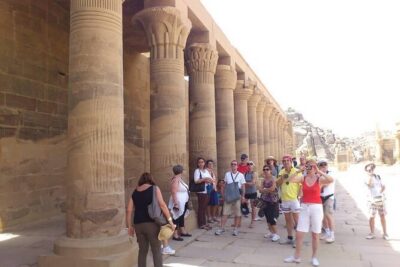
4-Day 3-Night Nile Cruise from Aswan to Luxor including Abu Simbel, Air Balloon
Read our review →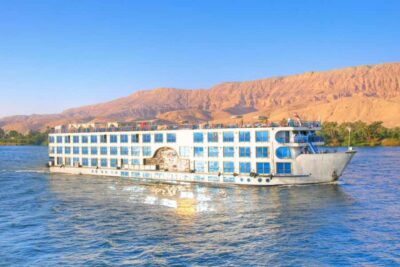
4-Day Nile Cruise from Aswan to Luxor with Guide
Read our review →4-Days Nile Cruise From Aswan To Luxor including Abu Simbel and Hot Air Balloon
Read our review →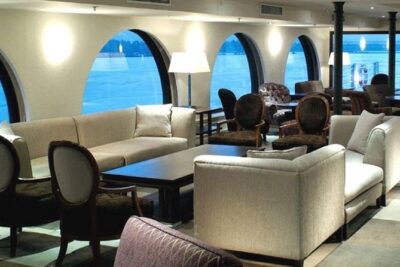
4-Day 3-Night Nile Cruise from Aswan to Luxor – Private Tour
Read our review →4 Days Nile Cruise from Aswan to Luxor including Abu Simbel and Hot Air Balloon
Read our review →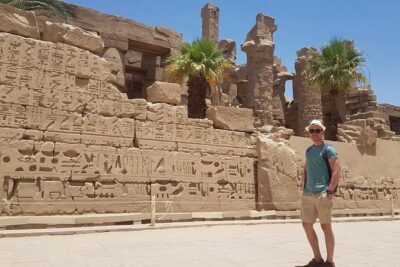
4-Day 3-Night Nile Cruise from Aswan to Luxor With Balloon and Abu Simbel
Read our review →Browse the lists this tour appears in