
REVIEW · PARIS
Paris: Historical Guided Tour of the Seine Riverbanks with Virtual Reality
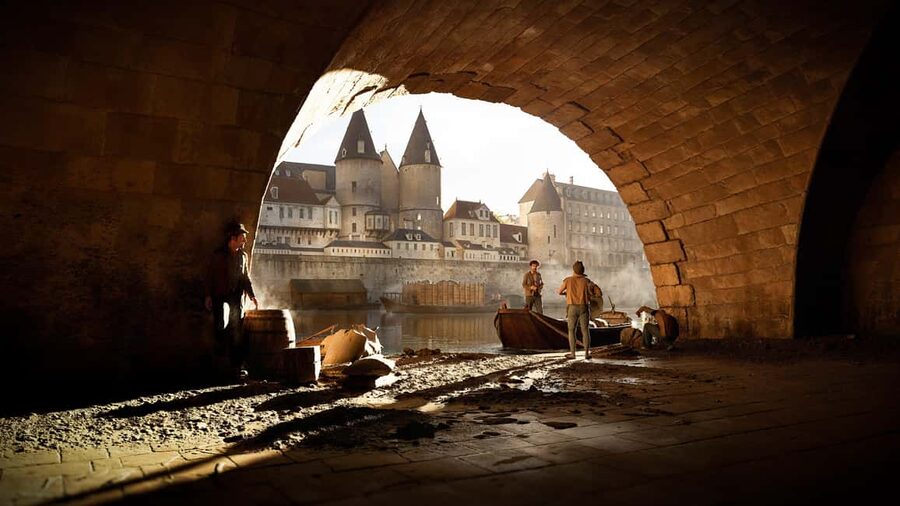
Paris turns its past into a moving picture on this one-hour walk along the Seine. With a guide and a VR headset, you watch the modern riverbanks give way to scenes from the first Parisii settlement, the Viking siege, the French Revolution, and the Liberation of Paris. It is history told right where it happened, not inside a dark museum room.
I like the 1.2-kilometer route, which gives you time to walk, look around, and let each scene settle. I also like the calm pace and the family-friendly format. The main tradeoff is that the headset, a small bag, and changing weather can be awkward together. Some sections may also be difficult if you have reduced mobility.
Key things to know before booking
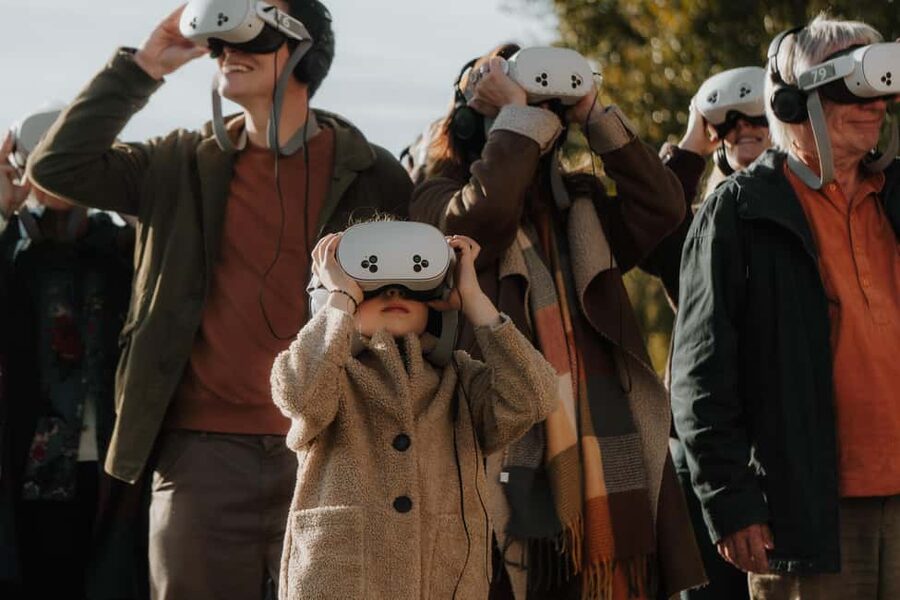
- More than 15 VR scenes place past events around the present-day Seine.
- A one-hour walk covers 1.2 kilometers in the historic center.
- The route begins under Pont Louis-Philippe, close to Hôtel de Ville.
- The story spans 2,000 years, from the Parisii to the Liberation of Paris.
- English, French, and Spanish tours are available, with some material presented in its original language.
- Children must be at least eight, and comfortable shoes are a smart choice.
Seeing Paris change around you
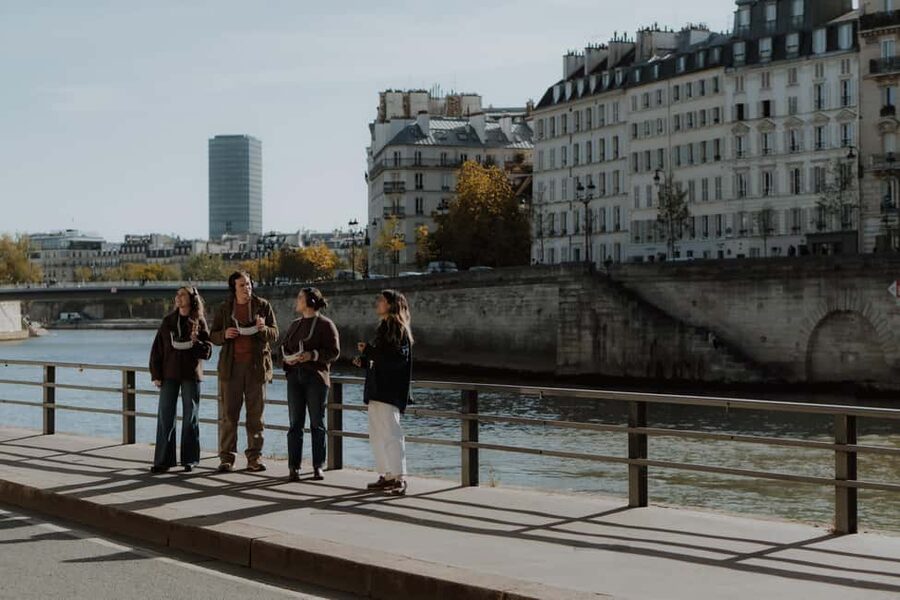
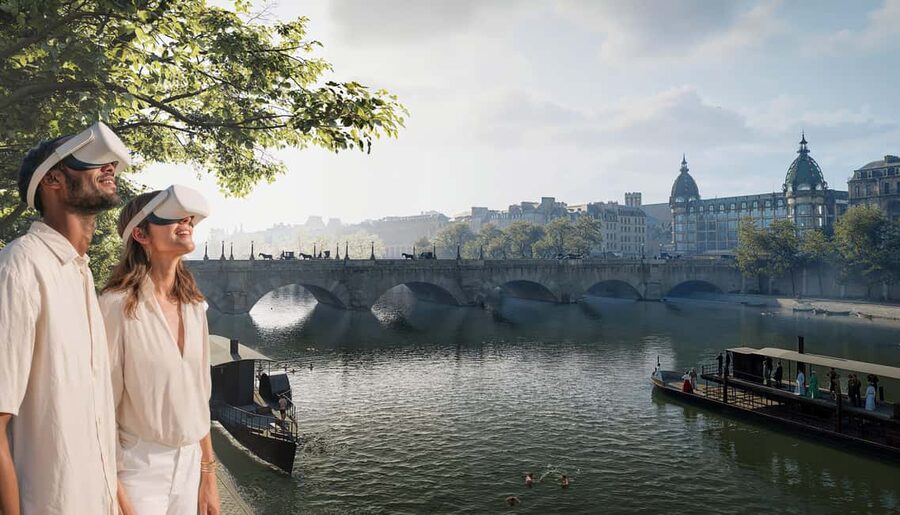
The clever idea here is simple: you stand beside the Seine, put on the headset, and see the city as it once looked. The current stone embankment and Paris streets do not disappear completely. Instead, historical scenes are placed over the setting around you, so the riverbank becomes a stage for earlier chapters of Paris.
That makes the experience especially useful if you find dates and dynasties hard to remember. You are not only told that Paris changed. You see the city change from one period to another, with 360-degree images and sound helping you connect the event to the exact area beneath your feet.
The headsets are described as a latest-generation system, with historical reconstructions checked by historians and other experts. The purpose is not to give you a technical demonstration. It is to make the past easier to picture while you are standing in the middle of modern Paris.
You do not need previous VR experience. The guide handles the equipment and leads you through the process. This matters because the headset is only useful if everyone knows when to put it on, where to look, and when to remove it. The walk is designed around those changes rather than asking you to stare through the headset for the entire hour.
More Seine cruises in Paris:
- Paris: 1-Hour Seine Cruise departing from the Eiffel Tower
★ 4.4 · 77,472 reviews - Paris: Seine Cruise & Crepe Tasting near the Eiffel Tower
★ 4.4 · 11,231 reviews - Paris: Seine River Panoramic Views Dinner Cruise
★ 4.3 · 10,611 reviews
Starting beneath Pont Louis-Philippe
The meeting point is at Berges Rive Droite, Voie Georges Pompidou, under Pont Louis-Philippe in the 4th arrondissement. It is a central location, close to Hôtel de Ville, so you can fit the tour into a day of sightseeing around historic Paris.
Allow a little time to find the exact spot beneath the bridge. The departure point is more specific than simply saying Hôtel de Ville, and a riverbank meeting point can be less obvious than a museum entrance. Have the address ready on your phone and arrive prepared to begin walking.
The Seine setting is one of the tour’s biggest strengths. You are already in the UNESCO-listed historic heart of Paris before the first scene begins. The tour does not spend time driving you to a distant attraction or moving you between indoor rooms. The city itself supplies the background.
The walk covers 1.2 kilometers, which is a comfortable distance for most people, but you should still wear practical shoes. This is not a seated show. You will walk, stop, handle a headset, and adjust your attention between the real riverbank and the digital scenes.
From the Parisii to medieval Paris
The earliest part of the story introduces the Parisii, the people linked to the settlement that grew into Paris. This opening gives the tour a clear starting point. Instead of beginning with the familiar Eiffel Tower or the grand boulevards, you go back to the beginnings of the city beside the river.
This is where the VR format can do something a normal walking tour may not. The present-day riverbanks tell you very little about how the area looked thousands of years ago. A reconstruction can show the earlier settlement in place, helping you understand why the Seine mattered to the growth of Paris.
The route then moves through major periods in the city’s development. The exact sequence of every scene is not specified, so you should think of the tour as a series of historical capsules rather than a full academic timeline. More than 15 capsules highlight important moments, with short visual sections supported by sound.
The format is best for getting a strong outline of Parisian history. If you want a long discussion of political causes, architecture, or individual rulers, you may find the hour too short. The strength is visual clarity and range: many eras, one route, and a steady walk through the city.
The Viking siege and the French Revolution
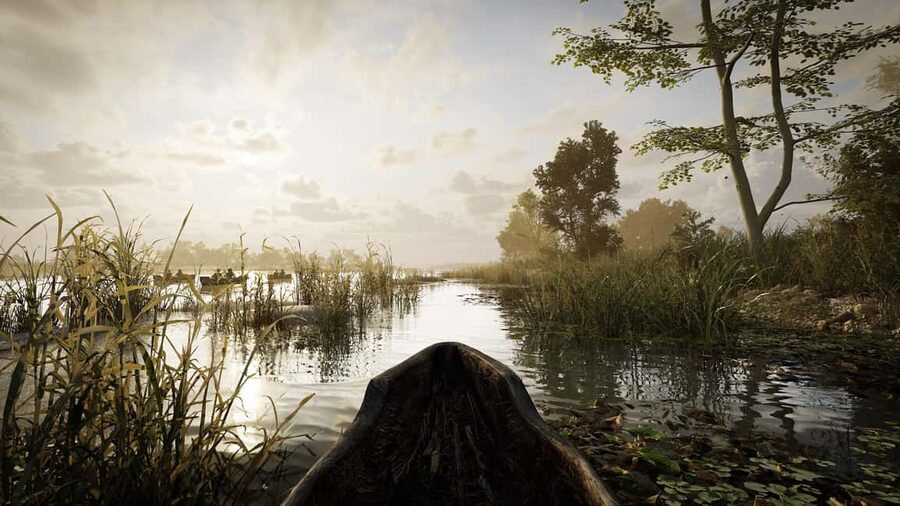
Two of the named episodes are the Viking siege and the French Revolution. They give the tour a useful mix of medieval danger and modern political upheaval.
The Viking siege helps you picture Paris as a vulnerable river city rather than the polished capital you see today. The Seine was a route into the city, and a historical scene placed along its banks can make that threat easier to understand than a paragraph in a guidebook.
The French Revolution brings you into a later period when Paris became the center of enormous political change. Here, the tour’s open-air design is helpful. You are not just looking at an old object behind glass. You are walking through the city where events unfolded, with the present-day streets and river still around you.
The sound design is part of the effect. Historical images are paired with immersive audio, giving each capsule a stronger sense of place. If you are sensitive to headsets or prefer quiet sightseeing, this added layer may feel busy at times. For most people, though, the combination of image and sound makes the short historical scenes easier to follow.
More history trips in Paris:
- Your Private boat Captain Guide Explore Historical Paris
★ 5.0 · 23 reviews - Douro Valley: Historical Sites, Wine Experience, Lunch & Cruise
★ 5.0 · 5,133 reviews - Paddlewheeler Creole Queen Historic Mississippi River Cruise
★ 4.5 · 1,948 reviews - Morning World Heritage Cruise on the Gordon River from Strahan
★ 5.0 · 1,193 reviews
The Liberation of Paris and the tour’s time limits
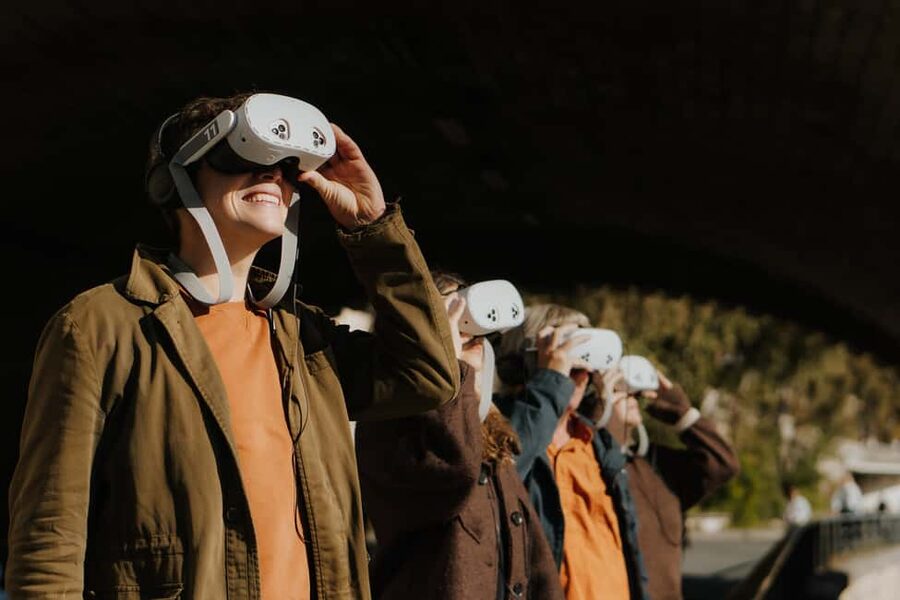
The story reaches the Liberation of Paris, another major moment in the city’s modern past. This gives the tour a broad arc from ancient settlement to the 20th century.
One practical point is worth knowing: the tour gives a wide view of Parisian history, but it cannot treat every century equally. One person found the later 19th and 20th centuries less detailed than expected, and the Eiffel Tower section includes a return to an earlier point in the route. That can make the ending feel a little less tidy.
I would view this as a survey rather than a detailed study of modern Paris. The title promises 2,000 years, and the tour does cover that span, but an hour does not allow equal attention to every era. If your main interest is Haussmann’s Paris, the Belle Époque, the World Wars, or the Liberation, you will want another tour or museum visit alongside this one.
Still, the short length is part of the appeal. The walk does not demand half a day, and the route can work well between larger sights. The one-hour timing was also described as just right for families and mixed-age groups.
How the VR equipment affects the walk
The headset is the heart of the experience, but it also changes how you move. You will need to manage the headset along with any small bag, phone, coat, or umbrella. In rainy weather, holding an umbrella while wearing the equipment can be awkward.
Cold-weather visitors should note one useful touch: gloves are available. That matters on a winter riverbank, where standing still during a historical scene can feel chilly. The tour is outdoors, so dress for the forecast rather than assuming the technology makes it an indoor attraction.
You also shift between two kinds of attention. With the headset on, you watch the reconstruction and listen to the sound. With it off, you see the actual Seine, bridges, embankments, and modern city. That contrast is one of the best parts of the format. You understand the age of the city by comparing what was there with what remains.
The walking speed is intentionally relaxed. You are not rushed from one checkpoint to the next, and the pauses give you time to absorb the information. This is good for families and for anyone who dislikes rapid guided walks. It also means the tour may feel less active than a conventional sightseeing walk.
Who will enjoy this most
I would recommend this experience to first-time visitors who want a quick introduction to Paris history without committing to a long museum visit. It is also a good choice if you have already seen the main monuments and want to understand the city beneath the familiar postcard views.
Families are a natural fit. The minimum age is eight, and the visual format can hold a child’s attention better than a long spoken lecture. Older children and teenagers may especially enjoy the technology, while adults get the historical framework. Keep in mind that younger children may need help with the headset and with carrying their belongings.
The tour also suits couples, small groups, and visitors who enjoy trying a different way to see a familiar place. It is not a substitute for a traditional guide if you want lengthy discussion or lots of questions at each stop. The guide is there to manage the experience and explain the story, but the VR capsules do much of the visual work.
The three language choices make it practical for international visitors. You can book in English, French, or Spanish. Some content is presented in its original language, so you should expect that not every sound element will necessarily be translated in the same way.
Is $34 a fair price?
The listed price is $34 per person. That is more than a basic self-guided walk along the Seine, where the riverbank itself costs nothing. You are paying for the guide, the headset, the historical reconstructions, the sound design, and the structured route.
For a one-hour activity, the price may feel high if you judge it only by duration. I think the better comparison is with a short museum visit or a standard guided walk. The special feature is not the distance covered. It is the visual reconstruction of places and periods you cannot see in the modern city.
A separate price comment cites €29, so the amount may vary by booking date, currency, or sales channel. Check the price shown for your chosen time before paying. At $34, I would call it worthwhile for people who are genuinely interested in the VR element and want a compact historical overview. If you mainly want views of the Seine, spend the money elsewhere and walk the riverbanks on your own.
The free cancellation window of up to 24 hours and the reserve-now, pay-later option reduce the risk if your Paris schedule is still shifting. Those terms are useful for a city break where weather and timed attractions can change your plans.
Practical details for a smoother visit
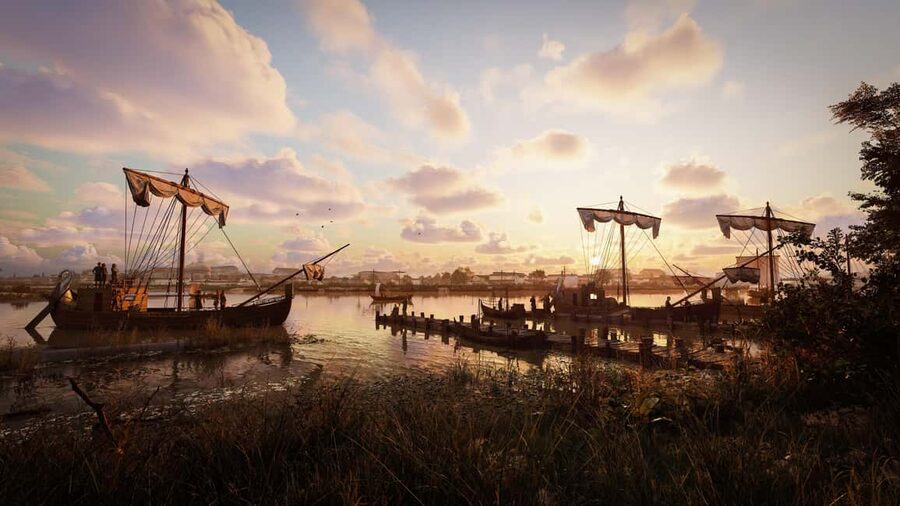
Choose comfortable shoes. The route is only 1.2 kilometers, but it is taken on foot and includes portions that may be difficult for people with reduced mobility.
Plan for outdoor conditions. Rain, cold, or bright sun can affect how comfortable you feel while wearing the headset. Gloves may be available, but you should still bring suitable clothing and avoid carrying more than you need.
Keep your hands as free as possible. A small crossbody bag is more practical than a backpack or a large shoulder bag, especially when you are handling the headset. An umbrella can be difficult to manage at the same time, so a rain jacket may be easier in wet weather.
The departure point is under Pont Louis-Philippe on the right bank. It is near Hôtel de Ville, but the exact riverbank location matters. Confirm the meeting details before setting out, particularly if you are arriving by metro or walking from another part of central Paris.
Should you book the Seine VR history tour?
Book it if you want to see Paris history rather than simply hear about it. The strongest reasons are the open-air setting, the 360-degree reconstructions, the calm one-hour route, and the chance to compare past and present at the same spot. It works especially well for families, first-time visitors, and anyone curious about virtual reality.
Skip it if you want a detailed treatment of the 19th and 20th centuries, a long traditional walking tour, or a completely hands-free stroll. The headset can be awkward in bad weather, and the tour’s wide 2,000-year scope means some periods receive only brief attention.
For the right visitor, $34 buys more than a walk beside the Seine. It gives you a visual framework for understanding how a settlement became Paris, and how the river helped shape the city you see today.
FAQ
Where does the tour begin?
The departure point is at Berges Rive Droite, Voie Georges Pompidou, under Pont Louis-Philippe in Paris’s 4th arrondissement, close to Hôtel de Ville.
How long is the experience?
The tour lasts one hour and covers about 1.2 kilometers on foot.
What languages are available?
The live guide can lead the tour in English, French, or Spanish. Some content is presented in its original language.
What historical periods does the tour cover?
The experience spans about 2,000 years, including the first Parisii settlements, the Viking siege, the French Revolution, and the Liberation of Paris.
Is previous virtual reality experience required?
No. The guide explains and manages the VR equipment, so you do not need prior experience.
Can children join the tour?
Children must be at least eight years old.
Is the route suitable for people with reduced mobility?
Some portions may be difficult to access for people with reduced mobility. The route is walked outdoors for 1.2 kilometers, so comfortable shoes are recommended.
Just added around Paris
- The Official Emily in Paris Champagne Seine Cruise★ 4.9 · 27 reviews
- Paris: Seine Cruise with Snack/Optional Eiffel Tower Ticket★ 4.2 · 210 reviews
- Paris: Bastille Day Dinner Cruise on the Seine River★ 4.1 · 84 reviews
- Paris: Loire Valley Castles Tour with Wine Tasting★ 4.9 · 22 reviews
- Paris: The Rodin Museum and Seine River Cruise★ 4.6 · 45 reviews
- Paris: Seine River Private Guided Pontoon Boat Cruise★ 5.0 · 133 reviews
- Paris: Seine River Dinner Cruise with Live Music★ 3.6 · 18 reviews
- Paris: Sightseeing Cruise on the Seine with 3-Course Lunch★ 4.6 · 33 reviews
Paris River Cruises, compared.
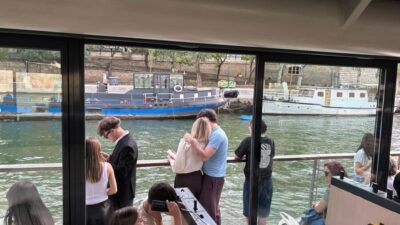
1-Hour Seine Cruise departing from the Eiffel Tower
Read our review →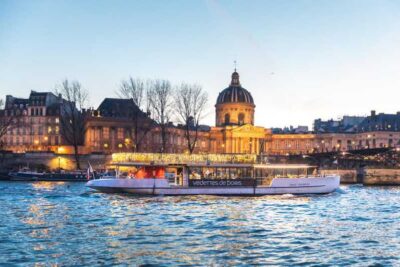
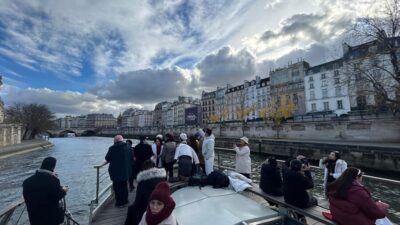
Illuminations River Cruise with Audio Commentary
Read our review →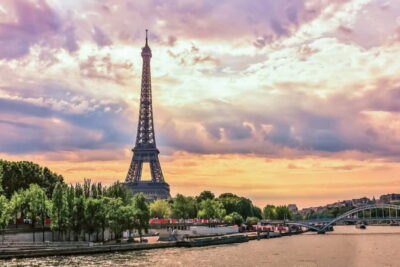
Seine Cruise & Crepe Tasting near the Eiffel Tower
Read our review →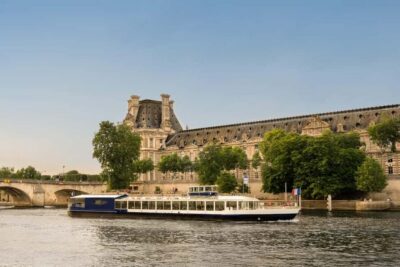
Louvre Museum Entry Ticket With Host and River Cruise
Read our review →
Eiffel Tower Access by Elevator & Seine River Cruise
Read our review →
3-Course-Dinner Cruise on the Seine with live music
Read our review →Browse the lists this tour appears in