
REVIEW · ASWAN
4-Day Nile Cruise sails Aswan to Luxor&Abu Simbel.Hot air Balloon
The best part of this four-day Nile cruise is the way it links Egypt’s great river temples without making you repack every morning. You board in Aswan, sail north through Upper Egypt, and finish among the Valley of the Kings, Karnak, and Luxor Temple. Philae’s island setting and the long, quiet sailing stretch on Day 3 are two especially appealing parts of the plan.
I also like the included transfers and nine meals, which make a complicated section of Egypt easier to manage. Guides including Khaled, Michael, and Talaat Abdo have earned strong praise for clear explanations and practical help. The catch is that the schedule is packed, entrance fees are extra, and the ship may be older than the 5-star label suggests.
Key points to know before booking
- Abu Simbel is a very long day: The early-morning excursion takes about eight hours, but it adds one of Egypt’s great monuments without requiring a separate hotel stay.
- Philae requires a boat ride: You reach the island temple by motorboat, then explore with your guide and have time to wander on your own.
- The cruise includes nine meals: You receive three breakfasts, three lunches, and three dinners, all on a full-board basis.
- Day 4 is temple-heavy: The Valley of the Kings, Hatshepsut’s temple, Karnak, and Luxor Temple all arrive in one demanding final day.
- The hot-air balloon is optional: You can add an early-morning flight over Luxor for an extra charge, subject to suitable weather.
- Budget for extras: Sightseeing tickets, drinks, cruise Wi-Fi, and staff tips are not included in the $306 price.
Why this Nile route works so well
A Nile cruise is a practical way to see ancient Egypt because the river connects the major sites. Instead of spending four days in cars between Aswan and Luxor, you unpack once and let the ship handle the long movement north.
This route covers a lot: Aswan’s High Dam and Philae, Abu Simbel, Kom Ombo, Edfu, the Valley of the Kings, Hatshepsut’s temple, Karnak, and Luxor Temple. You also get the passing views from the river, which are part of the point. The Nile is not just transportation here. It is the reason these towns and monuments developed where they did.
At $306 per person, the value is strongest if you plan to visit several of these places anyway. Your price includes three nights aboard ship, transfers, an English-speaking Egyptology guide, nine meals, and the main transportation between Aswan and Luxor. The advertised maximum is 50 people, while the Abu Simbel visit is described as a shared small-group excursion.
The price is not all-inclusive in the usual resort sense. You must add entrance tickets to the sights, drinks, Wi-Fi, and boat staff tips. Ask for the current total before booking, since the entry fees can change and may add a noticeable amount to the base price.
More Nile cruises in Aswan:
- 4-Days Nile Cruise From Aswan To Luxor including Abu Simbel and Hot Air Balloon
★ 5.0 · 3,142 reviews - 4-Day 3-Night Nile Cruise from Aswan to Luxor&Abu Simbel+Balloon
★ 5.0 · 2,023 reviews - 4-Day 3-Night Nile Cruise from Aswan to Luxor including Abu Simbel, Air Balloon
★ 4.5 · 612 reviews
Boarding in Aswan and visiting Philae
Your first day begins with pickup from an East Bank hotel or the Aswan train station. The transfer takes you to the cruise ship, where you can refresh and settle into your private cabin before sightseeing.
The first major stop is the Aswan High Dam. Built in the 1960s, it changed the flow of the Nile, created Lake Nasser, and produced a large share of Egypt’s electricity. From the top, you can look south across the lake toward Kalabsha Temple and north toward the power station.
This is an important engineering site, though it is not as visually rewarding as the ancient temples. I would treat it as useful context for understanding modern Egypt and the changes that made the relocation of Philae necessary.
Philae is the day’s highlight. The temple complex was moved roughly 500 meters from its original site when the rising waters threatened to cover it. A short motorboat trip carries you to the island, giving the visit a pleasant sense of arrival that a roadside monument cannot provide.
The temple is dedicated to Isis and retains a carefully arranged island setting. Your guide leads a walking tour through the complex, then gives you free time to look around and take photographs. Keep some energy for this independent portion. The carvings, columns, and river views deserve more than a hurried circuit.
The first day is fairly manageable compared with what follows. You see the High Dam and Philae, then return to the ship. The transfers are included, and the cruise becomes your base for the night.
Abu Simbel makes Day 2 a serious start
The Abu Simbel trip begins early and takes about eight hours. That sounds demanding because it is. Still, this is the part of the itinerary I would be most reluctant to remove.
The twin temples were built by Ramses II and are famous for their enormous seated statues cut into the rock face. The scale is the main event, but the setting and the story of their relocation also add weight to the visit. Like Philae, Abu Simbel was moved to protect it from the rising waters created by the Aswan High Dam.
You have time to explore the complex before returning to the cruise in the afternoon. Since admission is extra, confirm whether the current price is paid locally or arranged through the operator. The information provided specifies that the excursion is shared with an English-speaking guide.
The main drawback is fatigue. You leave early, spend much of the day on the excursion, then return in time for the ship’s schedule. If you want a slow, leisurely cruise holiday, this day works against that goal. If Abu Simbel is high on your list, the long outing is a fair trade.
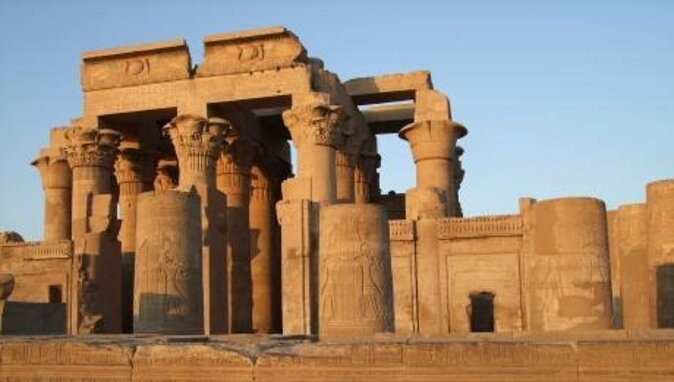
Later, the ship stops at Kom Ombo. The temple is unusual because it was dedicated to two gods, Sobek and Horus, and its design reflects that dual purpose. The visit breaks up the day nicely after Abu Simbel, though you may feel ready for dinner and bed by the time you return aboard.
The ship continues toward Edfu and you sleep in your private room. This is one reason the cruise format is useful: even on a tiring sightseeing day, you do not need to arrange another hotel transfer.
Edfu and the calmest sailing day
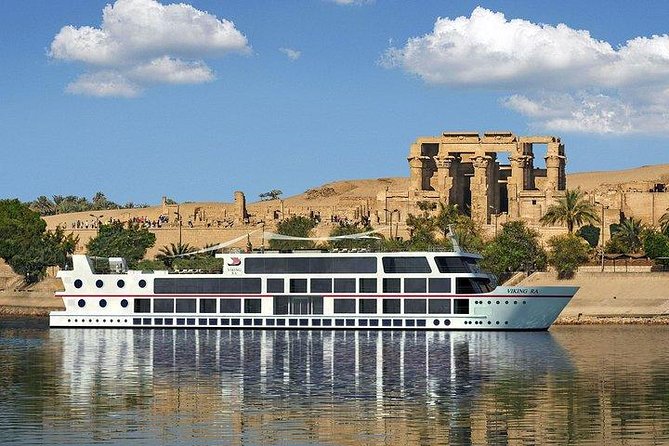
Day 3 begins with free time while the ship sails the Nile. This is likely to be the most relaxed part of the trip. Use it to sit on the rooftop, watch the river towns pass, or simply recover from the previous morning.
The cruise later stops at Edfu, where you visit the Temple of Horus with your guide. The temple is among the best-preserved major Egyptian temples, and its broad courtyards and towering entrance make it easy to understand how powerful the original complex must have appeared.
The visit lasts about three hours. You will have guided explanations followed by some time for photographs and personal exploration. This balance matters. A good guide can explain the reliefs and religious symbols, but you also need a few quiet minutes to look without listening.
The ship then continues to Luxor and arrives in the afternoon. You spend another night aboard, which gives you a second private cabin night before the final sightseeing day.
Several people have singled out guides named Khaled, Michael, and Talaat Abdo for clear explanations, friendly communication, and help with the day-to-day schedule. Talaat Abdo, in particular, is praised for explaining temple architecture and giving enough free time for photographs. Guide quality can shape a cruise like this, so the human side of the experience matters as much as the ship.
More balloon rides over Aswan:
- 4-Days Nile Cruise From Aswan To Luxor including Abu Simbel and Hot Air Balloon
★ 4.5 · 509 reviews - 4 Days Nile Cruise from Aswan to Luxor including Abu Simbel and Hot Air Balloon
★ 4.5 · 356 reviews - 4-Day 3-Night Nile Cruise from Aswan to Luxor With Balloon and Abu Simbel
★ 5.0 · 327 reviews - 4-Days Nile Cruise Aswan&Luxor,Hot Air Balloon&Abu Simbel.Hot deal
★ 5.0 · 322 reviews
Luxor’s West Bank in one morning
Day 4 begins with breakfast and checkout. You cross to Luxor’s West Bank for the Valley of the Kings, which contains 66 tombs from different dynasties.
The valley is not a single monument but a large burial area cut into the hills. The ticket typically controls which tombs you may enter, and the provided price does not include admission. Ask your guide which tombs are open and what additional tickets may be needed if you want to see special tombs.
The main challenge is heat. You may be walking on exposed ground, and the day continues for several more sites. Carry water, even though drinks on the ship are not included. Comfortable shoes and a hat will make a real difference.
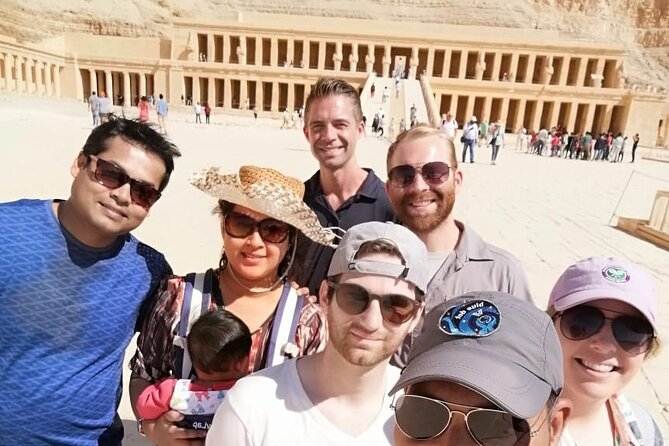
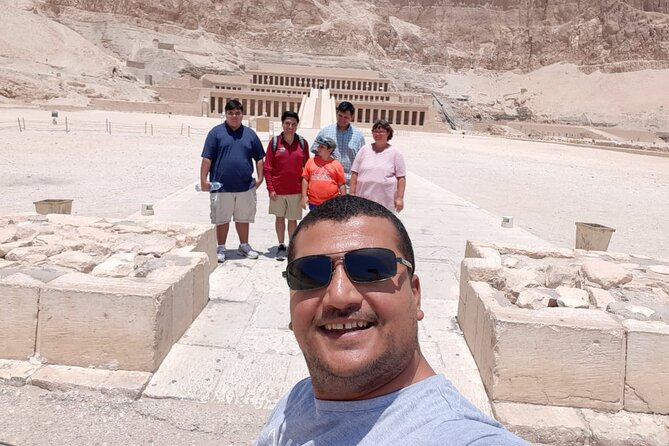
Next comes the Temple of Hatshepsut at Deir el Bahari. Hatshepsut was one of ancient Egypt’s few female rulers, and the temple’s terraces make it easy to see why the site feels different from the enclosed tombs and columned sanctuaries elsewhere on the route.
The stop at the Colossi of Memnon is brief, around 45 minutes. These two huge seated statues once guarded the entrance to the mortuary temple of Amenhotep III. They are a quick photo stop rather than a full site visit, but they fit naturally on the return route.
Karnak and Luxor Temple finish the cruise
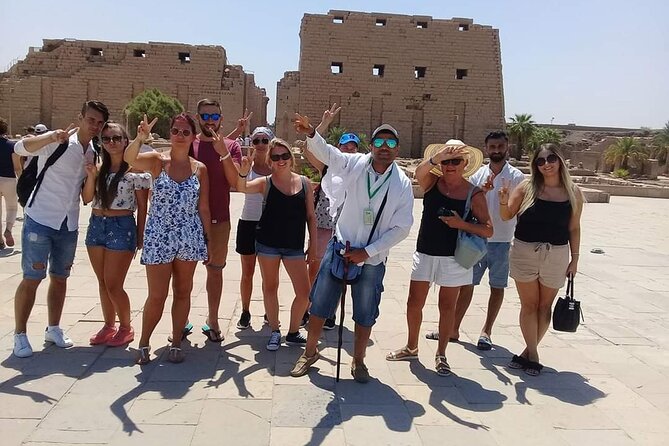
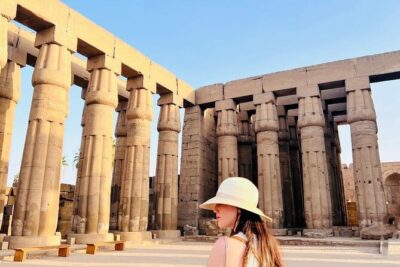
Karnak is enormous, so two hours only gives you an introduction. The complex was dedicated first to Amun-Ra, Mut, and Khons, then expanded by many later rulers. Its scale can be hard to grasp until you enter the Hypostyle Hall, where rows of giant columns create one of ancient Egypt’s most impressive spaces.
Your guide is especially useful here. Without context, Karnak can become a blur of columns, gateways, and damaged statues. With a clear explanation, you begin to see how additions from different kings turned the site into a long record of religious and royal power.
Luxor Temple comes at the end of the day. It is more compact than Karnak and is especially atmospheric as a final stop, with its processional layout and monumental entrance. The visit lasts about 90 minutes.
This final day packs four major stops into one schedule. That is efficient, but it is not gentle. If you add the optional hot-air balloon ride before breakfast, you will start the day even earlier. The balloon flight costs extra and depends on weather, so ask about its exact meeting time and cancellation terms before committing.
After Luxor Temple, you are dropped at a Luxor hotel, train station, or another preferred drop-off point. That onward transfer is valuable if you are continuing your trip immediately.
What the ship and meals are really worth
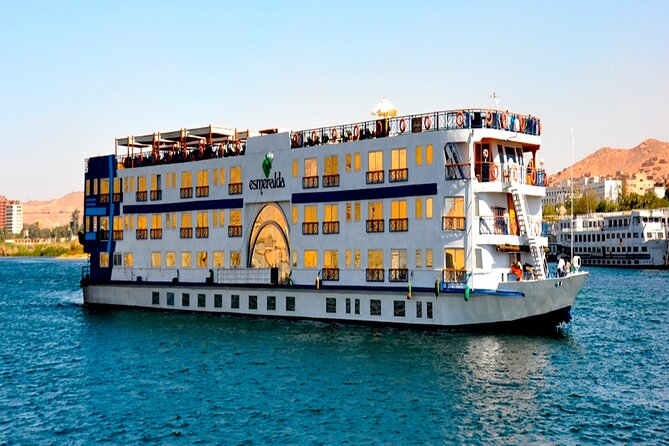
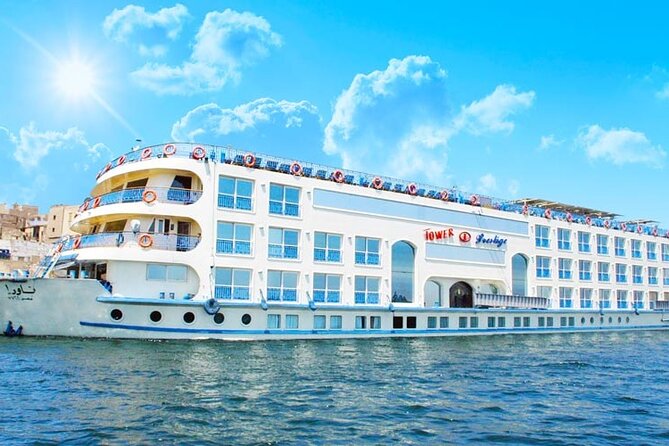
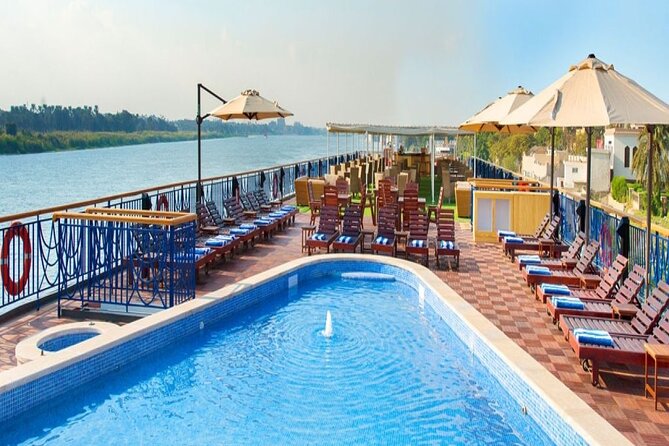
The cruise is described as 5-star, with private rooms, a restaurant, and a rooftop area with a pool. Several accounts praise the food, clean and roomy cabins, friendly staff, and comfortable rooftop. One especially useful warning is that the ship may be older and need updates.
That combination is common on Nile cruises. A ship can be clean, pleasant, and well maintained without feeling new. I would book this for the river setting, the included movement between sites, and the practical cabin arrangement, not because you expect a sleek modern hotel at sea.
Full board includes three breakfasts, three lunches, and three dinners. Nine included meals make budgeting easier, and the food has received good marks for variety and fresh ingredients. Water and other drinks are not included, so plan for that extra expense.
Wi-Fi costs extra on the ship. If staying connected matters to you, ask about the current charge and reliability before boarding. Cruise staff tipping is also separate. Carry small amounts of local currency or clarify the preferred tipping method with your guide.
Who should book this four-day cruise?
This suits you if you want to see many major monuments in a short period and prefer one organized package over separate trains, cars, hotels, and guides. It is also a good match if you value explanations at archaeological sites and want door-to-door transfers from Aswan through Luxor.
It works less well for you if you dislike early starts, long excursions, group schedules, or repeated ticket payments. The Abu Simbel day is long, and the last day in Luxor is tightly filled.
The group maximum of 50 is not tiny. Your actual sightseeing group may feel smaller in practice, especially for some excursions, but you should not assume a private experience. If you want complete control over timing, ask about a private upgrade.
The pickup rule also matters. Aswan pickup is included from East Bank hotels and the train station. West Bank hotel pickup costs extra. Make sure your hotel location is clear when you reserve.
Free cancellation is available up to 24 hours before the start time for a full refund. Changes or cancellations inside that window are not accepted for a refund. The experience also depends on a minimum number of participants and suitable weather, particularly for the balloon option.
Should you book it?
I would book this cruise if your priority is seeing the main Upper Egypt sights with an Egyptology guide while keeping the logistics simple. The route is strong, the meals and transfers add real value, and Philae, Abu Simbel, Edfu, Karnak, and the Valley of the Kings give you an excellent first look at the Nile corridor.
I would not book it expecting a perfectly modern ship or a slow, restful holiday. Add the entrance tickets, drinks, Wi-Fi, and tips to the advertised price, and prepare for two demanding sightseeing days. If you accept those tradeoffs, this is a well-priced way to cover a remarkable amount of Egypt in four days.
FAQ
Where does the cruise begin and end?
The cruise begins in Aswan and ends in Luxor. Pickup is offered from East Bank hotels or the Aswan train station, and the final drop-off can be at a Luxor hotel, train station, or another preferred point in Luxor.
How many nights do you spend on the ship?
You spend three nights aboard the Nile cruise in a private room.
Are meals included?
Yes. The package includes three breakfasts, three lunches, and three dinners, for nine meals in total.
Are entrance fees included?
No. Entrance fees for the listed sightseeing stops are extra, including the temples, Valley of the Kings, and Abu Simbel.
Is Abu Simbel part of the itinerary?
Yes. Abu Simbel is visited early on Day 2. The excursion takes about eight hours and is described as a shared small-group trip with an English-speaking guide.
Is the hot-air balloon ride included?
No. The hot-air balloon ride over Luxor is optional and costs extra. It takes place early on Day 4 and depends on suitable weather.
Is Wi-Fi available on the cruise?
Wi-Fi is available for an additional charge. Water and other drinks are also not included.
What is the cancellation policy?
You can cancel up to 24 hours before the experience begins for a full refund. Cancellations or changes made less than 24 hours before the start time are not refunded or accepted.
More 4-Day Experiences in Aswan
- From Aswan: 4-Day Nile Cruise from Aswan to Luxor with Guide
★ 4.1 · 593 reviews - 4-Day 3-Night Nile Cruise from Aswan to Luxor – Private Tour
★ 5.0 · 369 reviews - From Aswan:4 Days Nile Cruise Luxor Abu Simbel & Air Balloon
★ 4.4 · 310 reviews - 4-Day Nile Cruise Aswan and Luxor Hot Air Balloon with Abu Simbel
★ 5.0 · 234 reviews
Just added around Aswan
- Sailing Nile Cruise from Aswan to Luxor for 2 Nights★ 4.5 · 139 reviews
- 4-Day Nile Cruise: Aswan to Luxor & Abu Simbel + Hot Air Balloon★ 4.5 · 35 reviews
- 4-Days Aswan sails Nile Cruise Luxor &Abu Simbel.Hot air Balloon★ 4.5 · 77 reviews
- Sailing Nile cruise from Aswan for 2 nights★ 4.0 · 11 reviews
- 8 Nights Egypt Tour,Cairo,Luxor,Aswan&Abu Simbel,Nile Cruise,Hot Air Balloon★ 4.5 · 11 reviews
- Sailing Nile cruise from Aswan to Luxor includes tours for 3 nights★ 5.0 · 16 reviews
- 2 nights Nile cruise includes tours from Aswan to luxor★ 4.5 · 64 reviews
- (Wonderful 3-Nights Nile Cruise from Aswan to Luxor & Balloon)★ 4.5 · 17 reviews
Aswan River Cruises, compared.
4-Days Nile Cruise From Aswan To Luxor including Abu Simbel and Hot Air Balloon
Read our review →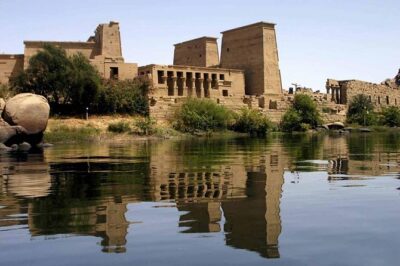
4-Day 3-Night Nile Cruise from Aswan to Luxor&Abu Simbel+Balloon
Read our review →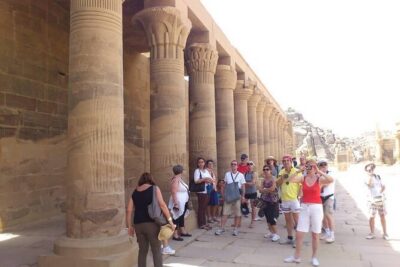
4-Day 3-Night Nile Cruise from Aswan to Luxor including Abu Simbel, Air Balloon
Read our review →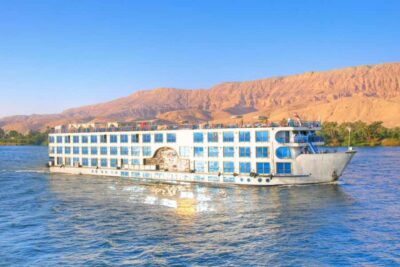
4-Day Nile Cruise from Aswan to Luxor with Guide
Read our review →4-Days Nile Cruise From Aswan To Luxor including Abu Simbel and Hot Air Balloon
Read our review →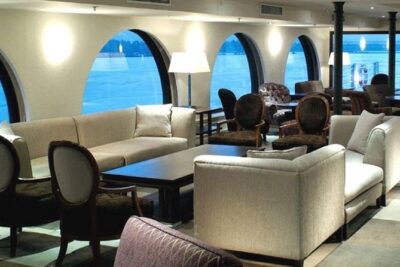
4-Day 3-Night Nile Cruise from Aswan to Luxor – Private Tour
Read our review →4 Days Nile Cruise from Aswan to Luxor including Abu Simbel and Hot Air Balloon
Read our review →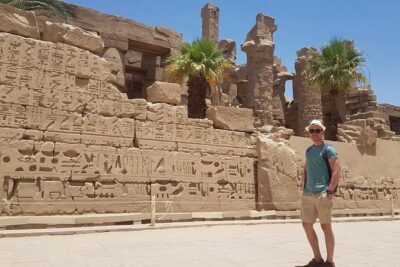
4-Day 3-Night Nile Cruise from Aswan to Luxor With Balloon and Abu Simbel
Read our review →Browse the lists this tour appears in