
REVIEW · ASWAN
3 Nights Nile cruise Aswan&Luxor,tours& Hot air Balloon,Abu simbel From Aswan
The best part of this four-day trip is the way it links Egypt’s great river sights in one moving journey. You sail from Aswan to Luxor, stopping at Philae, Kom Ombo, Edfu, and the Valley of the Kings, with Abu Simbel and a sunrise balloon ride added to the schedule. It is a lot of Egypt in a short time.
I like the easy transport, since hotel, port, airport, or train station pickup is offered, and I like the range of included experiences. The Nubian Village brings a more personal side of the Nile, while the hot-air balloon flight over Luxor gives you a memorable view of the temples and mountains. The main caution is the cabin quality: some rooms may be small, dim, or located in a lower section of the ship, so ask carefully about your room before paying.
Key points to know
- Abu Simbel is included from Aswan, making this a useful choice if you want Egypt’s most famous southern temple without arranging a separate trip.
- The balloon flight begins around 5:00 am, so expect an early morning followed by a full day on Luxor’s West Bank.
- Meals are included for all three nights, from lunch on Day 1 through breakfast on Day 4, with buffet service on board.
- The cruise includes several transport styles, including a motorboat to Philae, a motorboat to the Nubian Village, and a horse carriage to Edfu Temple.
- The ship and sightseeing arrangements may not always feel like one unified operation, so confirm your guide, pickup times, and meeting points before departure.
- The $370 price is strong for the number of inclusions, but entrance fees and drinks are extra, and cabin standards may vary.
What your $370 buys on the Nile
At $370 per person, this trip offers good value if you plan to visit many of these places anyway. You receive three nights on a cruise ship, private accommodation, three breakfasts, three lunches, and three dinners, plus ground transfers, an Egyptologist guide, a motorboat, a horse carriage, Abu Simbel, and the hot-air balloon ride.
That is a long list for four days. You are not simply paying for transport between Aswan and Luxor. You are also covering several guided outings that could take time and money to arrange separately.
Still, the price is not fully all-inclusive. Entrance fees are not included, and drinks cost extra. Gratuities are optional. The included Wi-Fi is limited to 4GB, which should be enough for basic messages and maps but not for heavy video use.
The cruise runs as a private activity for your group, but the ship itself may carry other passengers. That distinction matters. Your sightseeing vehicle and guide can be arranged for your party, while the dining room, deck, and ship facilities are shared onboard spaces.
More Nile cruises in Aswan:
- 4-Days Nile Cruise From Aswan To Luxor including Abu Simbel and Hot Air Balloon
★ 5.0 · 3,142 reviews - 4-Day 3-Night Nile Cruise from Aswan to Luxor&Abu Simbel+Balloon
★ 5.0 · 2,023 reviews - 4-Day 3-Night Nile Cruise from Aswan to Luxor including Abu Simbel, Air Balloon
★ 4.5 · 612 reviews
Day 1: Aswan’s dam, Philae, and the Nubian Village
Your first sightseeing begins at the Aswan High Dam, completed in 1960 to control flooding and generate electricity. The visit is fairly short, about 45 minutes, but it gives you useful context for the modern Nile. The dam changed farming, settlement, and the flow of the river, while also forcing the relocation of major ancient sites.
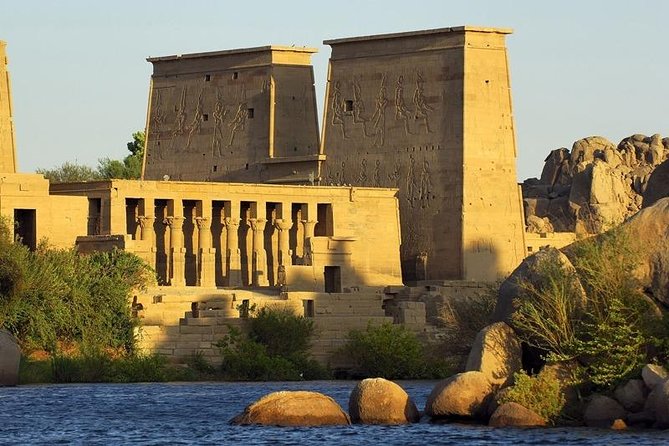
From there, you take a small motorboat to Philae Temple. This is one of the most appealing transfers on the whole trip. The temple complex sits on an island, so you approach by water rather than simply stepping off a coach beside a road.
Philae was dedicated to Isis and carries Greek and Roman touches alongside older Egyptian traditions. Your Egyptologist guide can help you read the carved scenes and understand why Isis remained such an important figure. Allow about two hours here, including the boat ride and walking around the complex.
Admission fees are extra, so budget for them. The same applies to most of the ancient sites on the cruise.
After lunch on board and a short rest, you travel by motorboat toward Soheil Island and the Nubian Village. The pace changes here. Instead of monumental stone temples, you get a look at daily life along the Nile, with time to walk through the village, visit a Nubian family home, share a welcome drink, and hear about local customs.
This three-hour visit is valuable because it breaks up the ancient-site routine. You will see the Nile from a smaller boat, pass through river scenery at a slower pace, and have direct contact with a local community. Keep in mind that the experience is still organized for visitors, so approach it as a structured cultural stop rather than an unplanned village visit.
You return to the cruise for the evening. Meals begin with lunch on the first day, not breakfast, so plan your arrival accordingly.
Abu Simbel: the major southern highlight
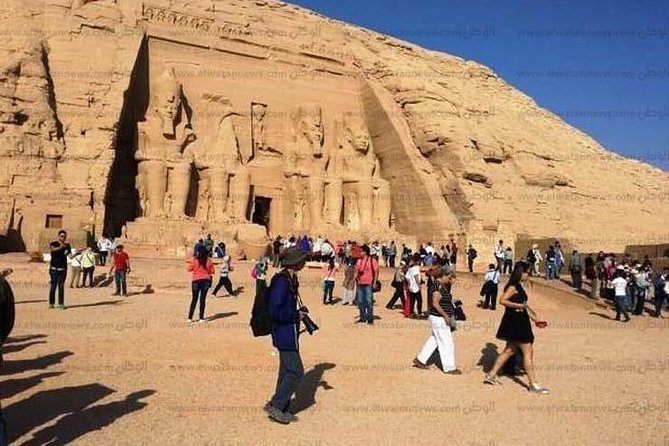
Abu Simbel is included in the overall trip, but the supplied schedule does not give a clear time or detailed sequence for this outing. That is one point you should confirm before departure. Ask when the Abu Simbel transfer leaves, how long the visit lasts, and whether it takes place before boarding the cruise or during the first day in Aswan.
The temples were built by Ramesses II and are famous for their enormous seated statues cut into the rock. Their setting near the southern end of Egypt makes them harder to fit into a standard Nile cruise schedule, so having the visit arranged is a real advantage.
Because the timing is not clearly shown, do not assume that every stop will unfold exactly in the order presented. Keep your phone available for pickup instructions, and confirm the meeting place with the local tour coordinator.
Day 2: Kom Ombo and the rhythm of river travel
The ship sails toward Kom Ombo, where you visit the unusual double temple shared by Sobek, the crocodile god, and Horus, the falcon god. The paired design is easy to appreciate, since many parts of the temple appear in symmetrical form for the two deities.
The visit takes about an hour. That may sound brief, but Kom Ombo is compact and the ship schedule has to keep moving. After the temple, you return for dinner and continue sailing toward Edfu for the night.
This is where the cruise itself becomes part of the experience. You can spend time on deck, watch the riverbanks pass, and take a break from vehicles and crowds. A Nile cruise is not a luxury hotel at sea, but the changing view and slower pace are the main reason to choose it over a string of road transfers.
More balloon rides over Aswan:
- 4-Days Nile Cruise From Aswan To Luxor including Abu Simbel and Hot Air Balloon
★ 4.5 · 509 reviews - 4 Days Nile Cruise from Aswan to Luxor including Abu Simbel and Hot Air Balloon
★ 4.5 · 356 reviews - 4-Day 3-Night Nile Cruise from Aswan to Luxor With Balloon and Abu Simbel
★ 5.0 · 327 reviews - 4-Days Nile Cruise Aswan&Luxor,Hot Air Balloon&Abu Simbel.Hot deal
★ 5.0 · 322 reviews
Day 3: Edfu by horse carriage, then the Esna Lock
After breakfast, a horse-drawn carriage takes you to the Temple of Horus at Edfu. The carriage is a practical part of the transfer, but it is also a distinct feature of the day. The temple is regarded as one of Egypt’s best-preserved, with large pylons, carved walls, and clear religious scenes.
Plan on about two hours for the temple visit and transport. Your guide can point out the main carvings, explain the role of Horus, and help you make sense of the building’s layout. Entrance fees are not included.
Back on board, the schedule becomes less crowded. Lunch is served while you sail toward Luxor, and afternoon tea is offered on the sundeck. This is a good chance to slow down, photograph the river, and simply watch village life pass by.
The ship crosses the Esna Lock on the way to Luxor. Locks are a practical part of river navigation, but they can also be interesting to watch as the ship is raised or lowered to match the water level. The exact timing depends on ship operations, so treat it as a possible viewing moment rather than a fixed performance.
In late afternoon, you visit Luxor Temple on the East Bank. The site is especially atmospheric toward evening, when the columns and statues are lit. Your tour notes refer to ancient Egyptian, Christian, and Islamic features, a reminder that the site changed over many centuries rather than belonging to one period alone.
Dinner and a belly dancing show take place on board, followed by an overnight stay in Luxor. The evening program gives the cruise a traditional tourist feel. You may enjoy it, but if you prefer a quiet night, the deck is likely the better place to sit.
Day 4: a sunrise balloon over Luxor
The hot-air balloon ride begins with a pickup around 5:00 am. That early start is necessary for the sunrise flight, and it makes this the most demanding morning of the trip. You should be ready before dawn and expect the balloon flight itself to last about 30 to 45 minutes.
From above, you see Luxor’s West Bank, the mountains, and major temple areas as the morning light spreads across the river region. The flight is included in the price, unlike the entrance fees for most temples. It is also weather dependent. If poor weather cancels the flight, a different date or full refund is offered.
The balloon is not a substitute for visiting the monuments on foot. Its value is the broad view: you see how the Nile separates the East and West Banks and how the ancient sites sit against the desert hills. Bring a light layer for the early start, though no specific clothing requirement is provided.
After the flight, the day continues with the West Bank visits. The timing described for the Colossi of Memnon is somewhat confusing, since the balloon section already includes a short stop at the statues. Treat the colossi as part of the West Bank route and confirm the exact order with your guide.
Valley of the Kings and Hatshepsut’s temple
After breakfast and checkout, you visit the Valley of the Kings. The tombs were cut into the hills during Egypt’s New Kingdom, with pharaohs seeking protected burial places away from the more obvious pyramid sites.
Your visit is scheduled for about two hours. The standard admission generally covers a set number of tombs, while special tombs may require an additional fee, but this tour information only confirms that entrance fees are not included. Ask your guide which tombs are covered on the day.
The tombs can be more demanding than the large temples. You walk on uneven ground, enter narrow passages, and may climb or descend steps. The payoff is the painted decoration inside, where color and detail survive in places that look plain from outside.
Next comes the Mortuary Temple of Hatshepsut at Deir el Bahari. The temple rises in terraces against the cliffs and tells the story of a queen who ruled as pharaoh. Your guide should explain her relationship with her nephew and the political problems surrounding her reign.
The itinerary lists an unusually long time for this West Bank portion. It is best understood as an extended sightseeing block covering the Valley of the Kings, Hatshepsut’s temple, the Colossi of Memnon, and lunch, rather than a literal 15-hour stop at one location.
Lunch at a local restaurant is optional. Since the cruise meals are included only through breakfast on the final day, you should clarify the cost and location of lunch before choosing it.
Karnak Temple closes the tour
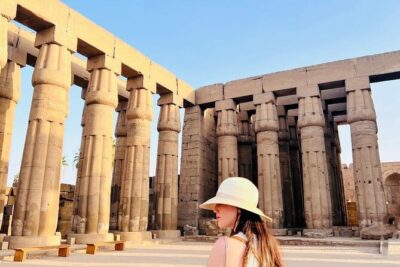
You return to the East Bank for Karnak Temple, the largest site on the schedule. The complex grew over roughly 2,000 years and covers a vast area, with massive pylons, obelisks, courtyards, and the famous hypostyle hall.
Give yourself time to look up as well as ahead. The scale is easy to understand when you stand among the columns, but the carvings and inscriptions reward a slower pace. Your Egyptologist guide is especially useful here because the site can feel overwhelming without a clear route.
Karnak is the final major visit listed, and it makes a strong ending. You finish with the grandest temple complex rather than a minor stop, though the full day can be tiring after the early balloon ride.
Cabins, food, and ship comfort
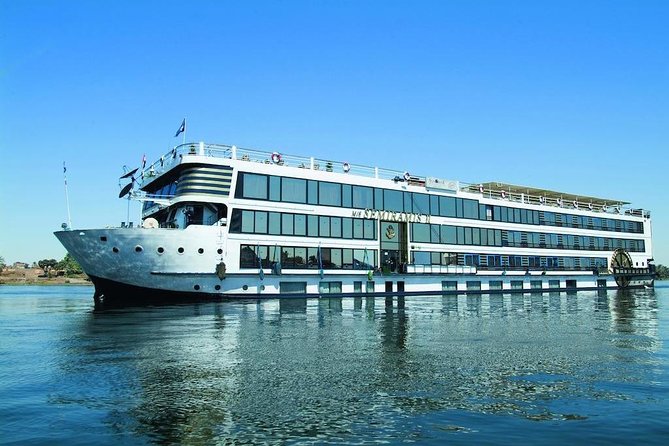
The ship provides private cabins with the usual facilities, and meals are included three times daily during the three-night stay. The food is served as a buffet, and the onboard menu has been praised for its range and hygiene.
The cabin is the main area where expectations need care. Some rooms may be small and located in a basement or lower section, with an old or unclear window. A cabin like that can feel gloomy, especially during a three-night stay when the room is your place to rest between long excursions.
Ask these questions before booking:
- Is the cabin on an upper deck or lower deck?
- Does it have a clear window?
- Is the room guaranteed, or assigned at check-in?
- Is the cabin category the same for every booking?
The deck is a strong part of the ship experience. You can sit outside, watch the Nile, and take a break from the heat and monuments. Wi-Fi is included up to 4GB, but you should not expect unlimited service.
Timing, guides, and coordination
The tour includes an Egyptologist guide, but no guide name is provided. Confirm the name and phone number of your guide before the first pickup. This is particularly important because the cruise operator and the sightseeing coordinator may not always be the same people.
The listed start and ticket points also need clarification. The activity gives Luxor as the start location while identifying Aswan as the ticket redemption point, even though the cruise sails from Aswan to Luxor. Ask exactly where you meet on Day 1 and where the experience ends on Day 4.
Pickup is offered from hotels, ports, airports, and train stations, which is useful if you are connecting between cities. Still, give the provider your exact accommodation or arrival details and confirm them in writing.
The schedule is busy. You visit several temples, take an Abu Simbel trip, sail between cities, and wake before dawn for the balloon. I would not choose this if you want a slow, unstructured Nile holiday. I would choose it if you want to cover the major sights efficiently and do not mind early starts.
Should you book this Nile cruise?
Book this trip if you want a packed introduction to Upper Egypt with transport, meals, a guide, Abu Simbel, and the hot-air balloon included in one price. The combination of temple visits and river time is hard to match at $370 per person.
Think twice if cabin comfort matters as much as sightseeing, or if you dislike unclear schedules. Confirm the room location, entrance fees, Abu Simbel timing, lunch arrangements, and the exact meeting point before you commit.
For an active first visit to Aswan and Luxor, this is a good-value choice. For a relaxed cruise with polished ship service and generous downtime, choose a slower package with a clearly specified cabin category.
FAQ
How long is the Nile cruise?
The experience lasts approximately four days and includes three nights on board, sailing from Aswan to Luxor.
Is Abu Simbel included?
Yes. The trip to Abu Simbel is included, though the supplied schedule does not specify the exact departure time or order of the visit.
Is the hot-air balloon ride included?
Yes. The balloon ride is included and begins around 5:00 am. The flight lasts about 30 to 45 minutes and depends on suitable weather.
Are meals included?
Yes. Meals run from lunch on the first day through breakfast on the final day. The package includes three breakfasts, three lunches, and three dinners.
Are entrance fees included?
No. Entrance fees for the listed archaeological sites are not included in the price. Drinks are also extra, and gratuities are optional.
Can I cancel for a full refund?
You can cancel at least 24 hours before the experience start time for a full refund. Cancellations or changes made less than 24 hours before the start time are not accepted for a refund.
Just added around Aswan
- Sailing Nile Cruise from Aswan to Luxor for 2 Nights★ 4.5 · 139 reviews
- 4-Day Nile Cruise: Aswan to Luxor & Abu Simbel + Hot Air Balloon★ 4.5 · 35 reviews
- 4-Days Aswan sails Nile Cruise Luxor &Abu Simbel.Hot air Balloon★ 4.5 · 77 reviews
- Sailing Nile cruise from Aswan for 2 nights★ 4.0 · 11 reviews
- 8 Nights Egypt Tour,Cairo,Luxor,Aswan&Abu Simbel,Nile Cruise,Hot Air Balloon★ 4.5 · 11 reviews
- Sailing Nile cruise from Aswan to Luxor includes tours for 3 nights★ 5.0 · 16 reviews
- 2 nights Nile cruise includes tours from Aswan to luxor★ 4.5 · 64 reviews
- (Wonderful 3-Nights Nile Cruise from Aswan to Luxor & Balloon)★ 4.5 · 17 reviews
Aswan River Cruises, compared.
4-Days Nile Cruise From Aswan To Luxor including Abu Simbel and Hot Air Balloon
Read our review →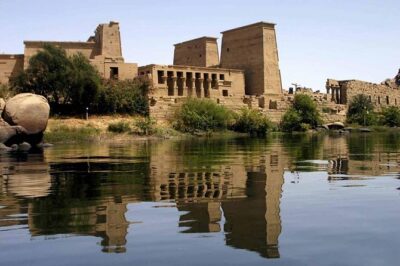
4-Day 3-Night Nile Cruise from Aswan to Luxor&Abu Simbel+Balloon
Read our review →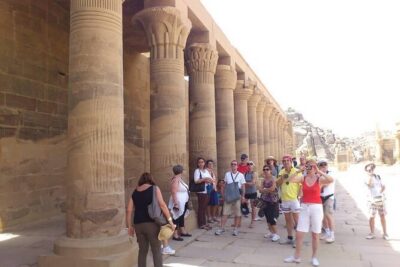
4-Day 3-Night Nile Cruise from Aswan to Luxor including Abu Simbel, Air Balloon
Read our review →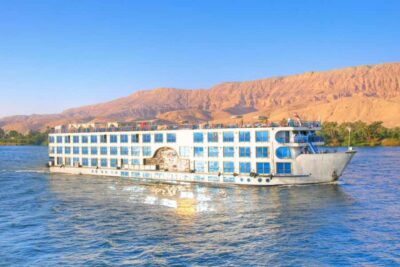
4-Day Nile Cruise from Aswan to Luxor with Guide
Read our review →4-Days Nile Cruise From Aswan To Luxor including Abu Simbel and Hot Air Balloon
Read our review →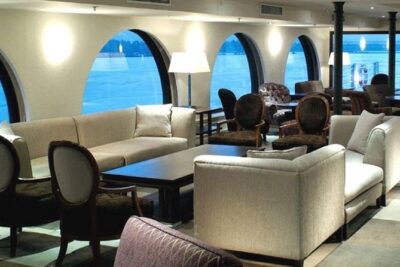
4-Day 3-Night Nile Cruise from Aswan to Luxor – Private Tour
Read our review →4 Days Nile Cruise from Aswan to Luxor including Abu Simbel and Hot Air Balloon
Read our review →
4-Day 3-Night Nile Cruise from Aswan to Luxor With Balloon and Abu Simbel
Read our review →Browse the lists this tour appears in